Winter Dog Walks:
The 7-Item Checklist
Say "winter walk gear" and everyone thinks coat first. But the paws actually outrank the coat: the salt spread on roads after snow is harsher than it looks. Here are the seven winter items, in order.
The 7 winter checks: a coat (small and short-haired dogs), paw protection (against road salt), shortened walks, midday hours, post-walk paw washing, moisturizing, and ice caution. Above all: any day you've walked a salted road, wash the paws. No exceptions.
The winter checklist, all 7
| No. | Item | Point |
|---|---|---|
| 1 | Coat | Near-mandatory for small, short-haired, and senior dogs |
| 2 | Paw protection | Avoid salted stretches, or boots and balm |
| 3 | Shorter walks | Start at half the usual and read their condition |
| 4 | Midday hours | The 11 a.m. to 3 p.m. sunshine window |
| 5 | Post-walk paw wash | Remove salt residue, down to between the toes |
| 6 | Moisturizing | Paw balm against cracking |
| 7 | Ice caution | A slip can be brutal on the kneecaps |
Is the coat really necessary?
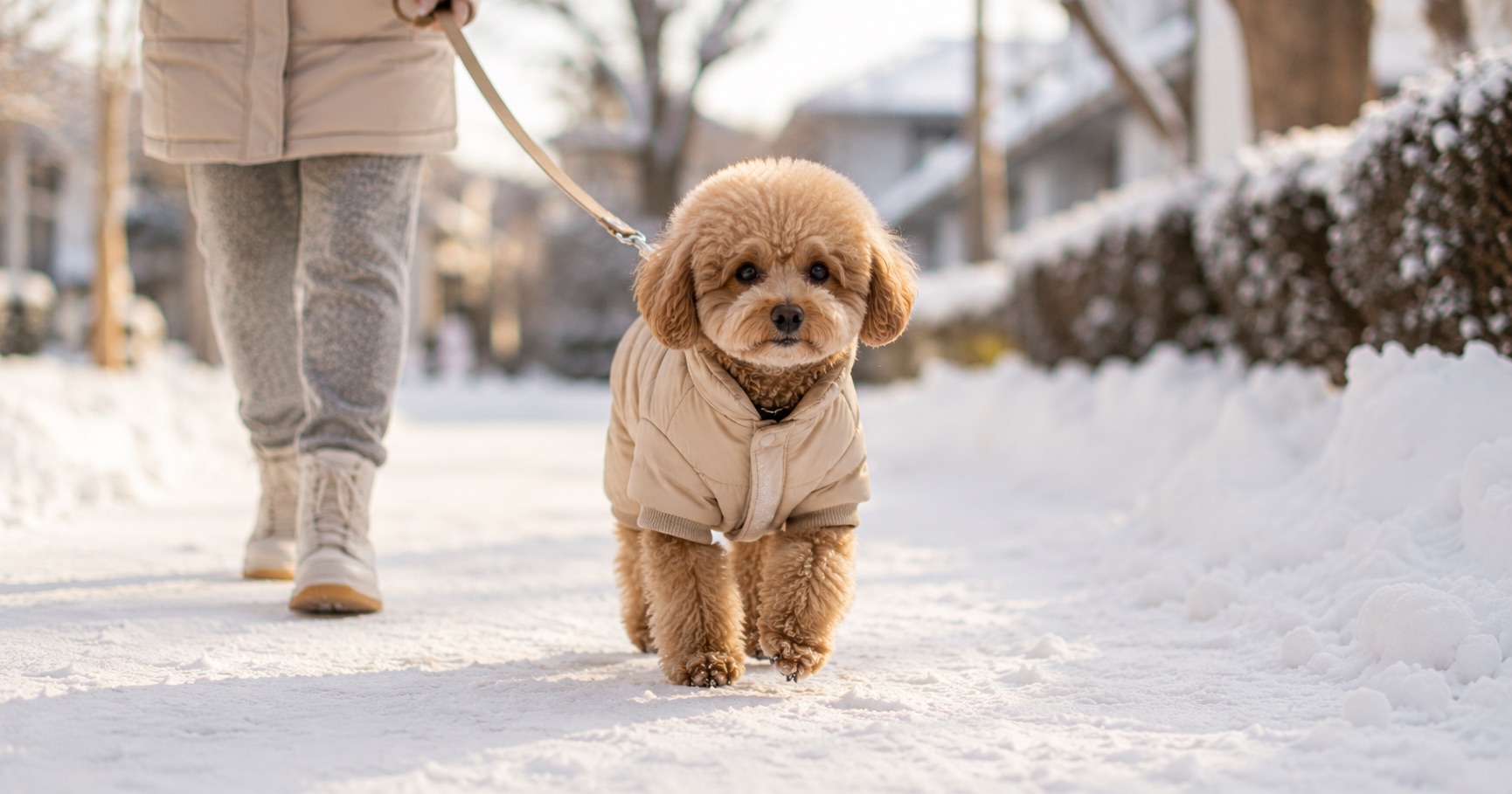
Depends on the breed. Double-coated northern breeds (Samoyeds, Shibas, and kin) can find a coat stifling. On the flip side, small dogs like Maltese, Poodles, and Bichons, short-haired breeds, and seniors are safer dressed. My dog Gureum wears a puffer out in winter (it means "cloud" in Korean), and the same dog who used to fight the sleeve now waits by the closet on cold days. They figure it out.
Road salt: winter's hidden ambush
That white de-icer scattered across the roads after snow: on contact it irritates paw pads, and on cracked pads it outright stings. The scarier part comes at home, when they lick their feet and swallow the residue.
Three countermeasures: carry them over or route around salted stretches, wash with lukewarm water down to between the toes after the walk, and moisturize with paw balm at the first sign of cracking. That alone prevents most winter paw trouble.
The walks must go on, even in winter
Skip weeks because of cold, and the activity deficit slides toward problem behaviors. Short daily outings beat long absences, and on the truly brutal days, substitute indoor nose work. It's one season to get through. No need to run it perfectly.
Counted how many days you've been out this winter?
Walks thin out in winter, which is exactly when a record earns its keep. When the paw stamps in your kkeung log go sparse, that's the signal. Post the bundled-up photo the same day and the whole winter stays kept.
Fill in your paw stamps →The pre-walk warmup
Just as people warm up before winter exercise, a dog does better with a minute of movement before stepping into cold air. Roll a few treats across the entryway floor for them to chase, or do a lap of the hallway first. For small dogs and seniors with fragile joints especially, that one or two minutes genuinely counts toward injury prevention.
On return, it's less cooldown than warmup, part two: dry them immediately if they're wet, and offer a little warm water. Shivering after the walk is the signal to cut the next one shorter.
The winter weight watch
Winter is the gaining season: walks shrink, treats don't. The problem is that winter weight loads the joints and raises injury risk when spring walking ramps back up. In low-walk months, trimming food and treats by about a tenth is a fair move. The fitness standard: ribs faintly findable under your fingers.
The measure of a good winter is simple: when spring arrives, heading out for that first walk in the same body as before winter. That's the win.
Winter walks demand more gear and more fuss, but winter has scenes nothing else offers, like your dog's face the first time their paws hit fresh snow. Prepared, winter is a perfectly good walking season. Pack the seven, and stay warm out there.
Frequently asked questions
How cold is too cold to walk?
Do dog boots actually help in winter?
They eat snow. Is that okay?
What about a dog who utterly hates clothes?
Their paw pads turn red after winter walks. Frostbite?
This article is general information and does not replace a veterinary diagnosis. Talk to your vet about your dog's condition.