Senior Dog Walks:
Not Less, Different
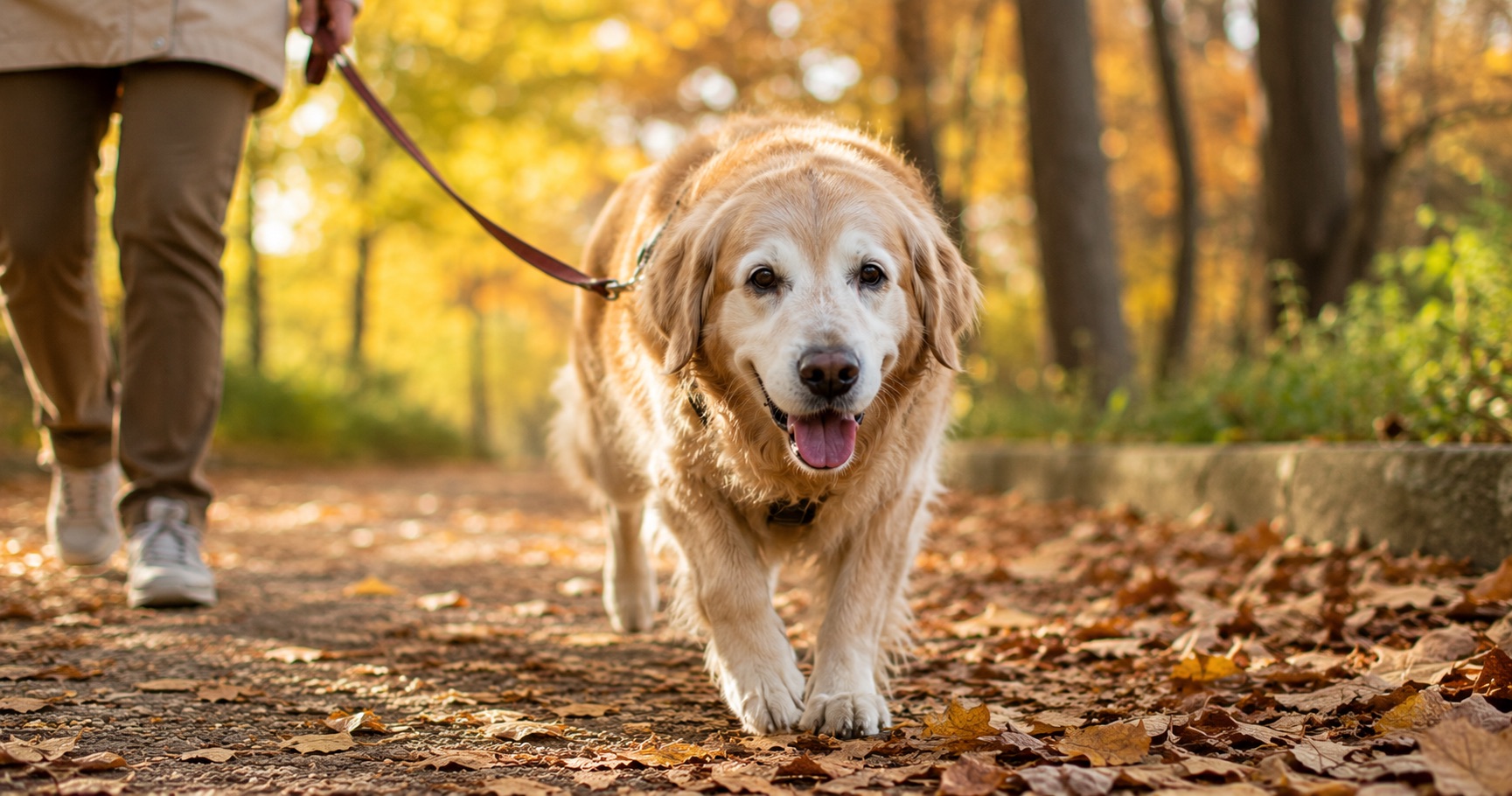
As your dog ages, the instinct is to wonder whether to cut back on walks. But the direction is a little different: for a senior dog, the walk isn't something to reduce. It's something to change. The moment walking stops, muscle starts leaving, and less muscle means less walking. That's the vicious cycle to avoid.
The senior walk principles: short, frequent, and flat. Two or three 15-to-20-minute outings beat one long one, and flat ground and dirt paths beat stairs and hills. Let your dog set the pace, and stop when they stop. Limping or sitting down mid-walk ends that day's outing; if it repeats, a vet visit is needed.
How to change the walk
| Item | Adult years | Senior years |
|---|---|---|
| Pattern | Long, 1 to 2 times | Short, 2 to 3 times |
| Surface | Anywhere | Flat ground, dirt paths, grass |
| Pace | Owner's pace works | The dog sets the pace |
| Hours | Free | Avoiding summer heat and winter cold |
| Goal | Exercise volume | Keeping muscle, lifting spirits |
Why keep walking at all?
Once age starts pulling muscle away, walking is nearly the only daily prescription that slows it. And the walk isn't just for the body. Outside smells are the stimulus that wakes a senior dog's brain, which supports cognitive health too. A slower pace doesn't mean the curiosity about the world is gone. Those long pauses at the utility pole: that IS the walk now.
Stop signals and vet signals
Signals to fold that day's walk: limping, sitting down and refusing to rise, panting rougher than usual. On those days, no pushing; head home.
Vet signals are about repetition: walking distance shrinking day after day, unusual struggle getting up, whimpering at night. These can be early signs of arthritis or heart issues, and catching them early opens up far more management options.
What you can add at home
Mats on slippery floors, steps in front of the couch, and light indoor nose work to fill the stimulation on reduced-walk days. Joint supplements and weight management, run in consultation with your vet, complete the set. Extra weight loads the joints, so for a senior dog, weight management IS joint management. My dog Gureum isn't a senior yet (it means "cloud" in Korean), but I laid the non-slip mats down now anyway. I'd read that installing them early spares an older dog the burden of adjusting to something new right when their footing gets shaky.
Even slowed steps can be protected, if you record them
For a senior dog, the walk log is a health chart. Log walks in kkeung and distance and time stay by date; when the walking-time trend line starts dipping, that's your cue for the vet. And you can use that very screen as reference material at the appointment.
Log today's walk →Walking a dog whose senses have dimmed
Age doesn't only weaken the legs; eyes and ears fade too. For a dog with failing vision, repeating a familiar route is the stable choice. This is the season for the comfort of known streets, not the adventure of new ones. A dog losing hearing can't hear the bike coming from behind, so you spot it first and step aside, and don't take it personally when their name gets no response. They simply didn't hear. Agree on a new signal, a light touch on the shoulder, and the conversation continues.
The season when the walk changes meaning
A senior dog's walk gradually shifts from workout to outing. The distance and speed numbers shrink, but the time itself, soaking up sun, reading the wind, confirming the familiar alley, is what holds up their day. A walk that's just sitting on a bench together watching people pass is a magnificent walk. Don't measure today by the standards of their younger years. The time out there together is the whole point of this season's walks, and later, it's the thing you'll miss most.
Walking a senior dog is also practice at slowing down. And there are things you only see at that slower pace: the sky, the season, and your dog's face. May the walks that remain be exactly that: slow, and long, and together.
Frequently asked questions
At what age do senior walk rules kick in?
The reluctant days are increasing. Should I just let them rest?
How do we mix the stroller and walking?
They keep stopping mid-walk and looking at me. What does it mean?
Do boots or socks help senior dog walks?
This article is general information and does not replace a veterinary diagnosis. Talk to your vet about your dog's condition.