Do You Really Need
a Dog Stroller?
Honest confession: I used to see dog strollers and think, isn't that a bit much? Walking is the walk, not riding. Then I heard the story of a neighbor living with a fifteen-year-old dog, and my mind flipped completely. A stroller isn't for the dog who doesn't want to walk. It's for the dog who wants to walk but can't walk for long.
A stroller earns its keep in 4 cases: long outings with a senior dog, recovery from surgery or kneecap issues, multi-dog households with different walking speeds, and public transit or long-distance trips. Replacing a healthy adult dog's daily walk with a stroller isn't recommended. Mixing walking and riding is the right answer.
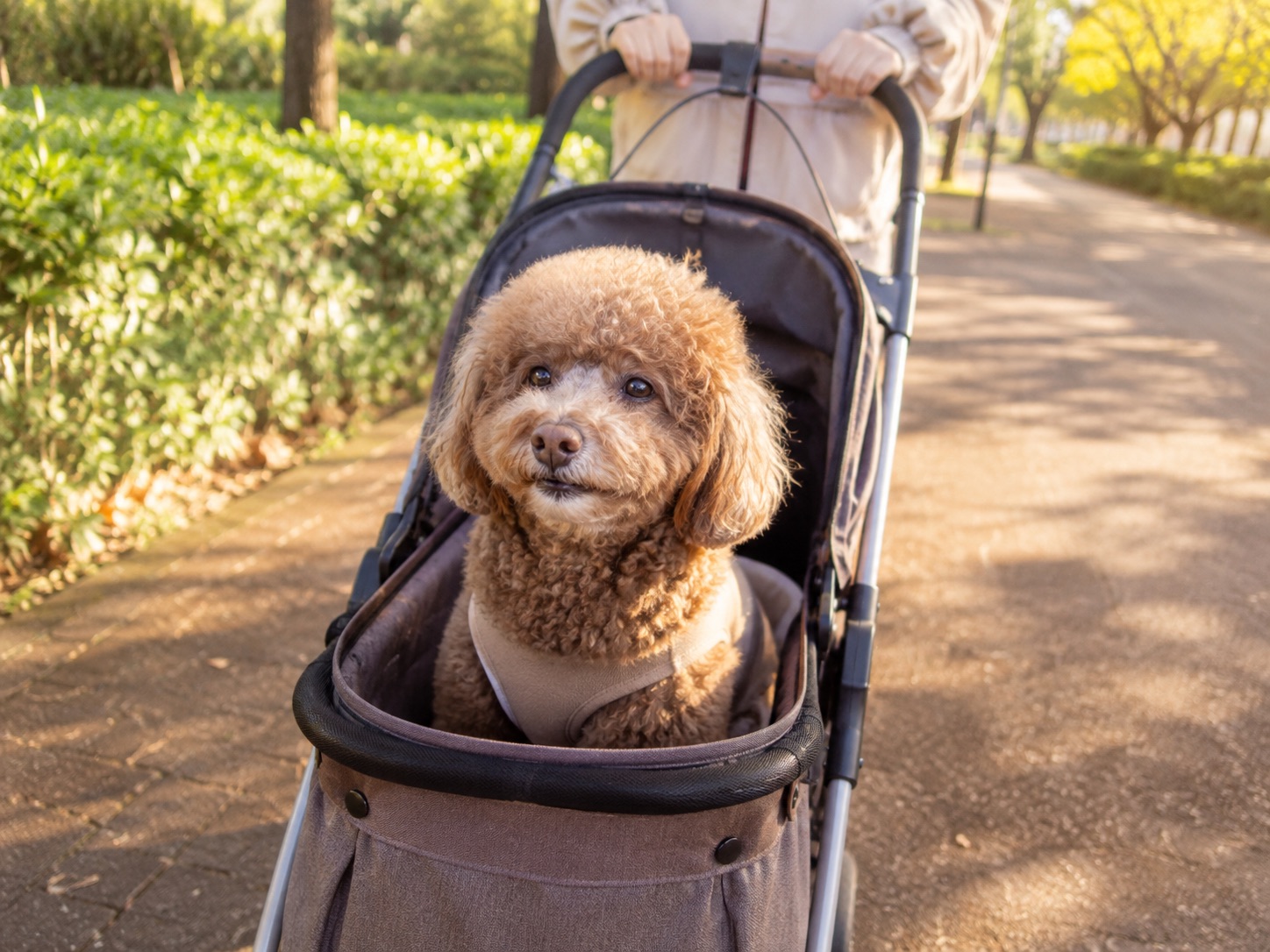
The 4 cases where a stroller helps
| Case | Why | How to use it |
|---|---|---|
| Senior dogs | Stamina fades, but the need to see the world doesn't | Walk until tired, then ride |
| Recovery | Fresh air during post-surgery exercise restrictions | Within the vet's limits |
| Multi-dog households | The speed gap between a puppy and a senior | Only the tired one rides; the walk continues |
| Longer trips | Cafes, the vet, public transit | Doubles as a carrier |
For a healthy dog, it can backfire
Flip it around: pushing a perfectly mobile dog everywhere for convenience erases what a walk is. To a dog, a walk isn't transportation. It's the walking and sniffing itself. Think of the stroller not as a substitute for the walk but as an extender of it.
A good pattern looks like this: stroller to the park with your senior dog, down and walking slowly inside the park, back in for the ride home. The total walking stays the same while the radius of their world grows.
The buying checklist
First, weight limit and size: pick one with margin above your dog's weight, big enough to turn around in. Second, wheels: if your neighborhood is full of curb cuts and bumpy pavement, big wheels and suspension decide the ride quality. Third, the interior leash ring: it prevents jump-out accidents and is non-negotiable. Fourth, ventilation: with summer in mind, generous mesh windows win.
Adaptation starts at home
Some dogs get scared if their first ride is out on the street. Open the stroller at home, toss treats in, let them climb in on their own; next, door closed for a few minutes; then a push around the living room. A few days of this and most dogs settle in. My dog Gureum (it means "cloud" in Korean) needed a week of treat-eating practice in the stroller in our living room before she'd ride calmly outside.
Riding days and walking days are both your dog's days
In a mixed walk-and-ride outing, what counts is how much your dog walked on their own four feet. kkeung's walk log keeps distance and time by date, with a paw stamp on every walked day. For a senior dog, that stamp saying "we walked 10 minutes today" is the most reassuring record there is.
Log today's walk →There are alternatives, too
If a stroller feels like too much, know the alternatives. Slings and backpack carriers are light for a small dog's short trips, and basket-style bike carriers widen your range. But for a senior dog's long outings and a recovering dog's stability, nothing matches a stroller. Think about how often you'd use it; if it's less than weekly, starting with a rental or secondhand is perfectly sensible.
Check storage as well: does it fold small enough for your entryway, does it fit the trunk? Even a great stroller goes unused if it's annoying to get out.
Your dog comes before the stares
One thing that makes people hesitate is, honestly, other people's eyes. "A dog in a stroller?" Some of you have heard it. But if a fifteen-year-old dog gets to come out and smell the park every day because of that stroller, is that really excessive? Only that household knows their story, and tending to a dog's remaining seasons is what an owner does. The stares pass; the walks remain. If your dog needs it, push that stroller proudly.
In the end a stroller is a tool that widens your dog's world: a way to smell the outside air even on the days they can't walk. If the time has come, skip the agonizing and take care of your dog's today. The good breezy days don't wait around.
Frequently asked questions
My dog only wants to ride and refuses to walk.
Can two small dogs share one stroller?
Can we enter cafes or stores with the stroller?
Can't I just carry them instead of a stroller?
They keep trying to jump out of the stroller. What do I do?
This article is general information and does not replace a veterinary diagnosis. Talk to your vet about your dog's condition.