Your First Trip with Your Dog,
Packing to Precautions
The first trip with your dog. Exciting, and worrying in equal measure. What to pack, what if they throw up in the car, what if they bark at the hotel. The night before my first trip with my dog Gureum (it means "cloud" in Korean), I did nothing but search for two hours. Here's everything I wish I'd known then.
First-trip prep rests on 3 pillars: transport (car-sickness prep and a seatbelt), lodging (confirm the pet policy in advance), and emergencies (save a vet near your destination). The packing basics: food and water, potty supplies, a spare leash, a blanket that smells like home, and a small first-aid kit. And make the first trip one night, somewhere close.
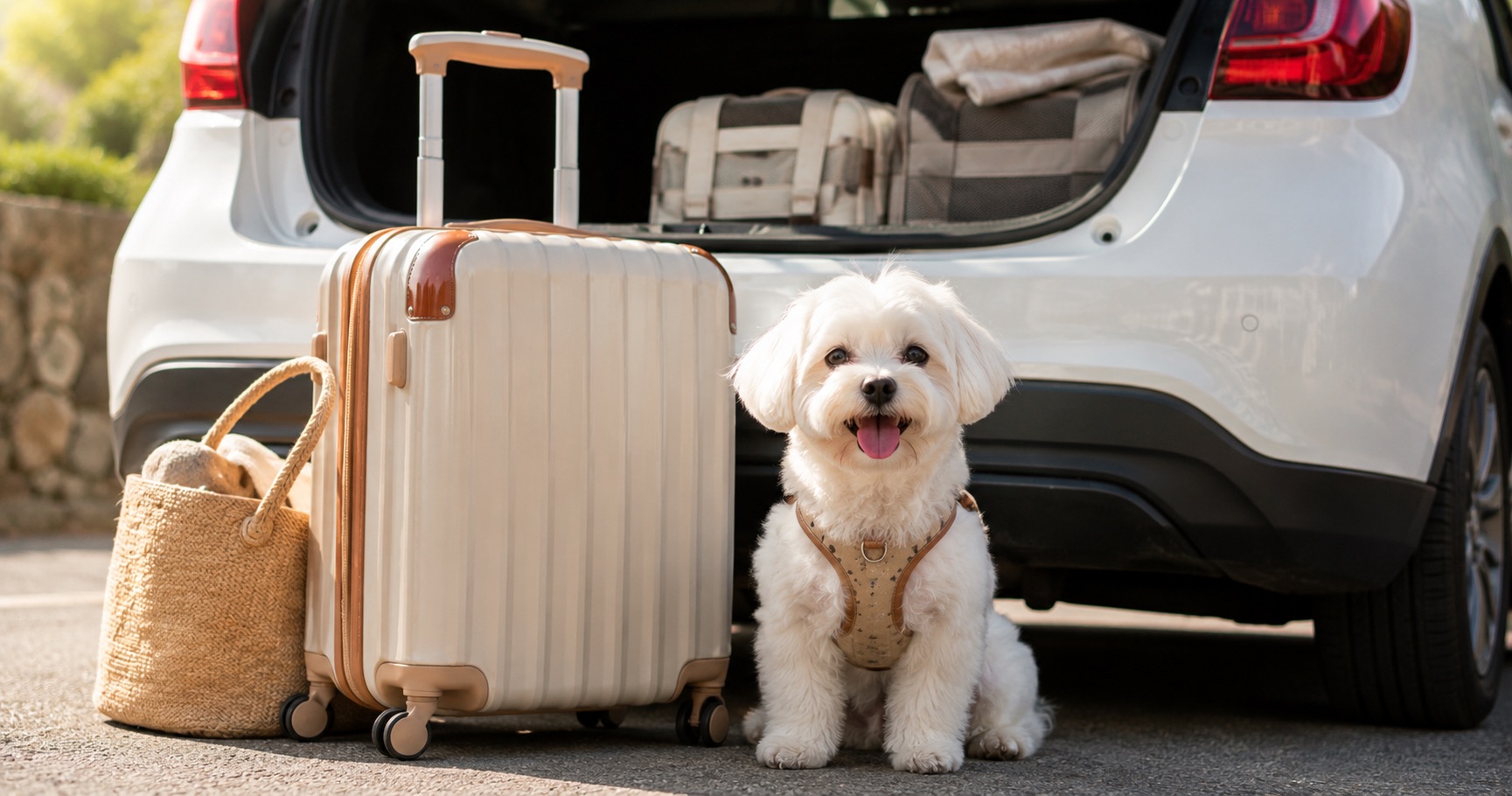
The packing checklist
| Category | Items | Note |
|---|---|---|
| Food | Their usual food, treats, water, bowls | Don't switch to unfamiliar food |
| Transport | Crate or car seat, seatbelt leash | Riding in your lap is dangerous |
| Hygiene | Waste bags, pads, wet wipes, towels | Pack generously |
| Comfort | The blanket and toys from home | Home smells are a superpower in strange places |
| Safety | ID tag, first-aid kit, vet contacts | Save a 24-hour vet near the destination in advance |
The car ride: the trip's first gate
Car-sickness prep starts with an empty stomach. Finish meals 2 to 3 hours before departure, and stop every 1 to 2 hours for water and a potty break. Cracking a window for airflow helps too.
And safety. Riding with your dog in your lap is dangerous for both of you in a crash. The baseline is a crate secured by the seatbelt, or a dog car seat with a belt leash clipped in. If your dog hates the crate, start crate adaptation at home a few weeks before the trip.
What to confirm with the lodging
"Dog-friendly" doesn't mean one thing. Confirm three points before booking: is there a weight limit, what are the extra fees and dog-count limits, and can your dog wait alone in the room. That last one matters most. If the property doesn't allow solo waiting, your entire itinerary changes the moment you want to go to dinner.
On arrival, don't head straight in to rest; walk the surroundings together for about 10 minutes. Once they've read the smells of the strange place, settling in goes much faster.
Keep the first trip short and close
Don't get ambitious. An hour or two by car, one night: that's the right size. The goal of this trip isn't sightseeing; it's making your dog like the concept of travel. Stack a good memory now, and next time you can go farther.
A paw stamp from a trip gets revisited for years
Log walks in kkeung and distance and time stack up by date, and on travel days the numbers themselves look different. Walk twice your usual and post the still-ecstatic photo the same day, and the trip records itself.
Log today's walk →Dry runs before the trip
Honestly, the trip is won or lost before departure. First: short practice drives before the long one. A few 20-to-30-minute outings build good memories of the car and crate. Second: check the basic cues. A trip with a dog who has "come" and "wait" is a different difficulty level from one without. Third: verify the ID tag and registration info. Getting lost in a strange place is the worst-case scenario, so check that the tag's phone number is current before you leave.
Pack your dog's things in their own dedicated bag. You can see at a glance what's missing, and it's easier to find things at the lodging.
The daily routine on the road
Keep home's rhythm as much as you can while traveling. Meal times, walk times, the blanket in the sleeping spot. When the routine stays the same, a changed environment settles much faster. And plan at half the human pace: one sight enjoyed slowly beats three rushed, with shade breaks in between. Your dog needs a day or two of recovery after the trip too, so an itinerary that gets you home in daylight beats rolling in late Sunday night.
The measure of a successful first trip isn't pretty photos. It's your dog sleeping soundly in the car on the way home. See that once, and you'll catch yourself planning the next trip. That's how, one place at a time, your dog's map of the world grows.
Frequently asked questions
Can I give motion-sickness medicine?
I'm worried about barking at the lodging at night.
Can I take them to the beach?
What about camping instead of lodging?
They won't eat at the destination. What do I do?
This article is general information and does not replace a veterinary diagnosis. Talk to your vet about your dog's condition.