Dog Water Safety:
Beach and Creek Rules
The term "doggy paddle" makes every dog sound like a born swimmer, but some breeds genuinely struggle to stay afloat, and plenty of dogs are afraid of water. Here's how to make summer water play wild fun and safe at the same time.
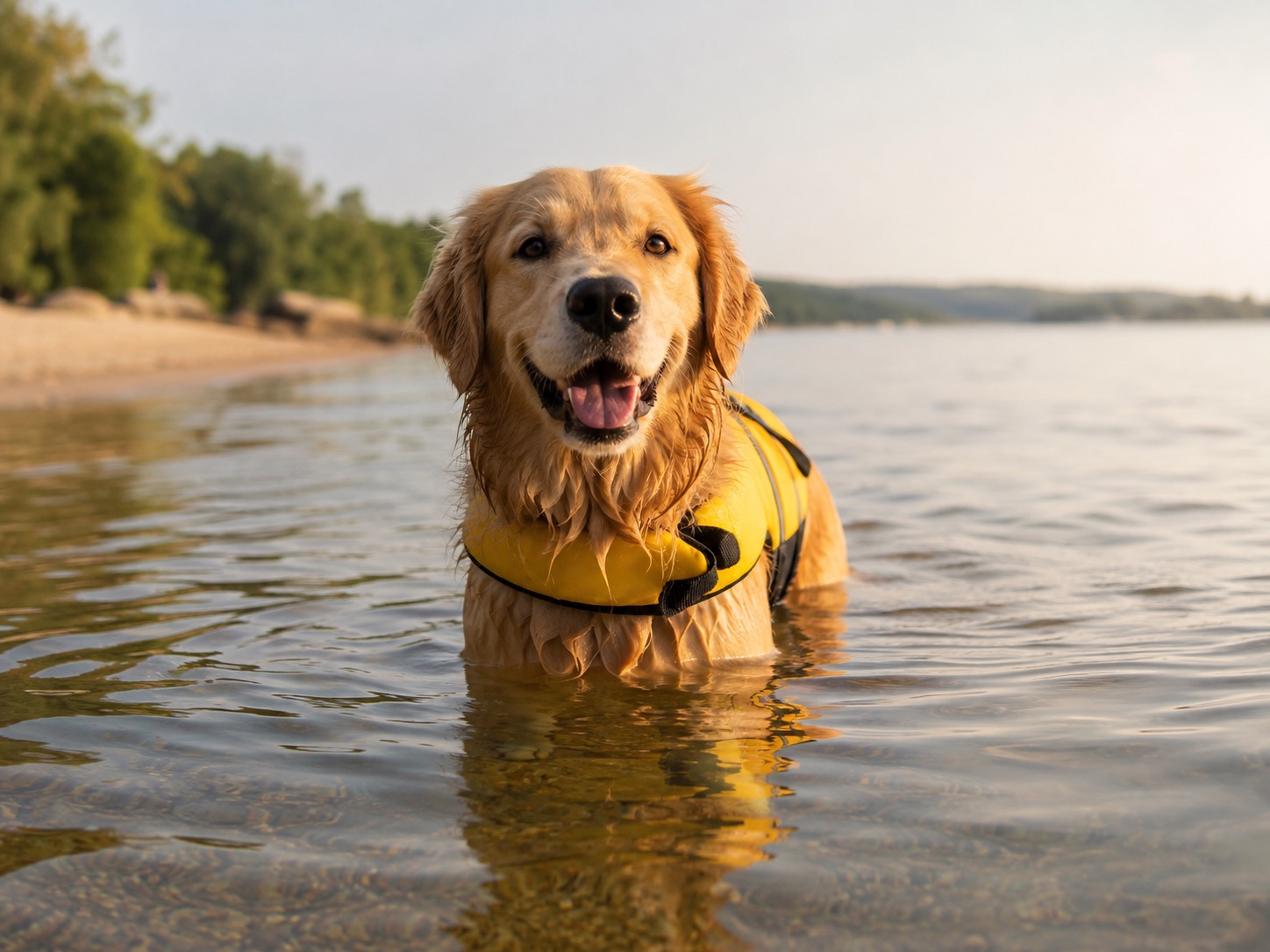
The three basics of water safety: a life vest, shallow water first, and no drinking seawater or creek water. Heavy-bodied, short-nosed breeds like bulldogs and pugs struggle to swim, so for them the vest is mandatory. And the outing isn't over until the freshwater rinse and the ear-drying are done.
Is my dog built for swimming?
Some breeds were born for water, like retrievers. Others, like bulldogs, pugs, and dachshunds, have builds that fight flotation. Big head, short legs, heavy chest: these dogs can paddle hard and still sink. They should never be in deep water without a life vest.
And even a swimming breed starts in the shallows if it's their first time. Let them play where their feet touch, and watch whether they venture deeper on their own. Throwing a dog in to teach them is absolutely off the table. All it teaches is fear of water.
Cautions by location
| Location | Watch for | Prepare |
|---|---|---|
| Beach | Drinking seawater (salt), waves, scorching sand | Offer fresh water often, leash on, go morning or evening |
| Creek | Fast current, slippery moss, cold water | Shallow pools only, short dips |
| Dog pool | Overexcitement, collisions with other dogs | Breaks in between, your dog's own pace |
Drinking seawater can bring on diarrhea and vomiting from the salt. Offering fresh water frequently during play keeps thirst from driving them to drink the sea. Creek water is cold, and long soaks bring hypothermia. Run a cycle: 10 to 15 minutes in, then out to dry off and warm up.
Aftercare is what protects their skin
Playing isn't the end. Salt, sand, and creek microbes left in the coat cause skin inflammation. Rinse the whole body with fresh water, and dry the ears especially well. Water left in ears goes straight to an ear infection, and floppy-eared breeds need extra care. Towel off, then use a dryer on low around the ears and between the toes, and you're done.
The first water-play video gets replayed every summer
The day they first dip a paw in, the ecstatic splashing: save it as a short video. Posts on kkeung keep their dates, so every time summer rolls around you can scroll back up the feed and watch it again. You'll see exactly which summer it was, too.
Save a video of your dog →Teaching swimming for the first time
For a dog with a water-loving streak, swimming is less taught than unlocked. The order: life vest on and playing at ankle depth, you calling their name from a step or two ahead, and depths where feet don't touch saved for days later. You being in the water with them is the core of it. Not sending them in from the bank, but going in together so their body learns a safe someone is right beside them. My dog Gureum (it means "cloud" in Korean) took three creek trips just to wade in to her ankles and back, and to this day she's more of a waterside-walk type than a swimmer.
Keep swim sessions short. An excited dog doesn't know they're tired and keeps paddling. Ten minutes in, five minutes resting on land: that cycle is yours to manage.
What to watch in the days after
Water play's side effects arrive days later more often than same-day. Three checkpoints: constant head-shaking or ear-scratching signals an ear infection; diarrhea past two days may be from drinking the water; and a tail hanging limp that won't lift can be limber tail, a tail-muscle issue after hard play in cold water. Most of it resolves with rest, but if symptoms continue, get it checked at the vet.
Water play is a dog's version of summer vacation, and with the safety rules in place there's no better seasonal event. Vest on, fresh water packed, ears dried. Remember those three and go make a great summer.
Frequently asked questions
How do I choose a dog life vest?
My dog is afraid of water. Should I push them to adapt?
They have diarrhea after the water. Vet visit?
I hear swimming is good for joints. Can we use it for rehab?
Their coat feels stiff after the beach. Is that normal?
This article is general information and does not replace a veterinary diagnosis. Talk to your vet about your dog's condition.