After the Walk:
Wipe the Paws or Wash Them?
The post-walk paw wipe: a daily ritual with surprisingly no rulebook. Some houses swipe with a wet wipe, some soap up every time, some do nothing. The right answer depends on where you walked that day. And no, washing daily is not the virtuous option.
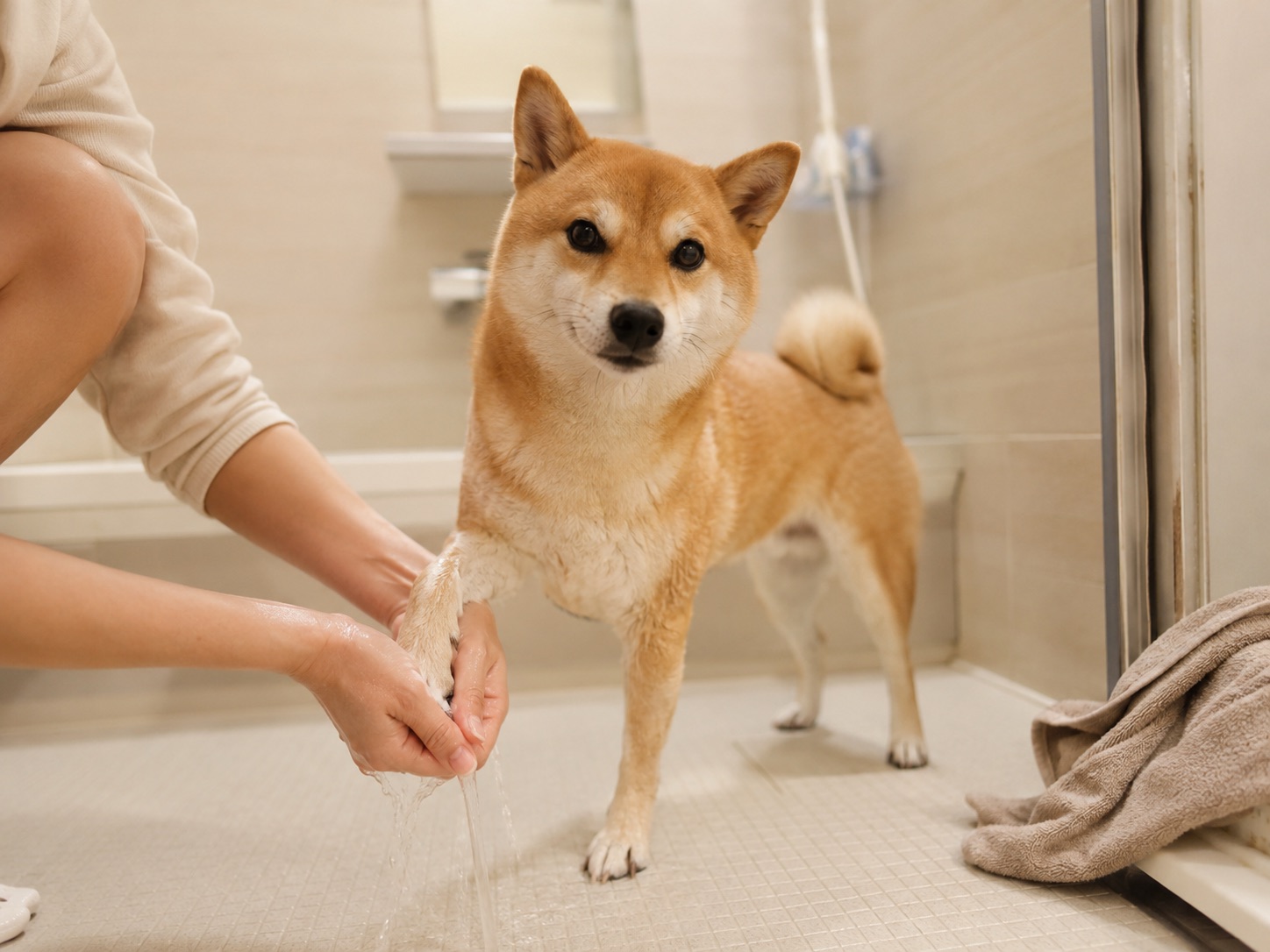
The baseline: wipe on dry days, wash on wet days and salted-road days. A clear-day sidewalk walk needs only a damp towel or wet wipe; rainy days, muddy paths, and winter roads treated with ice-melt salt call for a lukewarm rinse that reaches between the toes. Daily soap washing damages the skin barrier and becomes its own source of trouble.
Paw care by situation
| Situation | Care | Point |
|---|---|---|
| Clear day, sidewalk | Damp towel or wet wipe | Get between the toes |
| Rainy day, dirt path | Lukewarm water rinse | Water alone is enough, no soap |
| Salted winter roads | Water rinse, mandatory | Before they can lick it off |
| Beach, creek | Water rinse | Remove salt and sand |
| After any wash | Complete drying | Moisture between the toes is enemy #1 |
Why daily washing backfires
The skin of the pads and between the toes has its own protective barrier. Wash with soap daily, and especially skimp on drying, and that barrier breaks down into eczema and fungus territory. Among dogs who constantly lick their paws with reddened toe webs, over-washing is the culprit more often than you'd think.
I started out washing daily, borderline obsessively, until the skin between my dog Gureum's toes went pink and the vet set me straight (it means "cloud" in Korean): drying matters more than washing. Since then it's wipe-only on dry days, and on wash days, a low dryer setting all the way between the toes. The trouble disappeared.
A routine that makes it easy
Keep a towel and wipes at the front door and you're halfway there. Build the routine of wiping all four paws right there on arrival, and your dog learns it's the closing ceremony of the walk. For a dog who hates paw handling, start with one treat per paw. Within days they'll be offering the paw themselves.
And once or twice a month, check the pad fur and nails while you're at it. Long pad fur means slipping on hard floors, which strains the joints. Checking during the wipe is the version you'll never forget.
Before the paw wipe: did you log today's walk?
In that same minute at the door, one tap on kkeung's end-walk button saves today's distance and time as a paw stamp. Bundle paw care and walk logging into one ritual, and you'll never skip either.
Log today's walk →Adapting a dog who hates paw wiping
The real obstacle in paw care isn't technique; it's cooperation. A dog who yanks the paw away usually kept paws as a sensitive zone from puppyhood. Start the adaptation as a trade. Graze a toe, treat. Hold the paw one second, treat. Towel against it, treat. Raise the level over days and most dogs start offering the paw. Pinning them down to wipe just raises next time's difficulty.
Position matters too. Bending a standing dog's leg up backwards is joint-awkward, and they hate it. Sit them down or lay them on their side, and wipe with the leg at a natural angle.
Paws are also a health window
The hidden benefit of daily paw handling: it's where you find problems first. A thorn between the toes, early redness, a split nail, a cut on the pad. A hand that touches every day instantly knows what's different from yesterday. One minute of daily paw wiping is care and checkup in one. As closing rituals go, walks don't get a better one.
Paw care isn't fancy grooming; it's one minute a day. Wipe when dry, wash when wet, always dry. Keep that simple rhythm and you'll skip most paw trouble entirely. Start today, right after the walk.
Frequently asked questions
What about paw cleansers and foam cleaners?
Why does my dog keep licking their paws?
Their paw pads are cracked. What do I do?
They're scared of the dryer, so drying is hard.
They pull their paw away every time I wipe. How do we get used to it?
This article is general information and does not replace a veterinary diagnosis. Talk to your vet about your dog's condition.