Hiking with Your Dog:
From Prep to the Way Down
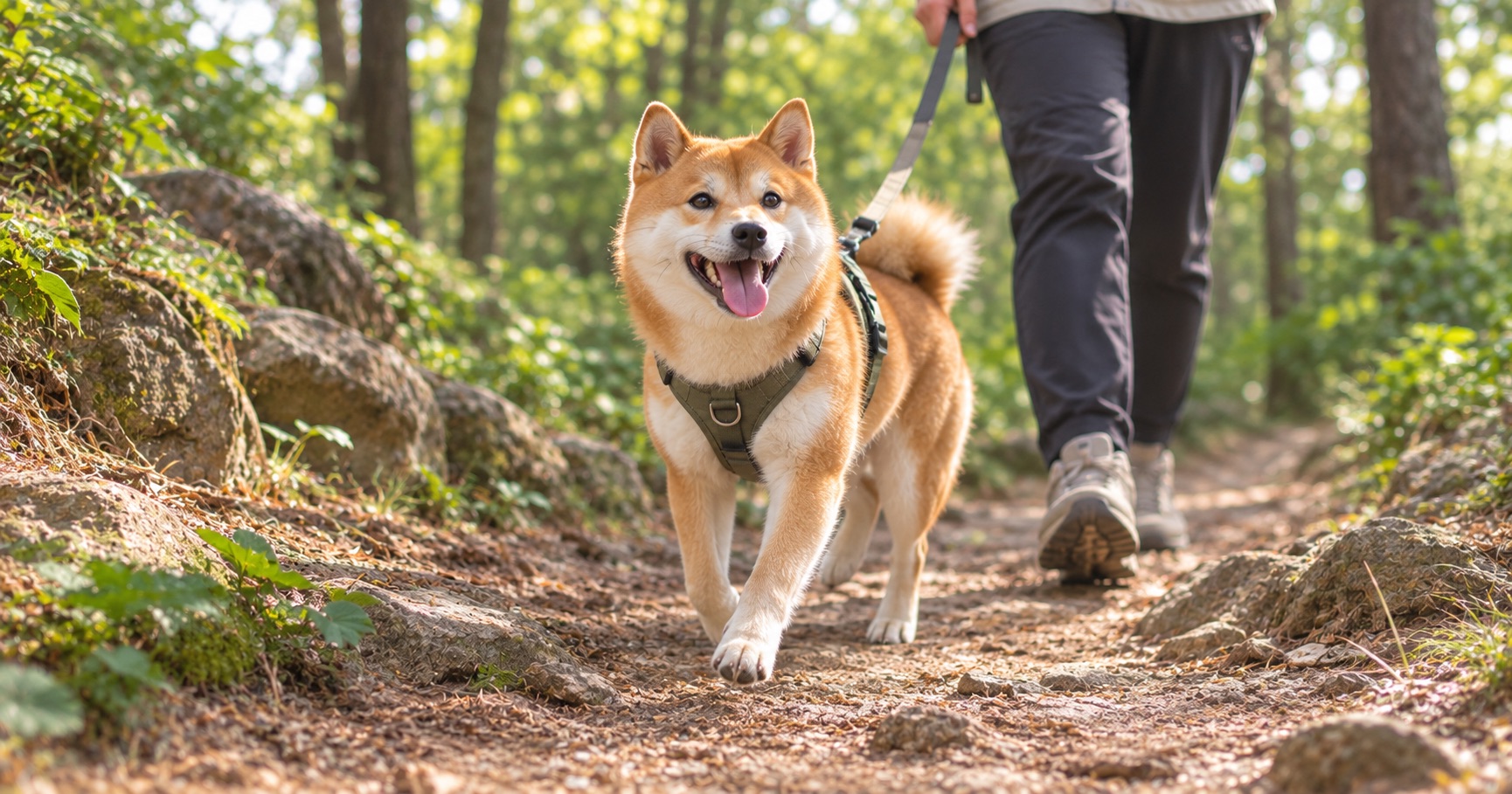
Saturday morning, you're packing the hiking bag, and there are those eyes watching you. You want to bring them. But dog hiking starts with a different question: are dogs even allowed? Surprisingly, many national park trails ban them. Here's the whole sequence, from checking access to the post-descent routine.
Confirming trail access comes first. Many national park trails ban dogs, while state parks, local trail networks, and neighborhood hills often allow them. On a dog-friendly trail: leash mandatory, water at twice the human amount, hiking only after they're full-grown, and a tick check after the descent. That's the basic set.
3 checks before you leave
| Check | What | How |
|---|---|---|
| Access allowed | Many national park trails ban dogs | Park website, ranger station |
| Your dog's condition | Growing puppies and seniors shouldn't push it | Can they breeze through an hour on flat ground? |
| Weather | No midday summer hikes | Air and ground temperature |
Puppies' joints are still growing, so slopes and rocky stretches strain them. It varies by breed, but roughly before their first birthday, flat ground beats mountains. Seniors do better on gentle loop trails than climbs, too.
Pack double what a walk needs
Water matters most. Pack by human standards and you'll run short: dogs cool themselves by panting instead of sweating, which burns through fluids. A collapsible bowl and generous water, treats and waste bags, plus one roll of bandage for the just-in-case, and the basics are covered.
The leash matters even more on a mountain. Bolting after a wildlife scent, hazards like snakes and drop-offs, and courtesy to other hikers. A standard leash held short beats a retractable here.
Rules on the trail
Match their pace on the climbs, rest often in the shade, and keep the water coming. Tongue hanging longer than usual and rough panting means rest, no exceptions. Don't let them drink from streams; the parasite risk isn't worth it. And yes, pack out the poop on the mountain too.
The descent is half the trip
There's work left at home. First, the tick check: run your hands behind the ears, in the armpits, between the toes, along the belly. Second, paw washing and drying. Third, watch their gait the next day. Limping or avoiding stairs signals they overdid it, so give them a few days off. Start with a low course of one to two hours round trip for the first hike. After I found a tick behind my dog Gureum's ear the day after her first hike (it means "cloud" in Korean), the post-descent check became a fixed step in our house.
The first hiking paw stamp sticks with you
Among the paw stamps in a kkeung walk log, the mountain ones stand out from the distance alone. With time and distance saved, you get a real gauge of your dog's stamina, and posting the summit photo the same day keeps that whole day in one place.
Fill in your paw stamps →Trail difficulty by season
The same mountain changes difficulty with the season. Spring and fall are prime time, but each season hides a catch. Spring is tick season's opening act, so preventives are a must. Summer trails feel hotter than the thermometer says thanks to humidity even in the shade, so early morning and short courses only. Fall is the best of all, but snakes are on the move preparing for winter, so just keep them out of the brush. Winter trails have icy stretches that are dangerous for humans and dogs alike; when it snows, trade the mountain for a flat-ground snow walk instead.
What hiking gives your dog
There's a reason to recommend dog hiking despite all the prep. A mountain carries a density of stimulation that city walks can't touch: the smell of soil and fallen leaves, traces of wildlife, terrain that works the whole body. You can see one hike deliver the satisfaction of several days of walks. The two days of blissed-out calm afterward are a bonus. Once a month, one low mountain, is plenty. Start with the hill behind your neighborhood.
Hiking with a dog is half preparation, half awe. Watch them on a ridgeline once, ears flapping as they read the wind, and you'll catch yourself searching for the next trail. Pack the safety rules and have a great climb.
Frequently asked questions
Can small dogs hike too?
How do we handle tick prevention on the mountain?
How do I know if my dog actually likes hiking?
What about carrying them in a hiking backpack all the way to the summit?
They're limping after the descent. Vet visit?
This article is general information and does not replace a veterinary diagnosis. Talk to your vet about your dog's condition.