How Many Walks a Day Does a Dog Need?
Times and Frequency by Age and Size
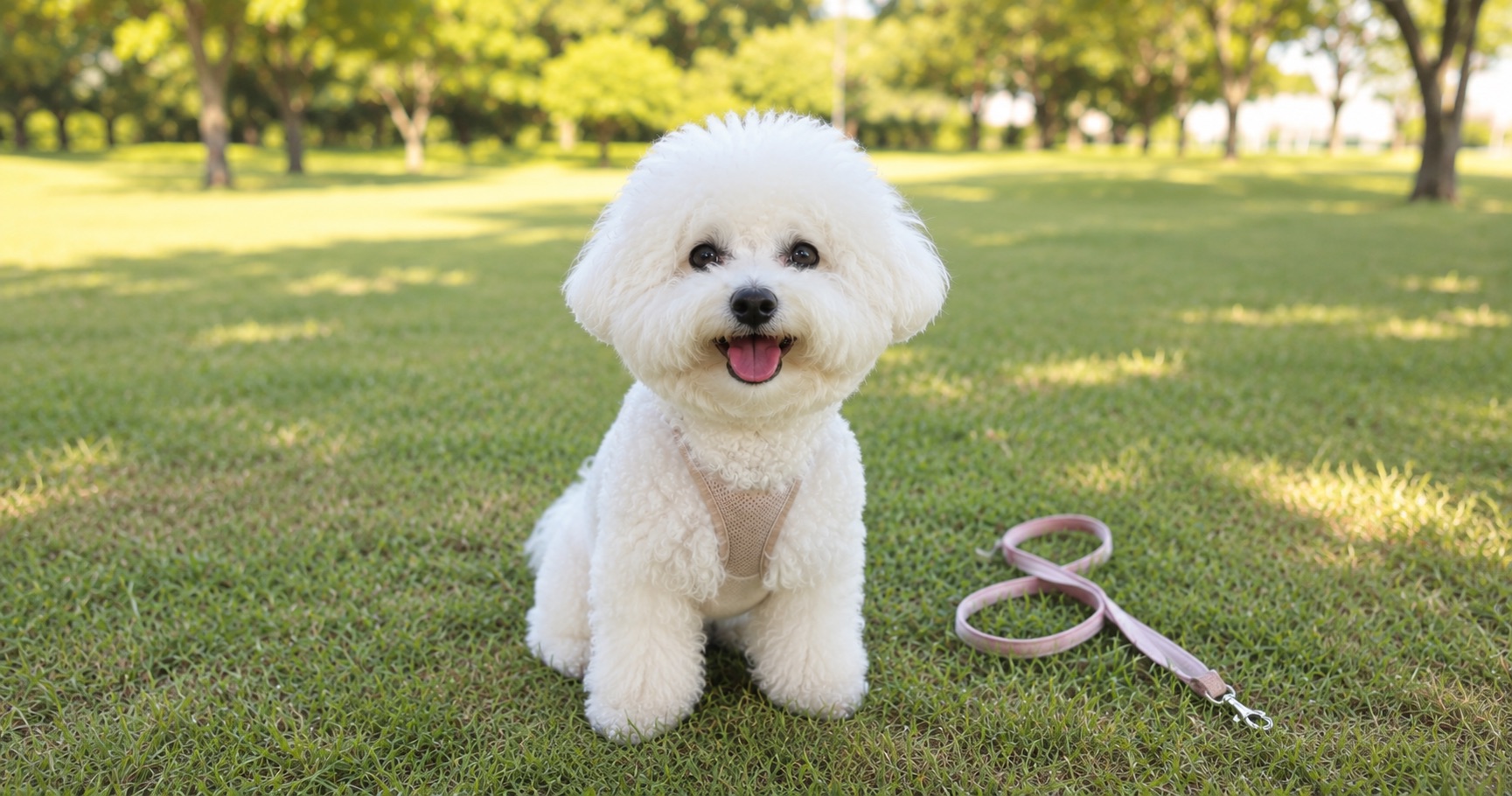
I live with a five-year-old Bichon named Gureum (it means "cloud" in Korean), and even after our walks I'd sometimes wonder: was that enough? Was it too short? So I finally sat down and organized it properly, from the age and size guidelines to the signs that a dog isn't walking enough.
Bottom line first: for a full-grown dog, 1 to 2 walks a day at 20 to 40 minutes each is the widely recommended range. Puppies go short and often, 5 to 15 minutes at a time; seniors go shorter, within what's comfortable. It varies by breed and health, so find your dog's row in the table below.
Recommended walks by age
Walk needs change a lot with age. Here's the general veterinary guidance in one table.
| Age | Walks per day | Minutes each | Point |
|---|---|---|---|
| Puppy (post-vaccination to 1 year) | 2 to 3 | 5 to 15 | Joints are still growing, so short and frequent. The famous formula: five minutes per month of age |
| Adult (1 to 7 years) | 1 to 2 | 20 to 40 | Active breeds go longer. Give generous sniffing time |
| Senior (7+ years) | 1 to 2 | 10 to 20 | Flat ground, adjusted to that day's condition |
* These are general guidelines. For dogs with health conditions or strong breed traits, adjust with your vet.
One more thing. If you're planning to increase walk time, don't jump; add about 10% per week. Taking a 20-minute dog straight to an hour strains their joints the next day. Same as human exercise.
What changes with size and breed?
Small dogs like Maltese, Poodles, and Bichons cover the same distance on much shorter legs, so 20 to 30 minutes is often plenty by the clock. Our Gureum comes home from 30 minutes and absolutely crashes. On the flip side, high-energy breeds like retrievers, border collies, and Shibas commonly need over an hour of total daily movement. Shortchange an active dog on walks and all that energy detonates indoors. There's a reason people say half of big-dog behavior problems are exercise problems.
And here's something I learned by living it: the quality of the walk matters more than the minutes. For a dog, a walk is exercise, but it's also their time to read the world's news. Letting them sniff to their heart's content relieves stress far better than power-walking. If they stand at a utility pole for three minutes, just wait. They're in the middle of reading.
Signs your dog isn't walking enough
- Weight gain. The most common and the quietest signal.
- Chewing furniture or shoes. Leftover energy with nowhere to go.
- More barking.
- Pacing at night instead of sleeping. Their body just isn't tired.
- Clinging to you excessively. Boredom shows up this way too.
Two or three of these together can signal not enough walking. Try increasing frequency or time for just one week and see what changes. Keeping a record while you compare makes the change far easier to spot.
We once missed three straight days during a stretch of rain, and I found a corner of the couch cushion chewed open. I was about to scold her, then suddenly felt sorry instead. It was Gureum's version of a protest.
Do you know how many days your dog walked this month?
Log walks in kkeung and distance and time stack up by date, with a paw stamp on every walked day. Put a sparse week and a packed week side by side and you'll see instantly how your household compares to the table in this article. Adjusting comes after seeing.
Start your walk log in kkeung →Seasonal cautions
Summer
Midday summer asphalt is genuinely dangerous. Press the back of your hand to the ground for 5 seconds. If you can't take the heat, neither can their paw pads. In summer, the answer is simply before sunrise or after sunset. I switch us to 9 p.m. walks myself. Bring water, and head for shade the moment the panting gets heavy.
Winter
Small dogs and short-coated dogs: coat on, outing short. The easy thing to miss is ice-melt salt. The de-icer spread after snow quietly irritates paw pads, so wash their feet after winter walks.
Rainy days
No need to force it. Nose work, tug, hidden treats: indoor games burn plenty of energy. Skipping a day or two of walks is not a crisis. Drop the guilt.
Frequently asked questions
Isn't a yard or indoor play enough instead of walks?
My dog refuses walks and plants themselves. What do I do?
One long walk vs. two shorter ones: which is better?
Does an older dog still need walks?
I added walk time and they're MORE wound up. Why?
This article is general information and does not replace a veterinary diagnosis. Talk to your vet about your dog's condition.