For a Fearful Dog,
the Walk Starts at the Front Door
You assume every dog on earth is crazy about walks, until you live with one who freezes solid the moment the front door opens. For that dog, outside isn't a playground. It's a horror movie. This is common with adult-adopted and rescue dogs especially, and here's the thing: it's okay. The road exists. Only the speed is different.
The principle: expand exactly one notch at a time from wherever your dog is comfortable. Eating treats with the front door open, then the hallway, then the front of the building, then one street. Stay at each stage for as many days as comfort takes. Dragging a scared dog outside isn't adaptation; it's fear reinforcement. The timeline runs weeks to months, and your dog sets it.
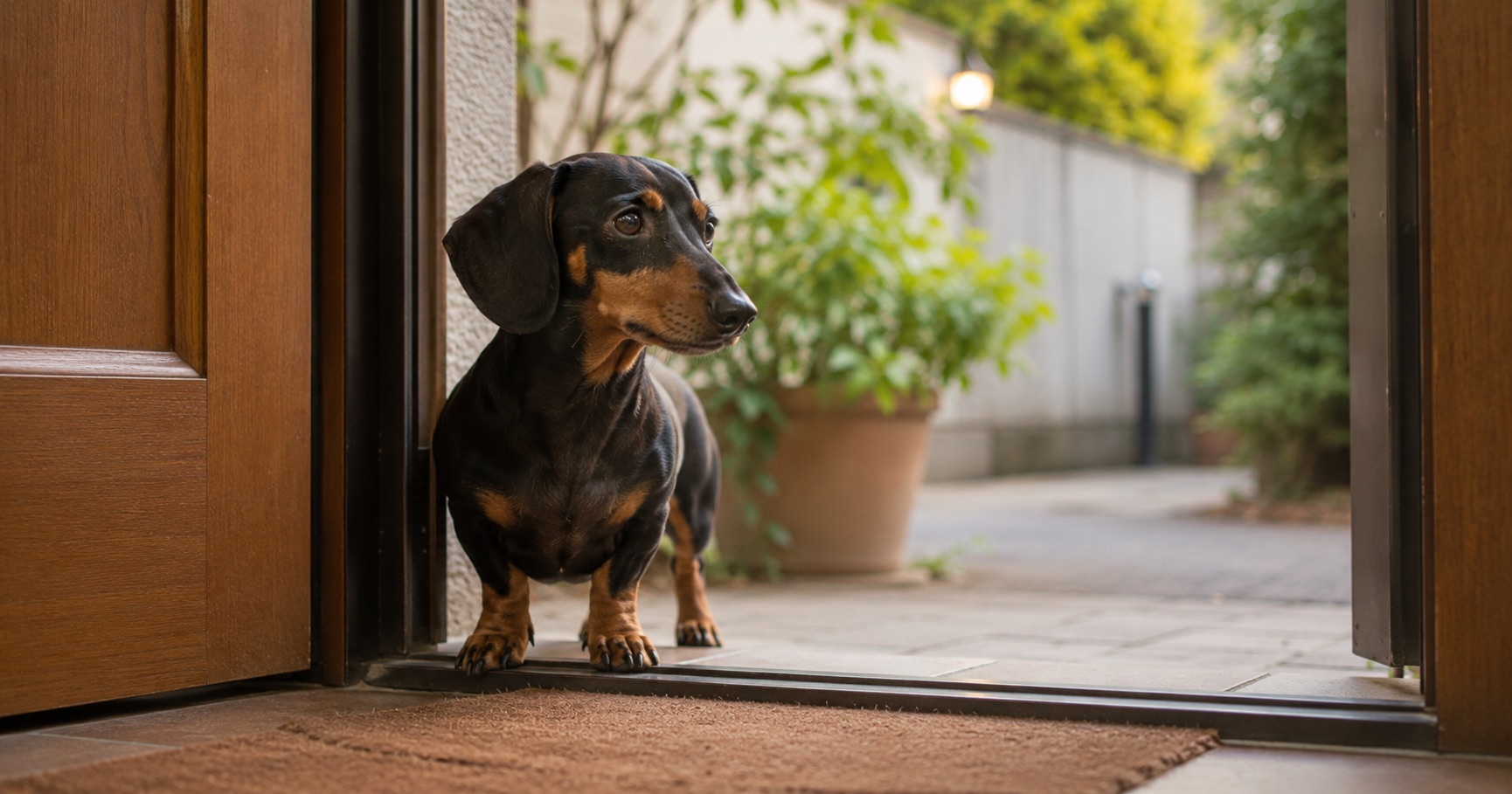
Why the fear?
Too little outside experience during the socialization window, a past scare, or a naturally cautious temperament. The causes vary, but the common thread is one thing: to this dog, outside is a place that can't be predicted. So the goal of training isn't "make them walk." It's "re-teach them that outside is safe."
The stage-by-stage roadmap
| Stage | Goal | Sign to move on |
|---|---|---|
| 1. Entryway | Eating treats with the door open | Door sounds don't startle them |
| 2. Hallway, stairs | A few steps past the door | Relaxed enough to sniff |
| 3. Front of the building | Standing for 1 to 2 minutes | Body loosens, tail comes down |
| 4. One lap of the block | A 5-minute walk | Moments where they lead the way |
| 5. Expansion | Longer routes and times | At your dog's pace |
The tools at every stage are treats and low-voiced praise. And retreating is a strategy too. If a motorcycle's roar freezes them, drop back one stage and rebuild. It's a staircase, not a slide: what you step down, you climb back quickly.
What not to do
Dragging, parking them in front of what scares them, and, surprisingly, over-comforting. When your dog trembles and you swoop in with dramatic soothing, you're confirming that yes, this situation deserves fear. A calm, unbothered owner is the best tranquilizer there is. Handing over a treat like it's nothing and strolling on: that's the technique.
It takes time, and that's fine
Don't panic that the neighbor's dog is sprinting around while yours is still at the entryway. The comparison isn't someone else's dog; it's your own dog last month. If they hid at door sounds last month and made it to the hallway today, that's the win.
Compare with your dog from a month ago
Day to day, adaptation training feels like standing still, and it wears you down. Post short videos to kkeung: the treat-eating-at-the-door scene, the made-it-to-the-building-entrance scene. Every post keeps its date. Pull up the video from a month ago, compare it with today, and you'll see how far you've come.
Save a photo of today →Managing your own mind is part of the training
In the adaptation period with a fearful dog, the owner burns out first. It feels like weeks stuck at the entryway, and the joyfully sprinting dogs on social media crush you a little. But tension travels down the leash. Open the door thinking "what if today fails too" and your dog reads the weather. So the technique is setting the goal absurdly low. Today's goal: eat one treat at the door. That's achievable every single day, and the ease of an owner who keeps succeeding transmits straight to the dog.
How to celebrate the small wins
This training has highlight moments nobody else would recognize. The first day they didn't hide at the door sound. The day the tail came up in the hallway. The day they took one step out on their own. Don't let those pass; record them. A photo, a one-line note. On the exhausted days, flipping through those records shows you plainly that you're moving forward. And someday, when they're walking like it's nothing, that record will have become the most tear-jerking growth album in the world. Going slow is fine. Going together is what counts. The day my dog Gureum (it means "cloud" in Korean) walked out to the hallway past our apartment door on her own four feet, I gave her one treat right there and we went straight back inside. That day, that was enough.
To everyone living with a fearful dog, here's what I most want to say: they're not slow, they're careful. And the joy of the moment a careful dog opens their heart is a kind that a dog who walked easily from day one can never give you. Rooting for you.
Frequently asked questions
What about carrying them out and setting them down?
It feels like months of no progress. Time for a professional?
They're lively at home and only freeze outside. Can I give up on walks?
They freeze so hard even treats don't work. Now what?
Should a fearful dog skip greetings with other dogs?
This article is general information and does not replace a veterinary diagnosis. Talk to your vet about your dog's condition.