A Puppy's First Walk:
When and How to Start
The biggest question in a house with a new family member: when can we go on walks? Straight answer: paws-on-the-ground walks come after vaccinations are done, but seeing the world should start before that. Keeping those two separate is the heart of puppy walking.
Walking on their own feet starts 1 to 2 weeks after the final core vaccination as a general rule (usually around 4 months old; guidance varies by clinic, so confirm). But the socialization golden window comes earlier, at 3 to 14 weeks, so before shots are done, carry them out to see the world. The first walk: a quiet spot, 10 to 15 minutes, and that's plenty.
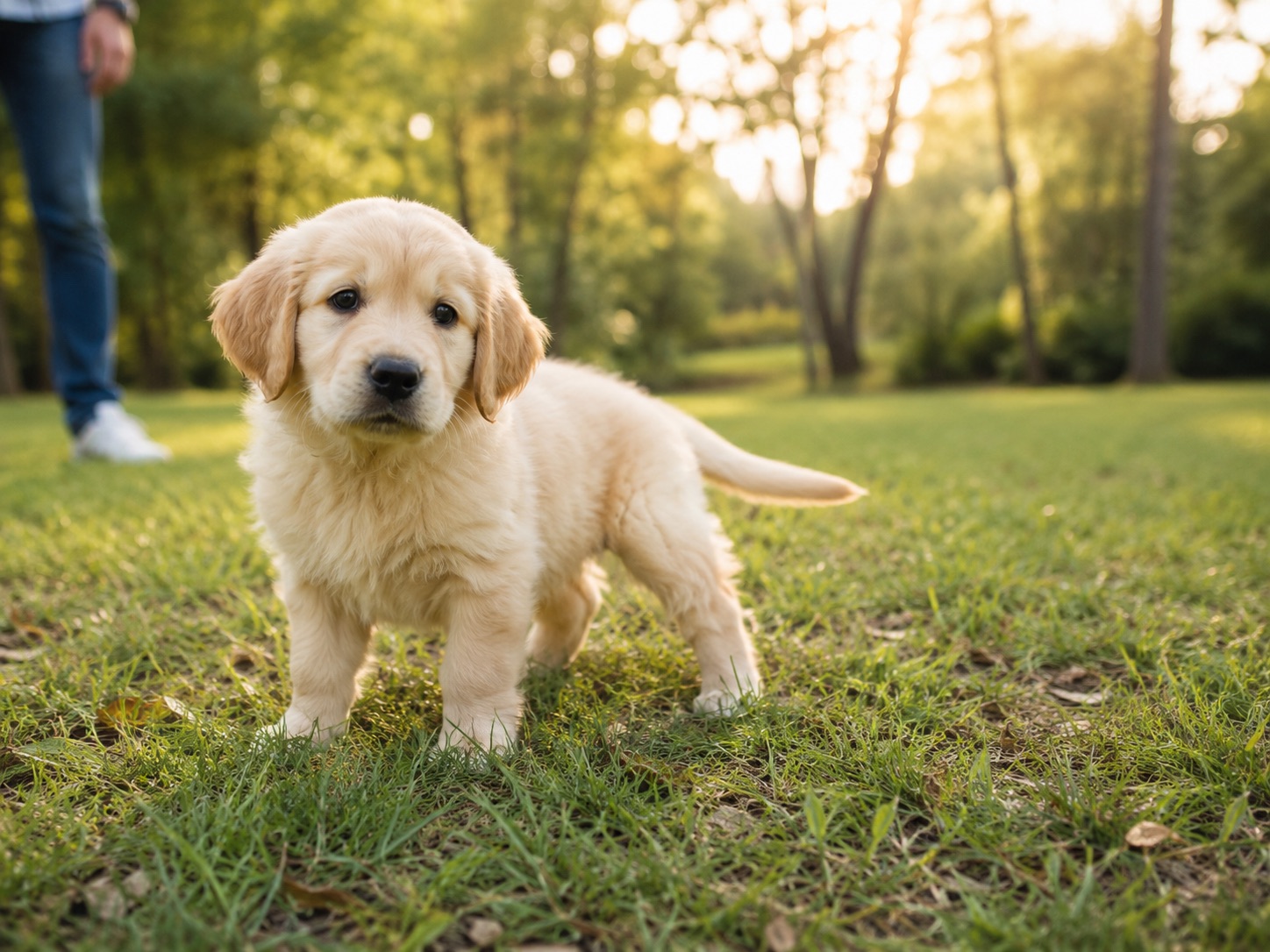
Before shots: the era of carried walks
Setting an unvaccinated puppy on the ground risks infection through other animals' waste. So walking waits, correctly. But keeping them home for those months blows the socialization window, and a puppy who never met the world's sounds and sights in that window tends to grow up fearful.
The answer is the carried walk. In your arms or a sling, tour the neighborhood. Car sounds, motorcycles, kids' laughter, the sight of other dogs. Every bit of world-studying happens without a paw touching the ground. Ten minutes a day covers it.
The first walk, in this order
| Step | What | Point |
|---|---|---|
| 1. Gear adaptation at home | Wearing the harness during play | The gear-equals-good-things formula |
| 2. Outside the door | Just the doorstep and hallway | Adjusting to unfamiliar smells |
| 3. The first walk | A quiet hour, a quiet route, 10 to 15 minutes | No distance ambitions |
| 4. Gradual expansion | Slowly longer routes and times | See the five-minutes-per-month rule |
A puppy who freezes in place instead of walking on the first outing is completely normal. The world is brand new. Don't pull; crouch down and wait. The moment they take one step on their own: treat and praise. That one step is everything. Ten meters today is a triumph. My dog Gureum's first walk was 10 minutes by the apartment flower bed, and 8 of those minutes she sat in place watching people go by (it means "cloud" in Korean).
Rules for puppy walks
Growing joints mean no overdoing it. Use the five-minutes-per-month-of-age rule, go short and often, and skip stair climbing. And remember: every experience at this age becomes a lifelong impression. Choose gentle dogs for the first meetings, skip routes past noisy construction sites. Think of it as designing good first impressions.
The first paw stamp becomes a lifelong record
A puppy's first walk happens exactly once. Save it to kkeung and the date of that first paw stamp and the day's photo stay on their account. Scroll back up the feed a year later and you'll see at a glance how big those tiny paws got.
Save a photo of today →Homework to finish at home before the first walk
The first walk's success rate is proportional to the prep done at home. Three assignments: attach good memories to the harness and leash (wear it, play, eat treats), eye contact when their name is called, and sound adaptation. Open a window to preview the outside noise, and pair the vacuum and doorbell with treats, and the sound-bombardment out there startles them far less. A puppy with this homework done and one without have completely different first walks.
The lifelong asset walks build: socialization
The real purpose of puppy walks isn't exercise; it's building their encyclopedia of the world. What they see, hear, and meet in this window becomes their lifelong worldview. So vary the routes: a quiet alley, a moderately busy storefront, near a playground (at a distance), umbrellas on a rainy day. One new scene a day is the right mindset. Every new experience happens while they're relaxed, with treats. Socialization is one good scene that sticks, not one overloaded day.
Puppy walk season blurs past. And that wobbly, clueless era never comes back. Take lots of photos, don't sweat the mistakes, and fill the weeks with good experiences. The few weeks you're stacking now build a lifetime of walks.
Frequently asked questions
Shots aren't done. Is the yard or rooftop okay?
On the first walk they just sat there doing nothing.
When can they start greeting other dogs?
I think we missed the socialization window. Is it too late?
They barked at another dog on the first walk. Is that a problem?
This article is general information and does not replace a veterinary diagnosis. Talk to your vet about your dog's condition.