Harness vs. Collar:
Which Fits Your Dog?
Harness or collar? Everyone ends up hovering over this question in the pet store at some point. Bottom line first: for most small dogs the harness is right, and the cases where a collar wins are specific. Here are the criteria.
Small dogs and pullers get a harness by default. A collar concentrates force on the neck, which can stress a small dog's trachea (windpipe). Collars earn their place for well-trained medium and large dogs on simple walks, and as the carrier of the ID tag. Using both together is a great combination too.
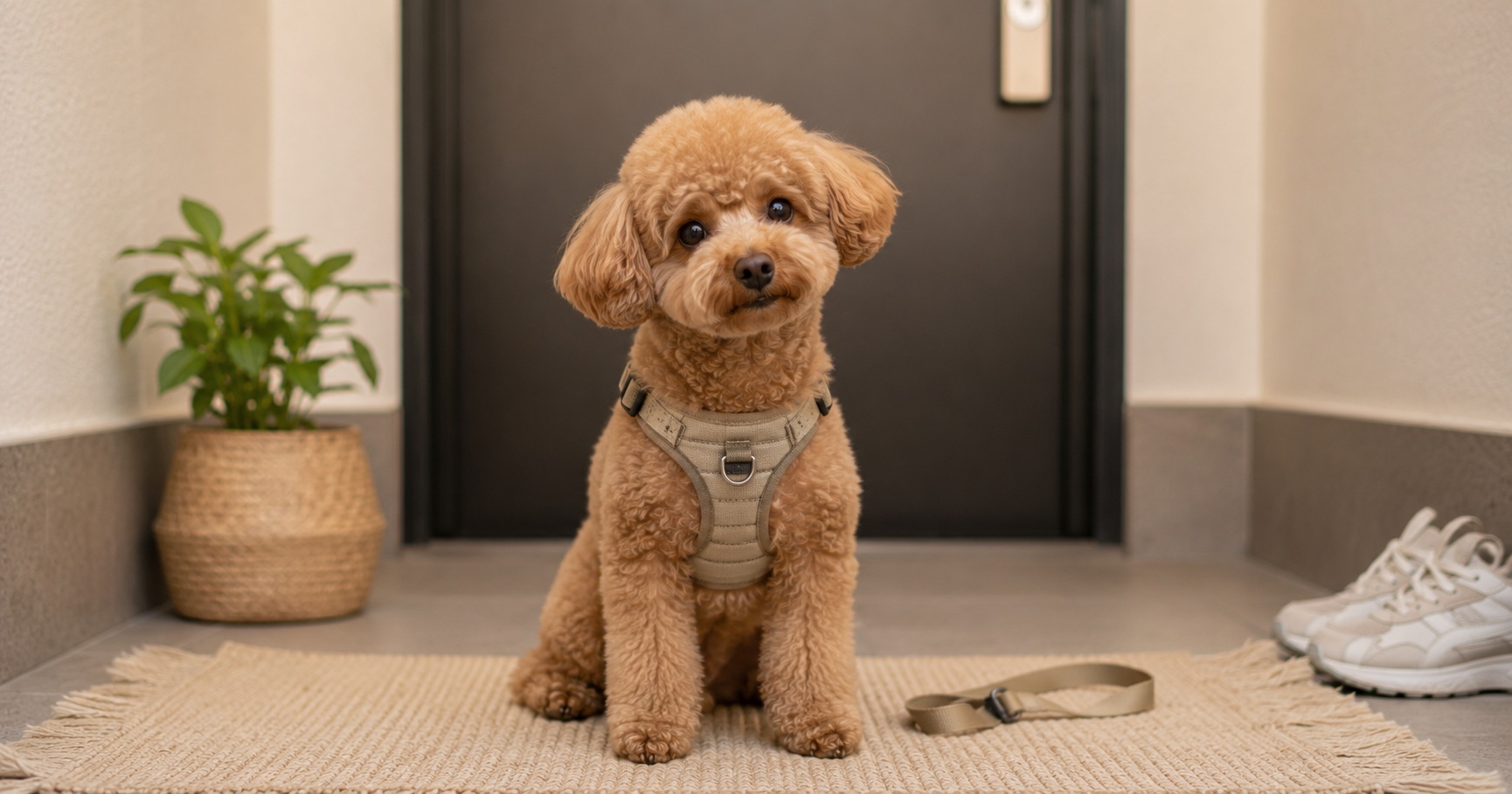
Harness vs. collar: the comparison
| Item | Harness | Collar |
|---|---|---|
| Where the force goes | Spread over chest and torso | Concentrated on the neck |
| Tracheal strain | Low | High when pulling |
| Escape risk | Low when sized right | Can slip off in a back-up |
| Ease of use | Fiddly at first | Simple |
| ID tag | Awkward to attach | Great for all-day wear |
Why small dogs get the harness
Maltese, Pomeranians, Yorkies: many small breeds have fragile tracheas. Repeated pulling against a collar can accumulate tracheal irritation. If your dog already makes a goose-honk cough, the harness isn't optional anymore.
My dog Gureum (it means "cloud" in Korean) is team harness too. Getting it on used to be a wrestling match, but now she recognizes that harness-out means walk and pushes her own head through. Adaptation comes faster than you'd think.
When the collar earns its place
For a well-trained medium or large dog who doesn't pull, the collar's simplicity is a genuine advantage. And even for harness dogs, I recommend a thin collar worn at all times just for the ID tag. The harness comes off at home, and if a door opens and an escape happens, that tag is the only clue that brings your dog back.
3 checks when choosing a harness
First, size: two fingers of slack is the standard. Loose ones slip off in a back-up. Second, armpit chafing: check the inner armpits after a few walks. Third, a Y-shaped front panel: look for a structure that puts the load on the breastbone, not the throat.
The day you switch gear, the walk itself tells you
Change the gear and the walking changes. Log walks in kkeung and distance and time stay by date, so you can check whether walk times grew or shrank after the harness switch. Whether the gear fits, your dog's stride answers.
Start your walk log →Harness types: what's the difference?
Not all harnesses are the same harness. Three main branches. Vest-style is soft-wearing and a safe everyday pick for small dogs. Y-strap style leaves the shoulders free, great for high-activity dogs. And front-clip style (leash ring on the chest) turns the body sideways when they pull, which makes it especially useful mid-correction for leash pulling. Pick the branch that matches your goal and the options narrow fast.
Mind the resize timing too. Puppies outgrow sizes in a couple of months, and even adults may need a size up if the harness goes over a winter coat.
More important than the gear: the putting-on ritual
Whatever the gear, if fastening it is a struggle, the walk starts with stress. Lay the harness on the floor with a treat on it; head goes through voluntarily, treat; buckle click, treat. A few days of stacking good memories and you get a dog who comes running at the sight of the harness. That's exactly our house. What used to be a wrestling match is now the walk's opening credits. In the end, good gear is gear your dog is comfortable in.
Harness or collar comes down to your dog's body and habits. On today's walk, just once, listen for whether a pull produces a little choking sound at the throat. If you hear it, the answer's already in.
Frequently asked questions
I've heard dogs pull MORE in a harness.
Can they wear the harness all day?
When do we start harness adaptation for a puppy?
They cough on the collar. Will switching to a harness fix it right away?
How do I measure for a harness?
This article is general information and does not replace a veterinary diagnosis. Talk to your vet about your dog's condition.