Retractable Leashes:
Are They Okay to Use?
No piece of walk gear splits opinion like the retractable leash. Nothing beats it in a wide-open park, and yet the accident stories keep coming. The verdict: it's less a problem of the product and more a problem of the place. Here's the line between where to use it and where not to.
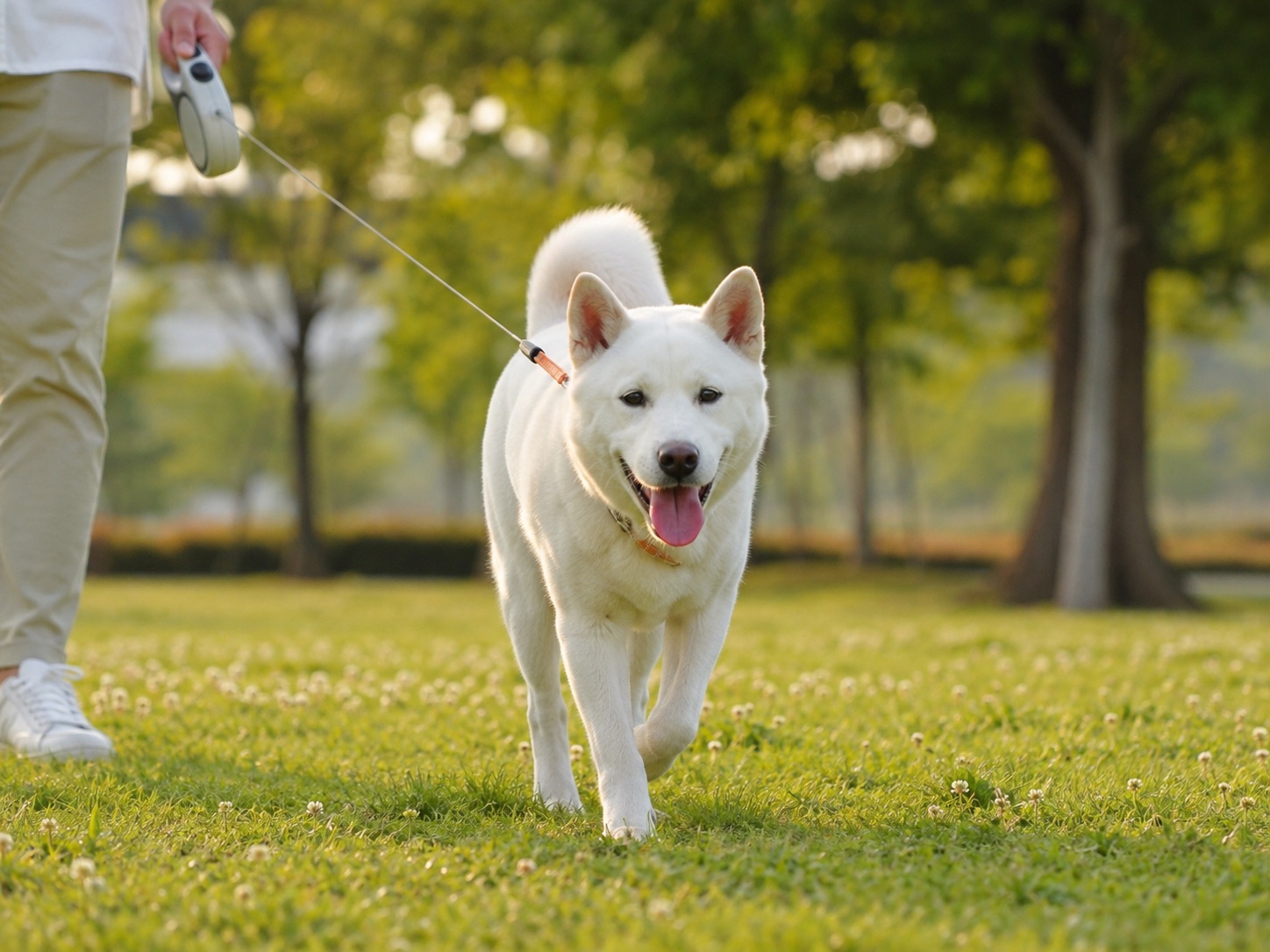
Retractables are useful in open parks and quiet trails, and dangerous on sidewalks and in crowds. Most accidents happen with the line paid out long. Next to roads and on narrow paths, the rule is lock it short or switch to a standard leash. And remember that leash laws commonly cap length around 6 feet in shared spaces.
Retractable pros and cons
| Category | What |
|---|---|
| Pros | Free exploration in open areas, less tangling, easy distance control |
| Cons | Hard to control in an instant, burn and cut risk from thin cord, lock-mistake accidents |
| Accident patterns | Darting into the road, sudden dog encounters, cord wrapping a person's legs, dropped handle chasing the dog |
How the accidents happen
The common scene in retractable accidents: the line is out 15 feet or so, and something suddenly appears. A cat, a motorcycle, another dog rounding the corner. When your dog launches, there's no way to intervene in something happening 15 feet away. The button is already too late, and grabbing the thin cord slices your hand.
The other classic: dropping the handle. The heavy plastic body hits the ground with a bang, your dog bolts from the noise, and the handle clatters along behind them in pursuit. From the dog's perspective they're being chased by a monster, and it becomes a panic sprint. This is why the wrist strap is non-negotiable.
The rules for safe use
First, divide by place: pay out line in open parks and quiet waterside paths, and lock to 6 feet or less on sidewalks, in alleys, and in crowds. Think of locked as the default and extended as the exception. Second, choose the tape type (wide ribbon) over the string-thin cord type: fewer cut injuries. Third, wear the wrist strap. Fourth, pair it with a harness for small dogs: the jolt of a full-run stop landing on the neck is dangerous.
When a standard leash wins
Dogs mid-correction for pulling, dogs who lunge at people or other dogs, and fearful dogs at risk of a panic bolt belong on a standard leash. A retractable adds freedom to a trained dog; it doesn't substitute for training. Our house runs both: standard leash on the daily route, retractable only for weekend open parks. My dog Gureum's retractable comes along only on park days, and on neighborhood sidewalks she's on the 6-foot leash. Just switching leashes made the walks noticeably calmer (it means "cloud" in Korean).
A shorter leash brings you closer together
Swap the retractable for a standard leash and the walk changes. In kkeung logs, many households see the distance stay put while the time grows: less being dragged forward, more sniffing side by side. After a gear change, log the next few days and see.
Start your walk log →Maintenance and when to retire it
Remember that a retractable is a consumable. The internal spring and line wear out with use. Three inspection points: does the line retract without stuttering, does the lock engage decisively, is the line surface free of fraying and nicks. Above all, if the lock has slipped even once, that unit retires today. It's a product you use on trust in the lock; an untrustworthy lock erases its reason to exist. For a years-old unit, also re-check that your dog's current weight still fits the rating.
Whatever the leash, the key is the hand holding it
The retractable-versus-standard debate ends in an anticlimax: any leash is safe in the hands of an owner who reads the situation first, and dangerous in a distracted one. What sets the leash's length isn't the button; it's judgment. What might come out of that alley ahead, how close is the road on the right. Once that judgment becomes habit, the gear choice turns secondary. On today's walk, run the question just once: in this exact stretch, how many feet should my dog's leash be? The moment that question becomes reflex, you're a safe owner with any leash in your hand.
The leash is the one physical connection between you and your dog. Whichever you choose, keep in mind who's at the end of it, and today's walk will be a safe one. Match the leash to the moment, and enjoy the outing.
Frequently asked questions
Are retractable leashes a legal problem?
How do I untangle the cord from their legs?
Can large dogs use retractable leashes?
Retractable or standard: which should a first-time owner buy?
If I only use it locked, is it the same as a standard leash?
This article is general information and does not replace a veterinary diagnosis. Talk to your vet about your dog's condition.