Leash-Pulling Dog?
The 4-Step Fix
You know the days when it's less a walk and more sled-hauling. Your arm's about to pop, your dog's gagging away. Leash pulling isn't won with strength; it's solved with a principle. And the principle is exactly one line: teach them that pulling gets them nowhere.
The core principle: zero forward motion while pulling. Run it in 4 steps. Step 1: the moment they pull, stop on the spot. Step 2: the leash slackens, you move. Step 3: severe pulling, reverse direction. Step 4: treat rewards for walking at your side. Hold the consistency and things change within weeks.
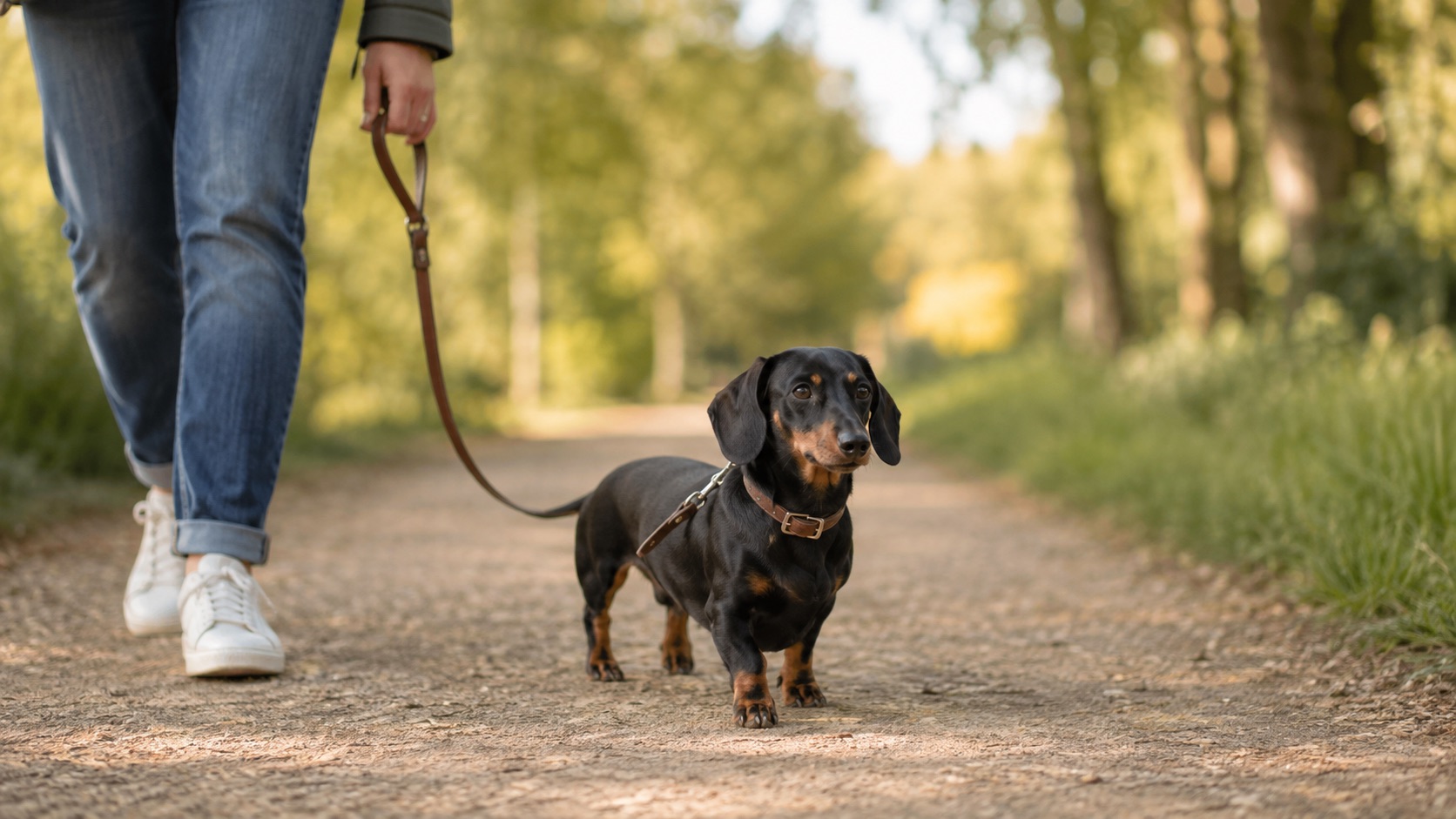
Why do dogs pull?
Simple: pulling works. Every time they pulled and you got towed along, pulling got filed as a winning strategy. So the fix runs in reverse: stack up the experiences where pulling stops working.
The 4 steps
| Step | Method | Point |
|---|---|---|
| 1. Stop | The instant the leash goes taut, freeze in place | No words. Just stop |
| 2. The go signal | Leash slackens, walking resumes | The slack = forward formula |
| 3. Direction change | Heavy pulling, turn and walk the other way | The signal that you pick the destination |
| 4. Reward | Treats and praise for walking beside you | Make the good position a good memory |
The first few days aren't a walk; they're a stopping contest. A hundred meters takes 20 minutes. That's normal. When I ran this with my dog Gureum (it means "cloud" in Korean), there were days we couldn't finish one lap of the block. And then, strangely, about a week in, the slack-leash stretches got visibly longer.
It only works if everyone plays
If even one family member lets themselves get towed, the training resets to zero. Different rules per person just confuses the dog. Make sure everyone who walks them runs the same principle.
And go harness over collar: the training produces constant pulling moments, and that force repeatedly landing on the neck can strain the trachea.
Check the correction's progress in numbers
If the same route is taking longer, the pulling is shrinking: less being towed forward, more walking beside you and sniffing. kkeung keeps walk time and distance by date, so the training results show up as-is.
Start your walk log →Lower the excitement before the walk starts
Half of leash pulling begins at the front door. Take out a dog who's bouncing off the walls at the sight of the leash, and of course they're a rocket outside. So build a departure ritual: leash on, then wait until they sit and settle before the door opens. Once they learn that excitement delays departure, the tension at the door drops, and the whole walk's tension drops with it.
The first five minutes have a trick too. Don't beeline for the fun direction (the park). Do a slow lap around the front of the house, sniffing. Let the opening excitement drain, then enter the main route, and the pulling is noticeably lighter.
Catch the not-pulling moments, diligently
The easy thing to miss in correction training: rewarding the moments they're doing it right. Run only the stop-when-pulling half, and the walk becomes a string of penalties. Every time you catch a few seconds of loose leash beside you, mark it with a treat and your voice. The moment the math clicks that walking beside you is the best deal in the world, they come to your side on their own. The finish line of training isn't suppression. It's choice.
Leash correction is a weeks-long project that pays off across the next decade-plus of walks. The difference between shoulder-wrenching walks and side-by-side ones, you only understand once you've had both. Start the stopping today.
Frequently asked questions
I stop, but they keep gagging and pulling anyway.
How long does the training take?
Can I use a choke chain or similar correction tools?
My dog is bursting with energy. Isn't walking practice cruel for them?
I feel embarrassed standing frozen when people pass. What do I do?
This article is general information and does not replace a veterinary diagnosis. Talk to your vet about your dog's condition.