Dog Barks at Other Dogs?
The Answer Is in the Distance
The moment a dog appears in the distance, your dog's body goes stiff. The next moment, the barking explodes. Walks turn into a game of dodging. The answer to this problem isn't in what you do after the barking. It's in what happens before, which is to say: distance.
The key is to find the threshold distance (the distance right before barking erupts) and build good memories outside of it. Repeat the formula "another dog appears, a treat appears" outside the threshold, then close the gap little by little. Scolding after the bark doesn't work; it only feeds the anxiety.
First, why the barking?
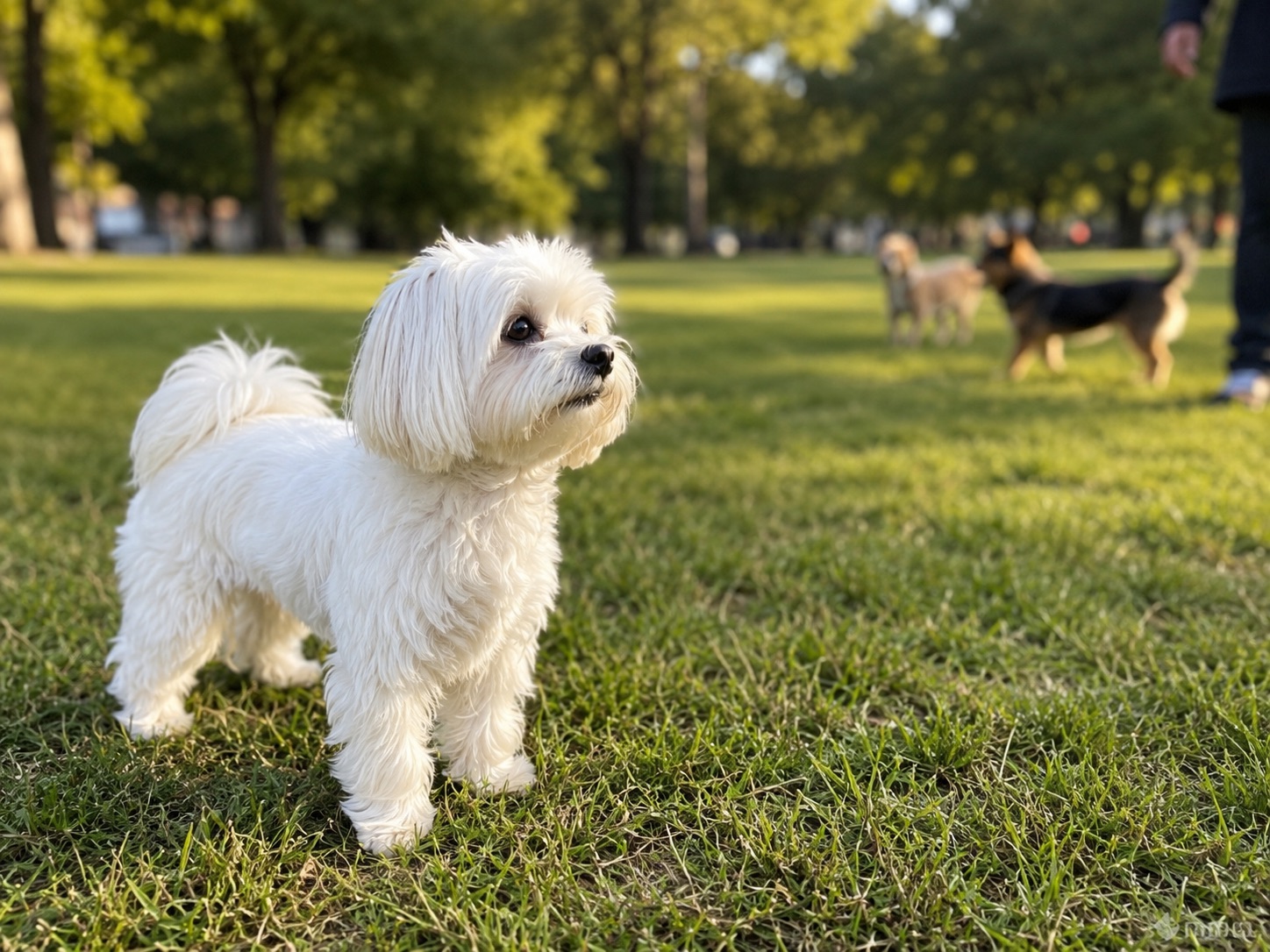
Barking at other dogs usually means one of two things. Fear (go away), or excitement they can't act on (I want to play). Tail and body shifted backward usually means the former; leaning forward with whining mixed in usually means the latter. The training is similar either way, but knowing the reason changes how you feel about it. A lot of dogs labeled aggressive are actually just scared.
Finding the threshold and the desensitization sequence
| Step | Method | Point |
|---|---|---|
| 1. Map the distance | Observe at what range your dog starts reacting | The body stiffening is the signal |
| 2. Secure the distance | Expose them to other dogs outside the threshold | Staying below the bark point is everything |
| 3. Build good memories | Dog appears, treats flow; dog leaves, treats stop | Create the "dog = treats" formula |
| 4. Close the gap | Approach a little closer every few days | If it fails, step back one level |
This training's biggest enemy is impatience. Success at 20 meters yesterday doesn't mean 10 meters today; that's how it collapses. Think in weeks, not days. And if an unexpected dog appears right in front of you mid-training, just turn around and avoid it that day. Avoiding isn't losing. It's protecting the training. My dog Gureum (it means "cloud" in Korean) started with a threshold of about 30 meters, and after two months of eating treats outside that line, it shrank to 10.
What not to do
Scolding after the bark, yanking the leash, dragging them over to another dog for a forced greeting. All three backfire. The last one especially tends to confirm the fear rather than cure it. Shoving a dog at what scares them is like treating someone's fear of heights by pushing them off a bungee platform.
If months pass with no improvement, or the barking escalates into lunging and snapping, that's when to consult a professional trainer. There's nothing embarrassing about it.
Record how many meters were okay today, on video
Desensitization moves slowly, so progress is hard to feel. Post a short video to kkeung of your dog calmly taking treats outside the threshold, and each post keeps its date. Compare the distance in last month's video with today's, and you'll see it: you've come a long way.
Save a video of your dog →Adjust difficulty with route and time of day
During training, environment design is half the battle. A park at the evening rush hour of dog walks is an advanced course for the late stages of training. Early on, pick times when dogs are scarce (early morning, late night) and routes with open sightlines. You can only manage distance if you can see an approaching dog from far away. Alleys and corners where dogs appear out of nowhere are the hardest terrain there is.
Learn the escape move for unavoidable encounters too: calmly change direction and pass with a parked car or a planter between you. For many dogs, just breaking the line of sight cuts the reaction dramatically.
Don't let the barking achieve its goal
A fear-barker's goal is to make the other dog back off. And when they bark, the other dog does walk away (from your dog's perspective: driven off). The experience of "barking works" keeps stacking up. That's why creating distance before the bark erupts matters so much. When being safe before barking becomes the repeated experience, your dog gradually loses the need to bark at all. The goal of training isn't to make them hold the bark in. It's to remove the reason to bark.
Walking a barker makes your shoulders tense up, I know. But remember: that barking doesn't mean a bad dog. It means a scared or unpracticed one. Stack up the training that protects their distance, and things will change. Go at your dog's pace.
Frequently asked questions
Is it okay to pick my dog up when they bark?
My dog won't even look at the treat I offer.
Will frequent trips to a park full of dogs get them used to it?
We only walk at dawn now, when no one's out. Is that okay?
Why does the barking come back on some days after improving?
This article is general information and does not replace a veterinary diagnosis. Talk to your vet about your dog's condition.