When a Dog Fight Breaks Out on a Walk,
Do This
There's knowledge you'd rather not think about that protects your dog in the decisive moment. Dog fight response is exactly that. The real thing unfolds in seconds, and what you know in those seconds decides the outcome. Read this calmly, now, while nothing is happening.
Rule number one: never put bare hands between two dogs. A dog in fight mode will bite its own person. Break their focus with sound, water, or a large object; if that fails, each owner lifts their dog's hind legs and backs away (the wheelbarrow method). Afterward, check for wounds even if everything looks fine on the surface, and any bite mark means a vet visit.
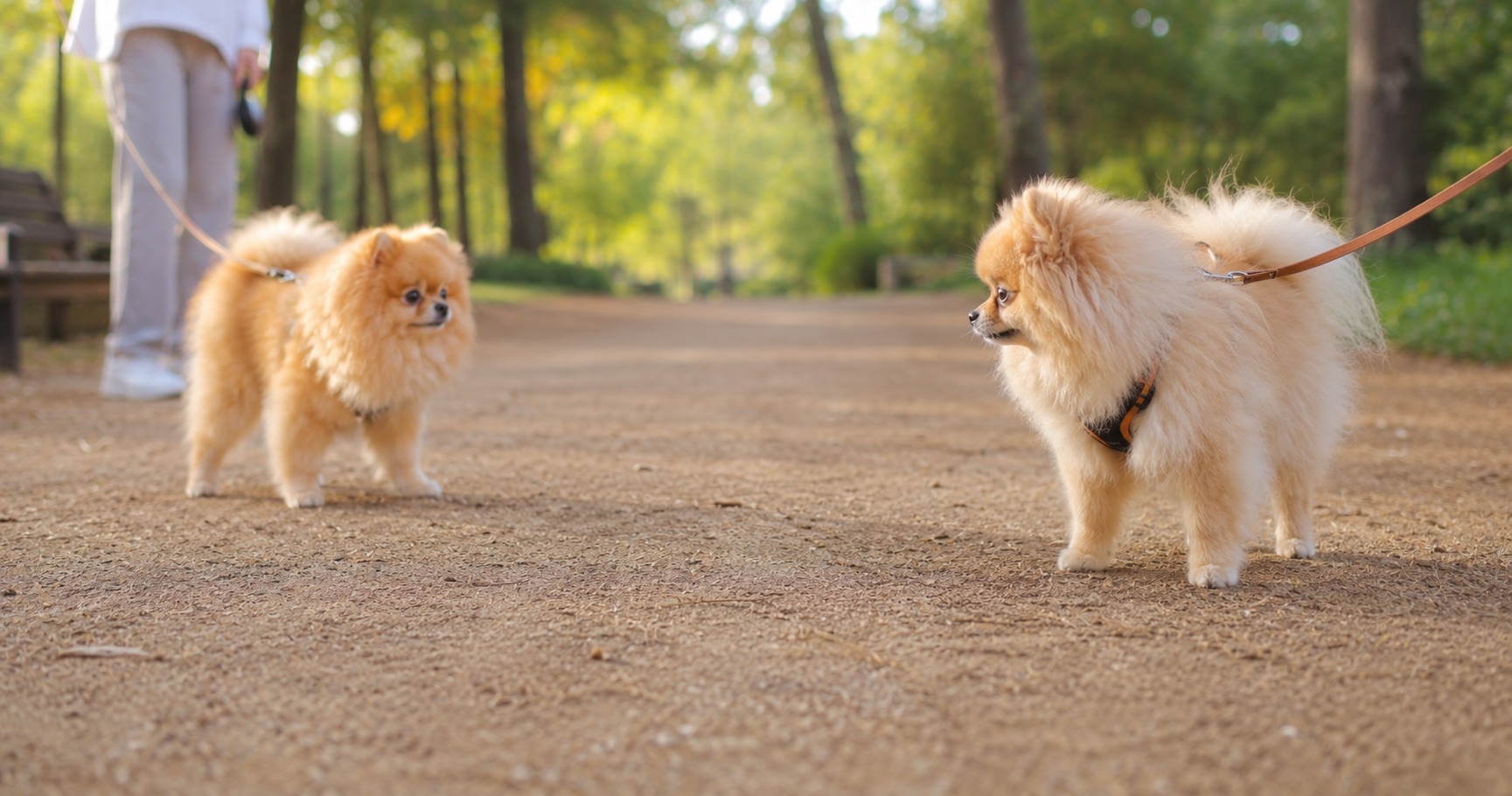
If a fight breaks out: in order
| Order | Method | Caution |
|---|---|---|
| 1. Break with sound | A loud, short shout; a clap | Screaming feeds the arousal |
| 2. Water and objects | Splash water; put a bag or jacket between them | Objects go in, bodies don't |
| 3. Lift the hind legs | Each owner lifts their own dog's hind legs and backs away | Both sides at once; don't set them down right away |
| 4. Distance after separation | Move them out of each other's sight | Prevents round two |
The most common mistakes are yanking the leash upward and trying to pry a mouth open by hand. Both are shortcuts to a human getting bitten. And pulling while a dog has hold makes wounds tear wider. The more urgent it feels, the more you need the order: sound, objects, hind legs.
After the fight is over
Once the adrenaline settles, check your dog's body inch by inch. Fur hides a lot of wounds, especially on the neck, ears, and inner legs. If there's a bite mark, go to the vet even if it looks small. Tooth wounds run deeper than they appear and carry infection risk. Exchange contact information with the other owner, and if needed, confirm vaccination status.
And tend to your dog's mind too. For a few days after a fight, they may avoid other dogs or stay on edge. Don't push meetings with other dogs; walk quiet routes for a few days and give them time to recover.
Honestly, the best response is prevention
Most fights send signals first. The body goes rigid, the stare locks in with a growl, the hackles rise. When you see these signs, the right call is to end the greeting and add distance. When introducing your dog to one they've never met, keep the leash loose and keep it short. The longer the face-to-face, the higher the odds of trouble. Making a habit of asking before letting your dog greet a stranger's dog is the best insurance there is. My dog Gureum (it means "cloud" in Korean) freezes when an unknown dog charges straight at her, so the first thing I check is whether the other owner has their leash in hand, and I pick our path from there.
Let them make friends with known dogs before strange ones
Your kkeung neighborhood feed fills up with local dogs' proud moments and finished-walk posts. When you can see what a dog is like before you meet, that first hello is far safer than a surprise encounter with a stranger. That's how walk buddies happen.
Meet neighborhood dogs →Know the process after an incident, too
When a bite happens, procedure comes before emotion. Confirm each other's contact information and dog registration, photograph the wounds and the scene, and keep the vet records and receipts. How treatment costs get split depends on the circumstances, and the side with a lapse in control, like an unleashed dog, carries more of the responsibility. Feelings run high in the moment, but at the scene, stop at checking the dogs and exchanging information. Save the compensation talk for after everyone has calmed down. It's better for both sides.
When your dog is the one who bit
No one wants to think about it, but prepare for the reverse case too. If your dog bit the other one, checking on the other dog and urging treatment comes first. That's basic decency and the correct legal order. Then replay the situation: what triggered your dog's aggression? If there's a repeating pattern with a specific type (big dogs, puppies, sudden approaches), a professional trainer's evaluation is the way to prevent the next incident. Until then, a muzzle and a short leash aren't punishments. Meeting your duty of control is also how you protect your own dog.
Reading up on dog fight response is like car insurance. You hope you never use it, and it's decisive when you do. Remember the three-step order: sound, objects, hind legs. And the best response of all comes before any of it: prevention.
Frequently asked questions
My dog is small. Can't I just scoop them up?
An off-leash dog charged at us. What do I do?
My dog is scared of walks since the fight.
It was only growling, no biting. Should I still be careful?
How should I talk to the other dog's owner?
This article is general information and does not replace a veterinary diagnosis. Talk to your vet about your dog's condition.