Sit and Stay:
Teaching Them in the Right Order
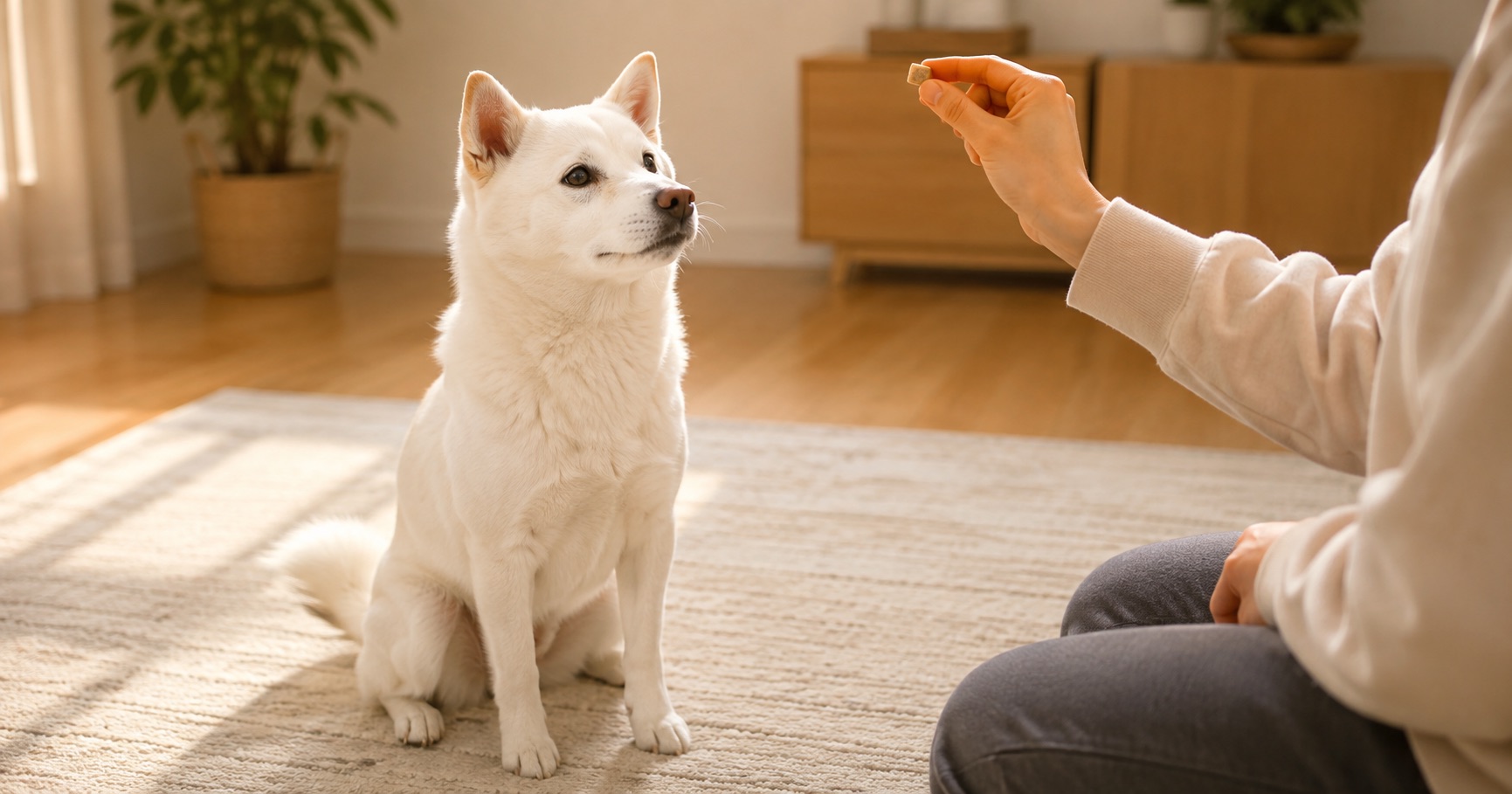
Sit is the front door of all training: teaching it, the owner learns reward timing, and the dog learns how to listen to a human. In our house, my elementary-schooler daughter served as my dog Gureum's official sit instructor (it means "cloud" in Korean): which tells you the principle is simple enough for a kid to run. Here it is, in order.
The sequence: 1) lure with a treat: from nose height, slowly up over the head: the rear lands on its own: 2) reward the INSTANT it touches (within half a second): 3) once the motion is fluent, attach the verbal cue sit RIGHT BEFORE the motion: 4) shrink to gesture-only, then word-only. Stay comes after sit: expanded by the 3D principle: duration, distance, distraction: raised one at a time, starting from one second. Sessions run 5 minutes, and always end on a success.
Sit: the 4 stages
| Stage | Method | Graduation |
|---|---|---|
| 1. Lure | Treat from nose to overhead; pay the instant the rear lands | 8 of 10 successes |
| 2. Attach the cue | One sit, right before the rear drops | Word links to motion |
| 3. Hide the treat | Empty-hand gesture; pay from the pocket after | Sits without a visible treat |
| 4. Generalize | Beyond the living room: doorway, elevator, walks | Works anywhere |
Most failures live in stage 2. Chant sit-sit-SIT and the word becomes background static. One cue, timed to the motion: and when it doesn't land, don't repeat the word: drop back to stage 1's lure.
Reward timing: the half-second craft
There's a reason it's called 80% of the training. A dog learns that whatever they were doing AT the reward moment was the answer. Rear lands, you fumble for the treat, three seconds pass: the dog has stood back up: congratulations, you just paid for STANDING. So: treats pre-loaded in hand before starting, and a short praise word (yes!) attached at the exact answer moment. That word later becomes the bridge (the marker) between answer and treat: and the timing transmission gets far more precise.
Stay: raise the 3Ds one at a time
Stay collapses for one reason: greed. Duration, distance, distraction: raise all three at once and failure is guaranteed. In front of the sitting dog: one second, reward. Three, five: TIME only. Around ten seconds, cut the time back to three and begin distance: half a step back. Distance established: drop to a low tier again and add distraction (a toy placed down, a door opened). Raise one, lower the rest: honor that law and stay never betrays you. Two failures in a row is never the dog's fault: it's difficulty design: step down one tier.
Training growth, twice as sweet on video
The first sit, the first 10-second stay, the 30-second milestone: each its own achievement. Clips posted to kkeung keep their dates and collect likes from the neighborhood dogs: and the neighborhood feed's training videos quietly suggest your next challenge.
Show the neighborhood dogs →Five minutes, several times
Canine focus is shorter than it looks: 5-minute blocks two or three times a day beat a 20-minute grind on every metric, enjoyment included. And every session ends on success: closing on a failed hard task files the whole hour under uneasy: so finish with a move they OWN, praised big. Training time = treat-and-praise time: that impression builds the next session's focus. Bonus intel: the slightly-hungry pre-meal window is focus's golden hour.
The final puzzle piece: one family, one vocabulary
If dad says sit, the kid says sit DOWN, and mom says take a seat, the dog is learning three different signals for one motion. Unify the cue word and the hand signal by family council, and align the payment rules (treats for success only). Our house started Gureum's training with exactly that vocabulary summit: progress took off right after. And learned moves survive by USE: sit before the bowl lands, stay before the front door opens: planted in the day, training stops being training and becomes manners.
Frequently asked questions
They only obey when I'm holding a treat.
Perfect at home: useless outside.
I say sit and they lie all the way down.
What training treats work best?
How do I extend the stay time?
This article is general information and does not replace a veterinary diagnosis. Talk to your vet about your dog's condition.