Clicker Training:
How to Start (the Science of the Click)
If you've wondered about that clicking gadget in every training video: today's your induction. The clicker isn't magic: it's an ultra-precise timing device that says CORRECT! Faster than speech, and immune to mood swings in tone. My dog Gureum only tilted her head at the first click (it means "cloud" in Korean): three days later she understood the sound completely.
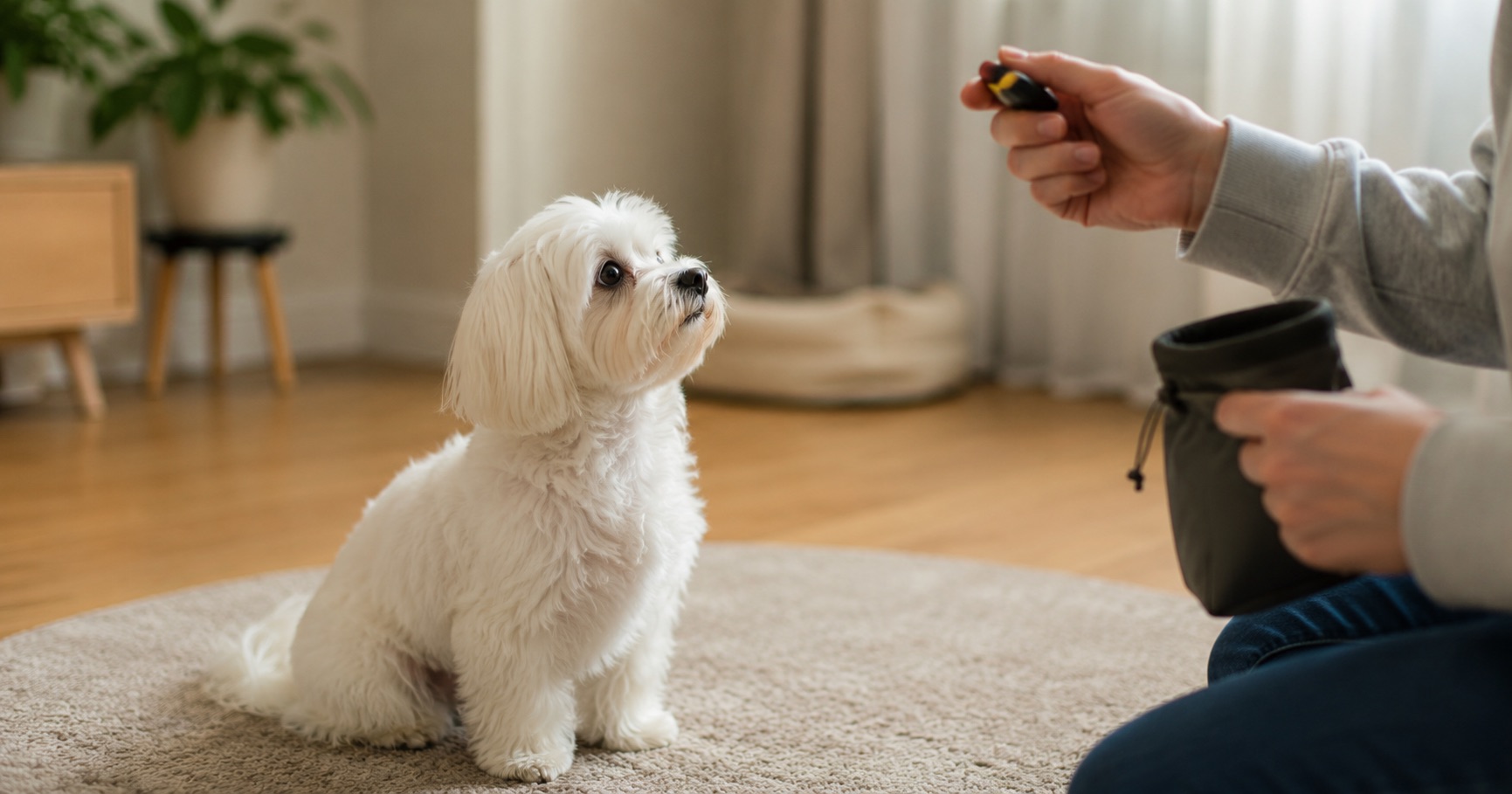
The principle: a conditioned link where click = correct + treat incoming. Start with charging: click → treat, no demands attached, 20-30 reps, planting the sound's meaning. Once linked, deploy it: click at the EXACT instant the wanted behavior appears, then treat. Two rules: every click gets paid (even a misclick), and no clicking non-correct moments. No clicker on hand: a short, consistent marker word (yes!) runs the same principle.
The 3-step start
| Step | Method | Done when |
|---|---|---|
| 1. Charging | Click → treat, no demands (2-3 sets daily) | Click triggers treat anticipation (looks, approaches) |
| 2. Easy behaviors | Click the instant of the sit → treat | The behavior's frequency visibly climbs |
| 3. Shaping new behavior | Click each step CLOSER to the goal | They actively hunt for the answer |
The clicker's real power: shaping
Where the clicker shines is building a brand-new behavior from zero. Teaching go lie on your mat: click for LOOKING at the mat: click for one step toward it: click for a paw on it: click for all four: JACKPOT (multiple treats) for lying down. Rewarding stair-stepped approximations of the answer: sculpting the behavior: that's shaping. The dog starts actively probing what makes the click go off?, and that brain game ranks with the best scent-work as mental exercise. Not training that's done TO them: training they figure out themselves. That's the clicker philosophy in one line.
The common mistakes
One: using the clicker as a remote control. Click-clicking to CALL the dog corrupts the correct-signal's meaning: the clicker marks answers, nothing else. Two: skipping the treat after a click. Even a misclick gets paid: the sound-treat trust is this training's currency. Three: late timing. A click two seconds after the sit may have marked something else entirely (the look up). If timing is hard, practice on humans first: click the instant a family member bounces a ball. Four: sound fear. For the flinchers, muffle it in a pocket, use a ballpoint pen's click, or swap to a soft marker word. The principle outranks the tool.
Shaping is fun: on video, twice the fun
The first reaction to the click, the first successful touch: moments built for a short clip. Posts on kkeung keep their dates and collect likes from the neighborhood dogs: and the neighborhood feed's trick videos are a fine menu for choosing your next project.
Show the neighborhood dogs →Yes, there's clicker graduation
The clicker isn't a lifelong accessory: it's construction scaffolding for the learning phase. When a behavior completes: reliably firing on the cue (sit) alone: that behavior retires its clicker and moves to maintenance mode: intermittent treats and praise. Then the clicker comes back out for the NEXT new behavior. Understanding this cycle dissolves the am-I-signing-up-for-lifetime-treat-hostage-negotiations worry: intensive while learning, ordinary once learned. That's the operating manual.
A starter curriculum
A 4-week beginner course: week 1, charging plus re-marking sit (timing practice on a known behavior): week 2, teaching touch (nose to palm): the classic first project, quick wins building confidence on both ends: week 3, shaping go-to-mat: week 4, wiring it into life (doorbell → mat: pre-walk → sit). Five minutes a day covers it. My daughter ran Gureum's touch training: turns out an elementary schooler can teach it inside a week. That's how strong a timing tool is. And above all, those five minutes become the densest conversation of your dog's day.
Frequently asked questions
Does it matter which clicker I buy?
How is a clicker different from just saying 'yes!'?
I did the charging but they don't react to the click.
Can I use it to STOP bad behavior?
How much clicker training per day?
This article is general information and does not replace a veterinary diagnosis. Talk to your vet about your dog's condition.