The Dog Who Comes When Called:
Recall, Step by Step
Recall isn't a party trick: it's a seatbelt. The leash that slips, the front door left open, the sprint toward something dangerous: in those moments, exactly one thing stops your dog: the ingrained habit that being called means coming. The day my dog Gureum charged a sparrow into the flowerbeds (it means "cloud" in Korean), this training is what saved me.
The principle is simple: the name (or come!) = good things, no exceptions: and the formula never breaks. Training runs: 1) indoors at 3 feet: call, and pay arrival with premium treats and festival-grade praise: 2) add distance and distractions one notch at a time: 3) outdoor practice on a long line. One absolute rule: scolding, baths, or nail trims after calling them DESTROYS recall: they learn that answering costs them.
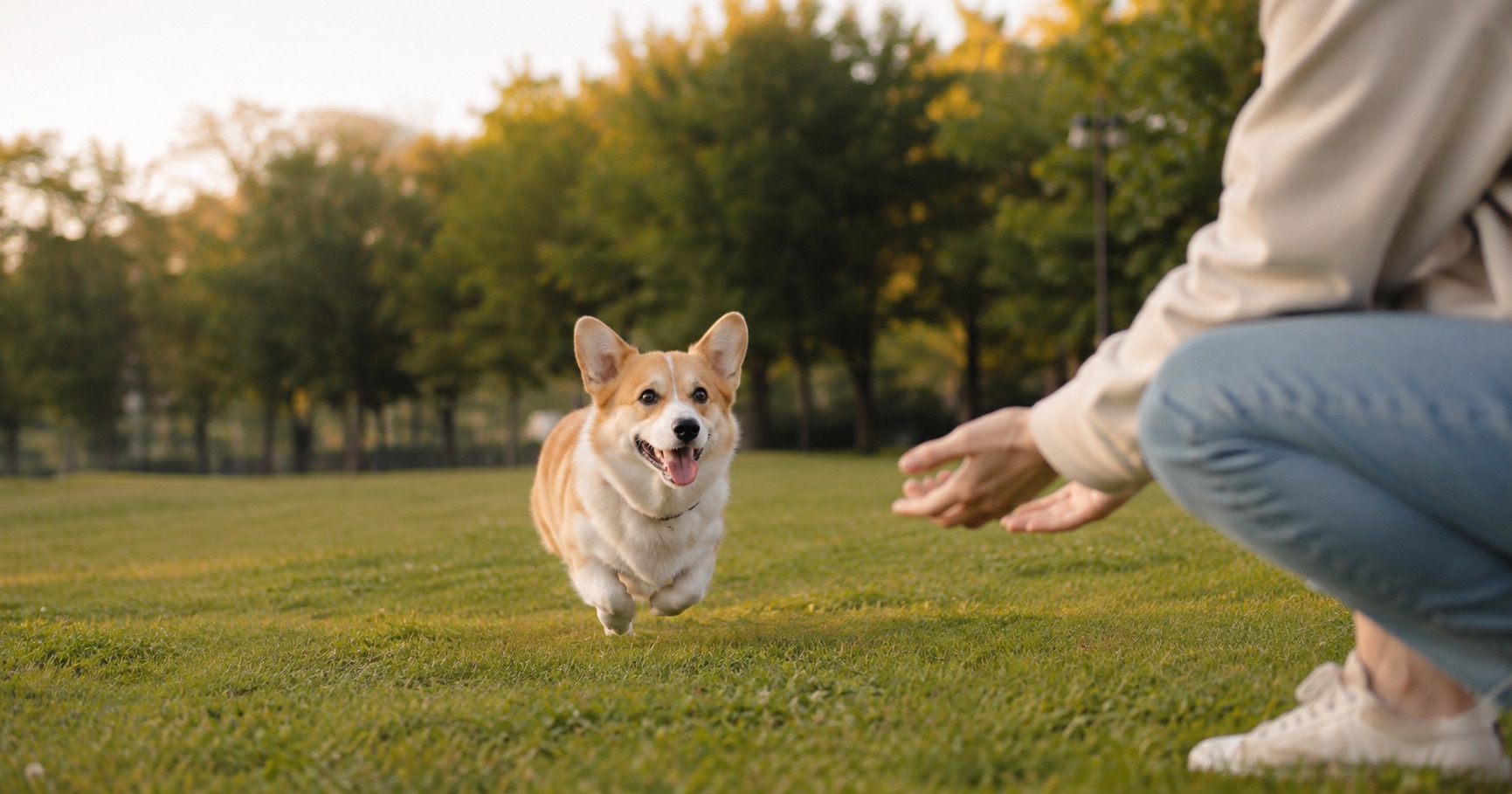
The stage table
| Stage | Setting | Goal |
|---|---|---|
| 1 | Indoors, 3-10 ft, zero distractions | Instant arrival 9 of 10 calls |
| 2 | From another room | Finds you out of sight |
| 3 | Out front, quiet outdoors + long line | Success amid mild stimulation |
| 4 | Parks and busy places + long line | Chooses you over smells and dogs |
The promotion bar is a 90% success rate. And at every stage, outdoor practice happens ON a long line (10-30 ft). Off-leash before the recall is finished isn't training: it's gambling: and leash laws make on-leash the default in most U.S. cities and parks anyway.
The mistakes that ruin recall
One: calling, then doing something unpleasant. Summon a happily playing dog straight to the bathtub, and from then on the call is the party's-over siren. When the unpleasant thing is necessary: don't call: go get them. Two: repeat-calling. Shout come! ten times to a dog who isn't coming, and the word files itself under safely-ignorable sounds. Call ONCE: no response: clap, or play the retreat game (pretend to run away) to pull them in, then pay. Three: lukewarm rewards. A dog who abandoned the park's smells and friends for you deserves compensation at that scale: recall pays in favorite-of-all-time treats, with theatrically big reactions. Recall stays alive only while it's always a winning trade.
Call and release: the advanced move
One secret that hardens recall into steel: outdoors, call them in, pay: then say go play! and release. Once they learn the call isn't the end of fun: just a brief check-in: they come without hesitation. Salt the walk with no-reason recalls: call, treat, release: and the success rate in the moments that matter climbs steeply. If nine of ten check-ins are pure profit, the tenth: the emergency: gets answered by muscle memory before thought.
Record the recall wins on video
The full-sprint response to a distant call is the training's highlight reel. Videos posted to kkeung keep their dates and collect likes from the neighborhood dogs: put the indoor-3-feet clip beside the park-success clip and the whole journey shows at a glance.
Show the neighborhood dogs →Name gone stale? Reset with a fresh signal
If the name carries a long history of preceding scoldings: met now with indifference or retreat: reviving the contaminated signal costs more than minting a new one. Pick a new recall word: any word, or a whistle. The new signal is a blank page, never once linked to anything bad: build it from stage 1 on good things only. Then divide the labor: the name for getting attention, the new word for MUST-come: clean operations.
The emergency recall: a whole-family project
Many households maintain one separate, nuclear-grade recall for the open-front-door and slipped-leash moments: a specific word (or whistle) linked ONLY to a legendary treat never otherwise served (boiled chicken breast, say), practiced just once or twice a week so its value never dilutes. The critical part: the WHOLE family shares the signal and the payment rules: because nobody knows who'll be standing closest when the moment comes. Recall isn't one person's skill: it's the household's safety system.
Frequently asked questions
They come close, then dodge right before I can reach them.
Calling is useless when they're playing with another dog.
What do I reward with when there's no treat on me?
What's the age limit on recall training?
Anything absolutely forbidden during recall training?
This article is general information and does not replace a veterinary diagnosis. Talk to your vet about your dog's condition.