Training Time:
How Many Minutes a Day Is the Answer?
In training, RIGHT-sized is harder than hard-working. Muscle through a determined 30-minute weekend block and your dog spends the last 20 minutes just standing up and sitting down with their body while their mind clocks out. Training results come from focused repetitions, not minutes invested. So today's conclusion fits in a number: five minutes, two or three times a day.
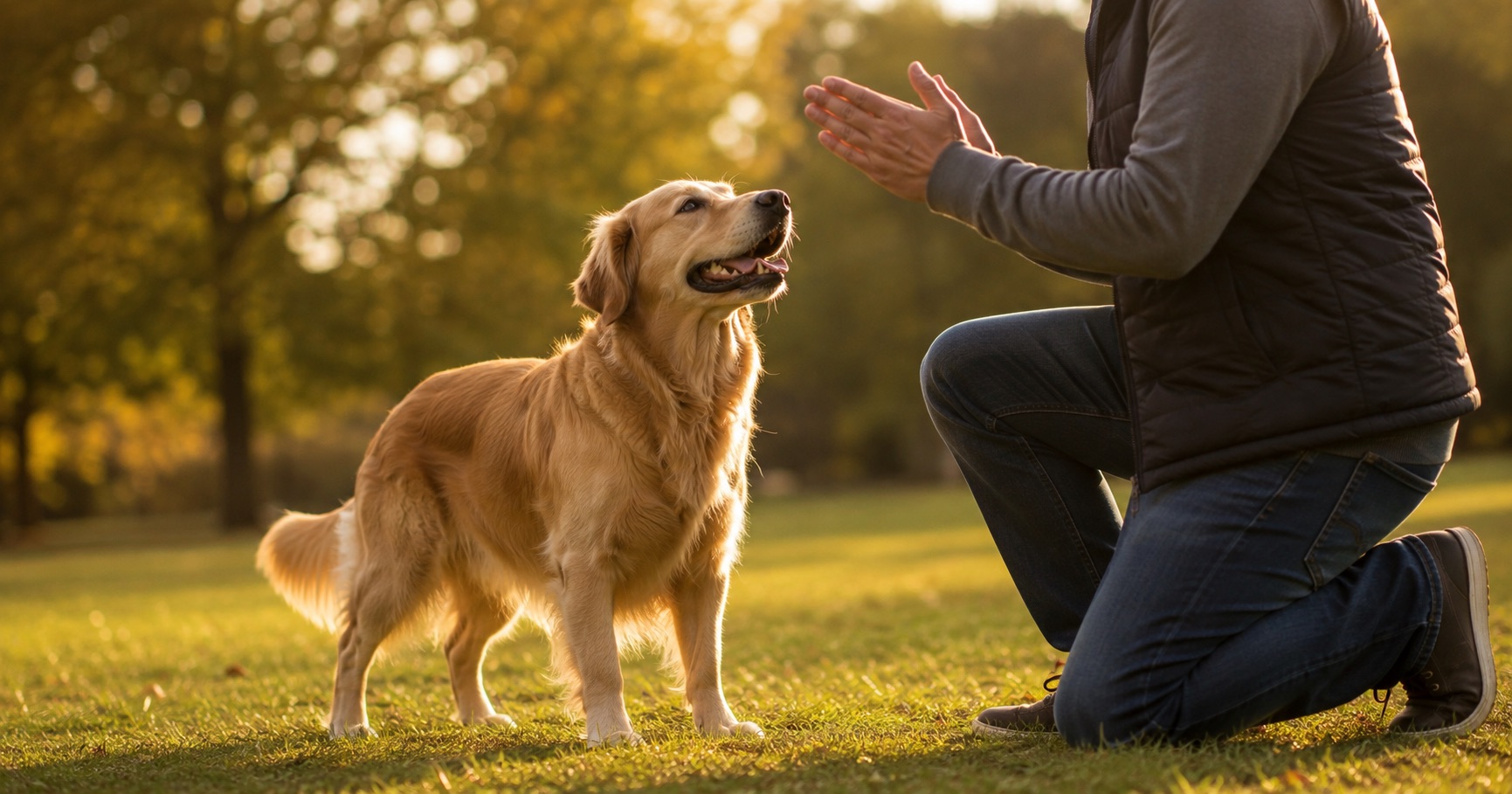
The standard: one session around 5 minutes, 2-3 sessions daily. Canine learning focus runs short, so short-and-often beats long-and-rare for memory consolidation (the rest and naps BETWEEN sessions are what cement the learning). Puppies: shorter, around 3 minutes. Adults can stretch to 10 on a good day: but fading-focus signals (yawning, drifting, slowed responses) end the session early, always. And every session closes on an easy, guaranteed success.
Sessions by age and situation
| Who | Session length | Note |
|---|---|---|
| Puppy (under 6 months) | 2-3 min, 3-4x daily | No border between play and training |
| Adult | ~5 min, 2-3x daily | New tasks short; review flexible |
| Senior | 3-5 min, condition first | Skip joint-heavy moves |
| Hard new task | Shorter (3 min) | Cut before frustration |
| Life-embedded review | 30-second gaps | Sit before meals, wait at doors |
Why short-and-often wins
Two reasons. One: the physical ceiling on focus. Reps AFTER focus breaks are sloppy practice: you're literally rehearsing the shoddy version of the behavior. Two: memory hardens during REST. The downtime and naps after learning are when the brain files it into long-term storage: the gap between sessions is part of the training. Which is why 5 morning minutes plus 5 evening minutes beats the weekend 30-minute marathon. I run a 5-minute timer for my dog Gureum's sessions (it means "cloud" in Korean): when it rings, we stop, even mid-hot-streak. Training that ends with appetite left over carries that appetite into the next session.
The anatomy of a good session
Design the 5 minutes like this: 30 seconds of warm-up on known moves (a few sits to start the engine): 3-4 minutes of today's project (a new behavior, or a difficulty bump): a final 30 seconds of a confident move, success, and BIG praise. The sandwich's load-bearing layer is the last one. The session's closing mood colors the whole enterprise: training that ends in failure files itself as an uneasy hour. On the days the middle won't cooperate, drop the difficulty without regret or shelve it, and close warm on an easy win. Today's project can wait for tomorrow: but if the training-time = joy equation breaks, the repair costs far more.
Training videos become the curriculum
Twice-daily 5-minute sessions blur together fast: where were we? Post a short clip of each session's win to kkeung and every post keeps its date: which move took how many days shows plainly, and picking the next project gets easy.
Save a video of your dog →Learn the overtraining signals
The most passionate owners cross this line most easily. Mid-session yawning and shake-offs, floor-sniffing avoidance detours, slowing responses, dodging eye contact when called: none of it is defiance: it's a full-brain indicator. Push through it anyway and the dog learns to avoid TRAINING itself: the one who mysteriously melts away whenever the treat pouch appears. See the signals: close immediately on an easy win and pivot to play. And watch the daily TOTAL: after a stimulating day (daycare, guests, the vet), the brain's battery is already drained: that's a legitimate rest day.
Training gets finished OUTSIDE the sessions
If the 5-minute session is the class, daily life is the exam hall. The 30-second gap-reps that plant learned behaviors into real contexts are what create true permanence: sit before the bowl touches the floor: wait before the front door opens: sit at the crosswalk: to your mat at the delivery knock. These life-reps cost zero session time and outperform sessions anyway. So the final arithmetic: 10-15 formal minutes daily (5 min × 2-3) is plenty: dissolve the rest into the day. When training stops being a special event and becomes the grammar of the household, you get the dog who does it without being asked.
Frequently asked questions
Five minutes feels too short: they want MORE.
Won't a few days off erase what they learned?
What time of day trains best?
Can one session mix multiple behaviors?
They yawn or drift off mid-session. Now what?
This article is general information and does not replace a veterinary diagnosis. Talk to your vet about your dog's condition.