The Outdoor-Only Dog: Fine as Is?
Pros, Cons, and the Backup Plan
The dog who will only do their business on a walk. Some owners love the spotless house: others sigh about the servitude contract. Outdoor-only pottying is natural instinct: not a problem in itself. The real question is this: when the storm parks overhead for two days, when the owner is sick in bed: what happens to the dog?
Outdoor-only pottying is a habit pattern, not a health defect: but it needs risk management. Repeatedly holding it past a day risks bladder infections and constipation, and the no-walk days: brutal weather, an injured owner, the dog's own senior years or surgical recovery: WILL come. So even the committed outdoor dog should carry an emergency indoor option (a pad, or balcony setup) taught like an insurance policy. Respect the instinct: build the plan B.
The pros-and-cons ledger
| Column | Contents |
|---|---|
| Pros | Indoor hygiene, no odor / walk routine auto-guaranteed / marking instincts satisfied / stool inspected daily by default |
| Cons | Hostage to weather and owner availability / the holding habit's health load / dawn and late-night demands / hard to serve in senior and recovery years |
| Management | 3+ potty opportunities daily / monitor the holding hours / train the emergency indoor option |
What the holding habit costs
Healthy adults can hold it a long time: but CAN hold and SHOULD hold are different claims. Chronically long urine-holding is fertile ground for bladder infections and urinary disease, and habitual stool-holding trends toward constipation. The outdoor household's minimum standard: about three potty opportunities daily: commonly morning walk, evening walk, plus one short potty run. If work schedules leave a long midday gap, that structure itself may be straining the dog: lay the family calendar against the dog's rhythm and look honestly. Darkening urine and rising bathroom signals (hovering at the front door) mean the opportunities are falling short.
Plan B: the emergency indoor option
Teaching indoor pottying to a confirmed outdoor dog isn't easy: it isn't impossible either. The trick is IMPORTING the outdoors: a potty tray on the balcony or in the bathroom, topped with outdoor-textured material: sod, a grass mat, artificial turf: to shrink the strangeness. A pad piece carrying their own scent from a walk-time spot makes a powerful hint. Then use the can't-go-out days as training days: when the potty signal comes, guide them to the spot, and pay any success at festival scale. A few wins plant it: this works here too. The goal was never conversion to team-indoor: it's ONE emergency bathroom that functions when needed.
Know the rhythm, see the holding
In an outdoor-potty home, the walk interval IS the potty interval. Log walks in kkeung and the departure times stack by date: exactly how many hours your dog is holding becomes visible. If the stretched-out days are getting frequent, that's the signal to run the indoor tray in parallel.
Check this week's walks →The rainy-day playbook
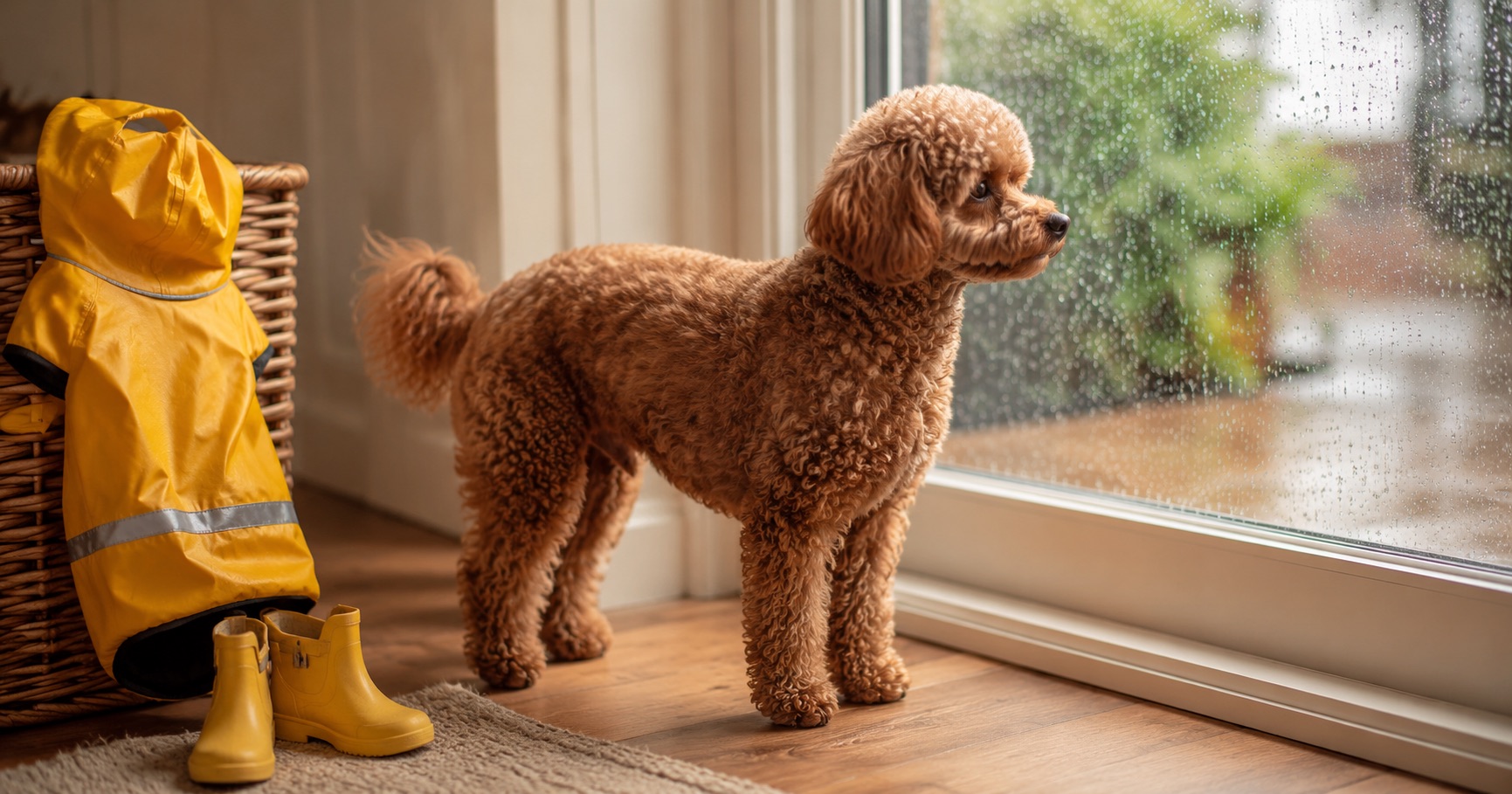
No plan B yet: then wet weather is an equipment game. For the dog, a raincoat (practice wearing it on a DRY day): for you, a poncho beats an umbrella: both hands free. And scout the low-rain shortcut in advance: building overhangs, the green strip by the parking-garage entrance: the shortest viable potty circuit. The return-home protocol: wash paws and belly, dry to the undercoat: is part of the set. My dog Gureum stages sit-down strikes at the door in real downpours (it means "cloud" in Korean), so our emergency route is a three-minute loop from the building entrance. The treaty between instinct and owner survival, it turns out, is a short course.
Think ahead to the senior years
One future every outdoor-potty owner should pre-load: age erodes bladder control, and joints eventually make stairs and outings hard. The lifelong outdoor dog who holds it, slips, and then visibly shrinks with shame over the accident: that scene breaks owners. Which is why plan-B training is also retirement planning: done while young and healthy. From around age 7, gently keep the indoor option open: and when the accidents begin, skip the scolding entirely and adjust the environment instead: more pads, closer pads, easier access. The instinct is lifelong: the body isn't. Bridging that gap is the owner's job.
Frequently asked questions
Is outdoor-only pottying a training failure?
A day or two with no poop: vet time?
The dawn potty-walk demands are wearing me out.
What about trips and hotels?
Can an outdoor-only dog learn indoor pottying too?
This article is general information and does not replace a veterinary diagnosis. Talk to your vet about your dog's condition.