The Dog Who Won't Go Outside:
Why, and How to Help
Some dogs will ONLY go outdoors: and then there's the opposite puzzle. The dog who walks a full hour and saves it all for the pad at home. If you were hoping they'd handle business out there, it's maddening. But here's the thing: most of these dogs aren't refusing. They CAN'T.
Four main causes. 1) Indoor habit lock-in: pad texture and indoors learned as the bathroom's required conditions. 2) Outdoor tension: pottying is a defenseless posture needing real security, and noise, dogs, and people keep the guard up. 3) Surface preference: dirt and grass feel wrong underfoot. 4) Timing: potty rhythm and walk schedule misaligned. The invitation: quiet routes with generous sniffing time, departures in the post-meal golden hour, and festival-grade rewards for outdoor success. Pressure and hurry only feed the tension.
Sorting the causes
| Cause | Clue | Approach |
|---|---|---|
| Indoor habit | Beeline to the pad on return | Deploy pad pieces outdoors |
| Outdoor tension | Scanning all walk, tail low | Quiet routes, ample sniff time |
| Surface preference | Balks at entering grass at all | Staged texture exposure |
| Timing | Potties long after the walk | Depart 15-30 min after meals |
Pottying is proof of feeling safe
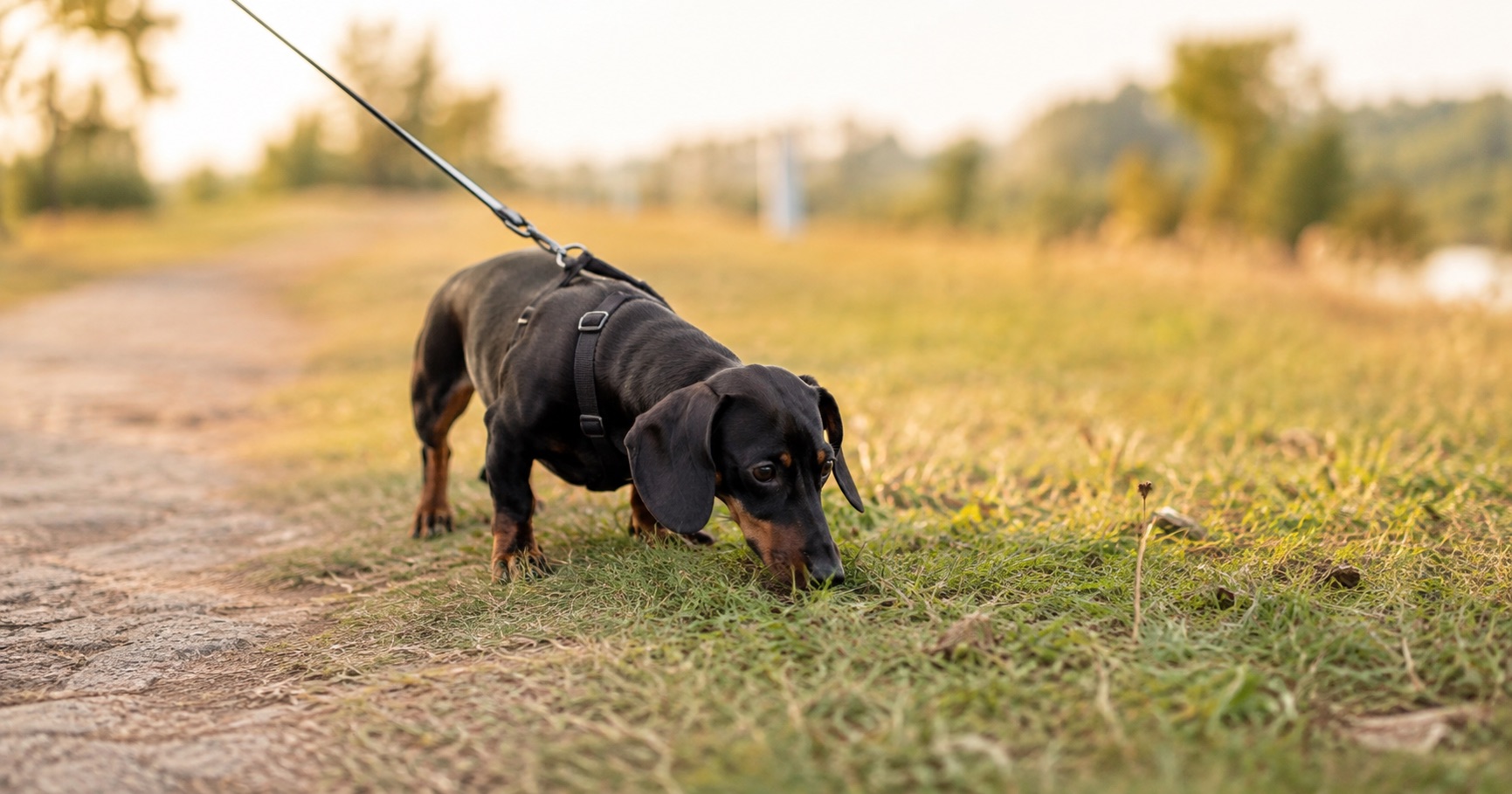
The potty posture is a dog's most defenseless moment: no fleeing, no fighting from there: so the body only signs off when instinct rules the area SAFE. The dog scanning the street with radar ears all walk long has a full bladder and no clearance. Which means the prescription isn't potty-inducement: it's tension reduction. Routes light on cars and people: the SAME route repeated (familiarity is security): and a slow walk that never hurries the sniffing. Sniffing is intel-gathering and stress relief at once: let it run long enough and the tension curve sinks: pottying often waits at the bottom of that curve. My dog Gureum held it until home for her first months too (it means "cloud" in Korean): the dawn she finally went in an empty alley, I physically restrained my applause.
Field tips for the outdoor invitation
One: golden-hour departures. Leave 15-30 minutes after meals, or right after waking: high-pressure windows raise the base odds. Two: scent hints. A urine-marked pad piece from home, placed briefly at a quiet candidate spot (a grass corner), is a powerful IT'S-OKAY-HERE signpost: heavily dog-trafficked spots serve as natural signage too. Three: the success festival. The FIRST outdoor success triggers immediate top-shelf treats and theatrical praise: one installed formula: outside pays JACKPOT: becomes the engine of the whole conversion. Four: zero reaction to failure. The not-again sigh and the hovering impatience put THE WALK ITSELF on the dog's tension list. On the no-go days, just finish a pleasant walk: the long way around is the shortcut.
The walk log finds the success conditions
The day of the first outdoor success, the time and walk length hold the answer. Log walks in kkeung and distance and duration stack by date: the successful days' common threads emerge. Quiet early morning? The 30-minute mark? That becomes the recipe for the next walk.
Start logging walks →Do they even NEED to go outside?
For balance, this question deserves airtime. If indoor pottying is flawless, outdoor pottying is an option, not a requirement: the ideal state is actually the hybrid who can do both. Rainy stretches, heat waves, and the senior years are when INDOOR skills protect the dog: trips, long drives, and all-day outings are when OUTDOOR skills free them. So set the goal as adding an option, not converting camps: can't-go-outside isn't a defect: can-also-go-outside is a bonus. That framing drains the urgency: and with the urgency gone, paradoxically, success comes faster.
Months in, still nothing?
Golden hours, quiet routes, scent hints, festival rewards: all deployed, months passed, no movement: check two things. One: the walk's own tension level. If a general outdoor fear sits underneath (sounds, strangers, other dogs), desensitizing THE WALK precedes any potty work. Two: the body. Rarely, discomfort in the potty posture (joints, pain around the rear) shows up as venue-specific avoidance: the half-squat-then-quit pattern repeating is a checkup flag. Behind a behavioral wall, a physical story hides more often than you'd think.
Frequently asked questions
They pee on walks but never poop.
Isn't holding it until home bad for their health?
Can you actually teach a potty cue?
What about bringing a pad outside and laying it down?
How do I praise an outdoor success?
This article is general information and does not replace a veterinary diagnosis. Talk to your vet about your dog's condition.