Potty Training:
The Principles, and Why It Fails
Potty training is dog life's first gate: and its most common site of despair. Our house started my dog Gureum's puppyhood with the old newspaper method (it means "cloud" in Korean) and achieved a living room that was, functionally, one large bathroom. What I didn't know then and know now: in order, from the principle up.
Potty training runs on one principle: repeat successes at the designated place, rewarded within 3 seconds. Your job: predict the potty windows (right after waking, 15-30 minutes after meals, after play) and escort them to the spot. Accidents get cleaned quietly with zero reaction: scolding teaches HIDING the act, which moves training backward. Weeks to months, at each dog's own speed: all normal.
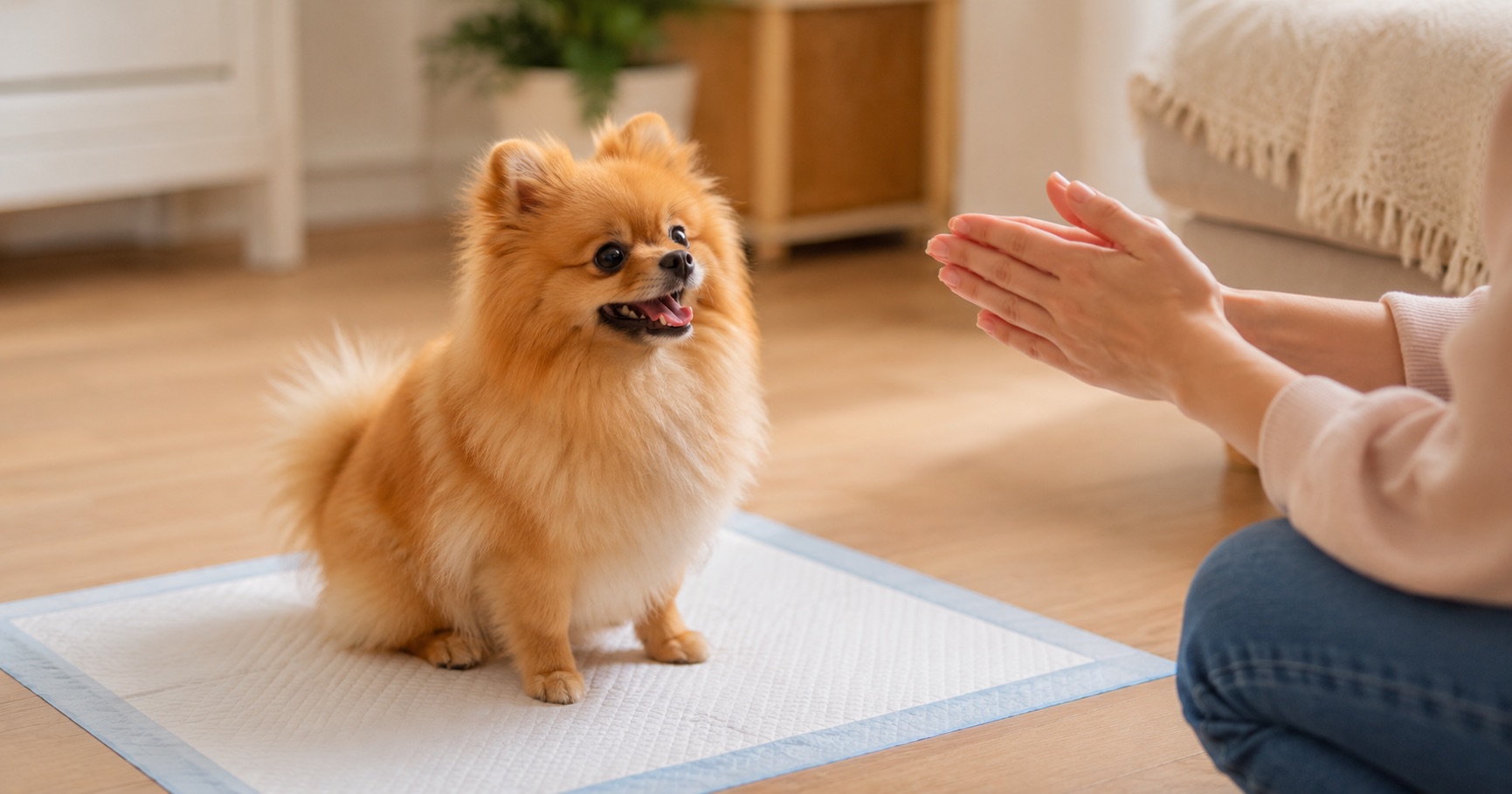
The three elements of success
| Element | Content | Point |
|---|---|---|
| 1. Timing prediction | On waking, 15-30 min post-meal, after play, after naps | Catch the signals (floor sniffing, circling) |
| 2. Fixed location | Escort to the pad or potty spot | Wait quietly until success |
| 3. Instant reward | Treat and praise within 3 seconds of finishing | AFTER completion, exuberantly |
Remove any one and the speed collapses. The 3-second reward especially: a dog's window for linking act to payment is tiny, and a treat delivered long after is just a treat, not training. Which is why the early weeks' real requirement is TIME: being nearby to witness the potty moments is half the program.
The top 3 failure causes
One: scolding. The nose-in-the-mess routine teaches potty = punishment: the side effects are stealth pottying when you're out, and the behind-the-curtains specialist. The correct response: clean it: scent and all: when the dog isn't watching. Two: too much territory. Free-roam of the whole house means, from the dog's side, no distinction between bathroom and living space. Early on, shrink the world with a playpen to inflate the pad's success rate: expand as the rate climbs. Three: consistency collapse. Different rules per family member: praise one day, indifference the next. Dogs learn patterns, not rules: the whole household runs the same protocol or the dog learns noise.
Handling accidents correctly
Catch one starting: a short calm interrupt, then carry them to the spot to finish there. Discover one after the fact: clean it with no commentary whatsoever. The critical part is the SMELL: ordinary cleaners leave the odor molecules behind, and the spot gets re-registered as a bathroom. Enzymatic cleaner breaks the relapse loop. And when accidents CLIMB after a good run, sort training problem from body problem: a reliable dog's sudden misses are often a health signal (bladder infection and kin), not a training one.
Potty training is a timing game
Know the success times and the next window reveals itself. Post the success moments to kkeung: each keeps its date, and the how-many-minutes-after-meals pattern emerges. Log walks too and the post-walk potty rhythm joins the picture.
Save a photo of today →The week-by-week roadmap
Weeks 1-2: shrink the space and escort at every window, stacking successes. Past an 80% rate, weeks 3-4 widen the territory bit by bit while you watch for self-directed pad trips. Accidents rising at this stage: shrink again: that's adjustment, not retreat. Then comes the migration phase: sliding the pad toward its final address (the balcony, say) a foot or so per day. Our family's famous failure lives here: I moved the pad across the living room in ONE day, and Gureum filed her business at the original address, as one does. Pads relocate like a stroll, not a move: I learned it in laundry.
Months of no progress: audit the conditions
Long stalls call for a conditions audit before a methods change. Is the pad crowding the food or sleeping area (dogs avoid both)? Is it chronically dirty? Has the reward treat gone stale in their eyes? And did a scolding history spawn the stealth-potty pattern? All conditions fixed and still stuck: a trainer or behavior consult with potty-problem mileage saves real time. Potty-training speed is almost never about the dog's intelligence: it's about the environment's design.
Frequently asked questions
At what age does potty training start?
How do I prevent overnight accidents?
They shred the pad and play with it.
They hit the pad sometimes, and miss right next to it. Why?
How long does potty training usually take?
This article is general information and does not replace a veterinary diagnosis. Talk to your vet about your dog's condition.