Biting:
The Correction Timeline, Puppy vs. Adult
Biting is a completely different problem depending on WHEN. Puppy nipping is normal development: learning the world by mouth. Adult biting is a signal demanding a cause. Which one lives at your house decides the whole approach: so here are both branches, sorted.
Puppy biting (teething included) is normal: correction's goals are force control and toys-instead-of-hands. The golden window is as early as possible: the method: painful bite = play ends instantly (OW + turn away), and redirect the mouth to toys. Adult biting starts with cause-sorting: overheated play, pain, fear defense, or resource guarding: and once serious air-snaps or actual bites appear alongside growling, professional consultation beats self-correction on safety alone.
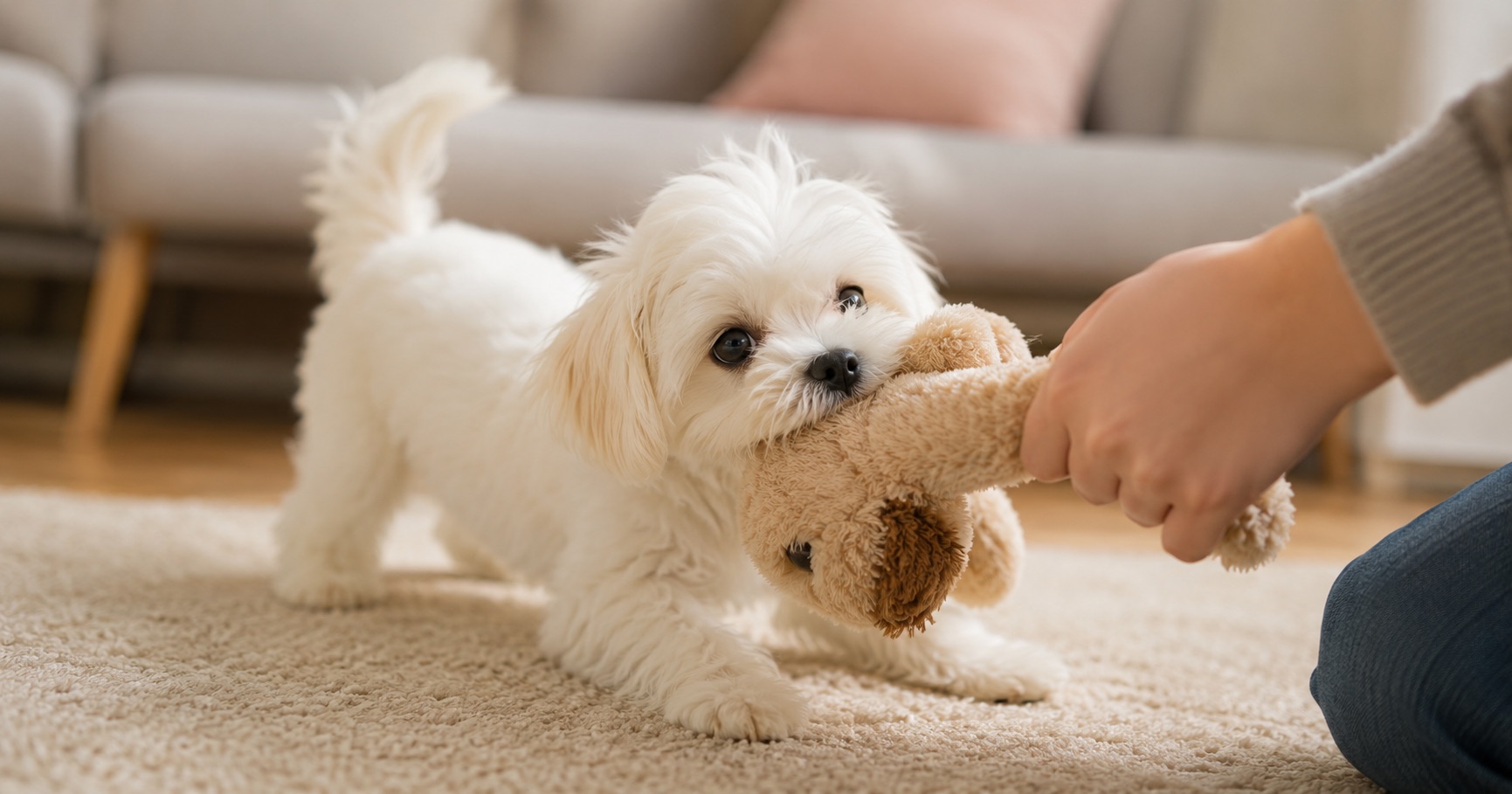
Puppy biting: the standard playbook
| Situation | Response | Principle |
|---|---|---|
| Soft mouthing | Play continues | Learning the allowed force |
| Painful bite | Short OW, 3-10 sec pause, turn away | Hard bite = fun over |
| Relentless charging bites | Leave quietly, brief ignore | Time-out |
| Bites the toy instead | Big praise, enthusiastic play | Present the correct answer |
Through my dog Gureum's baby-teeth era (it means "cloud" in Korean), my hands were a standing exhibition of tiny tooth marks: this table's sequence is what worked. The heart of it is consistency. Indulge hand-wrestling one day and scold it the next, and no rule can form. The whole family holds hands are never toys at any force, and the biting urge gets its full ration through tug and chew toys. Those two axes, and most of it resolves as teething ends. For the record: physical punishment (muzzle-grabbing, swatting) doesn't stop biting: it just plants distrust of human hands.
Adult biting: read the cause first
When a grown dog bites, WHY is everything. Overheated play excitement? A pain response to a touched spot? Cornered-fear defense? Guarding the bowl or the toy? Each gets a different prescription. Excitement: play-intensity control and calming work. Suspected pain: the clinic first (the classic cause of suddenly-started biting). Fear: desensitization to the trigger. Resource guarding: trade-up training (swapping for something better) over taking things away. The common law across all four: stop rehearsing the bite. Respect the pre-bite warnings: stiffening, growling, lip lifts: and defuse the situation. That respect is where correction begins.
Why you must never punish the growl
It runs against intuition, so it needs the emphasis: growling is the broadcast warning BEFORE the bite. Punish it into silence and you risk manufacturing the dog who bites without notice. When the growl comes: end that situation so it never reaches teeth: and structurally, hunt down what CAUSED it (the sore spot touched, the cornering, the threatened resource) and remove it. Thank you for the warning is the attitude that: paradoxically: prevents the bite.
The bite video sorts the cause
Play, fear, or pain: the response differs completely, and the moments before and after tell them apart. Post short clips of the surrounding context to kkeung: each keeps its date, showing a trainer exactly which situations repeat.
Save a video of your dog →Bite management in a house with kids
Households like ours: with children: need one extra rulebook: the kid-and-dog interaction rules. Don't wake the sleeping dog. Don't touch during meals. Don't take the toy. No chase-and-grab hugging campaigns. A large share of bite incidents happen at the dog's I-can't-take-it moment. During Gureum's teething, my daughter and I signed a no-bite-games treaty: hands retired, tug toys only. Give a kid the throwing games and the scent-game duties, and they become the best play partner in the house: no teeth required.
The professional-intervention line
Any of the following: stop self-correcting and bring in a professional (a behavior trainer, or a veterinary behaviorist when needed): a bite has left marks or broken skin: serious threats (teeth-bared lunging) repeat in specific situations: children or elderly family raise the accident stakes: or the biting comes with no warning stage at all. Aggression work requires cause analysis and safety engineering: a self-attempt from internet methodology that goes wrong is hard to walk back: for the dog and the family both. The earlier the call, the faster the fix.
Frequently asked questions
How long does teething last?
When I yelp, they get MORE excited and charge.
They latch onto sleeves and pant legs.
They snap at sudden touches now. They never used to.
Can adult biting be trained away?
This article is general information and does not replace a veterinary diagnosis. Talk to your vet about your dog's condition.