The Daily 3-Second Health Check:
Your Dog's Poop
Not a dinner-table topic: but among dog people, an earnest perennial. For good reason: poop is a free daily health report. Build the habit of a three-second look before the bag goes on, and you get a daily read on the digestive tract of someone who can't tell you a thing.
Normal stool: chocolate brown, holds its shape when picked up leaving almost nothing behind, in the usual amount and count. The caution list: black (possible GI bleeding), red blood, gray-white or yellowish (liver, pancreas questions), repeating watery diarrhea, heavy mucus, white grains (suspected parasites). Color or firmness changes running past two days, or any dip in condition alongside: bring the stool photo to the exam.
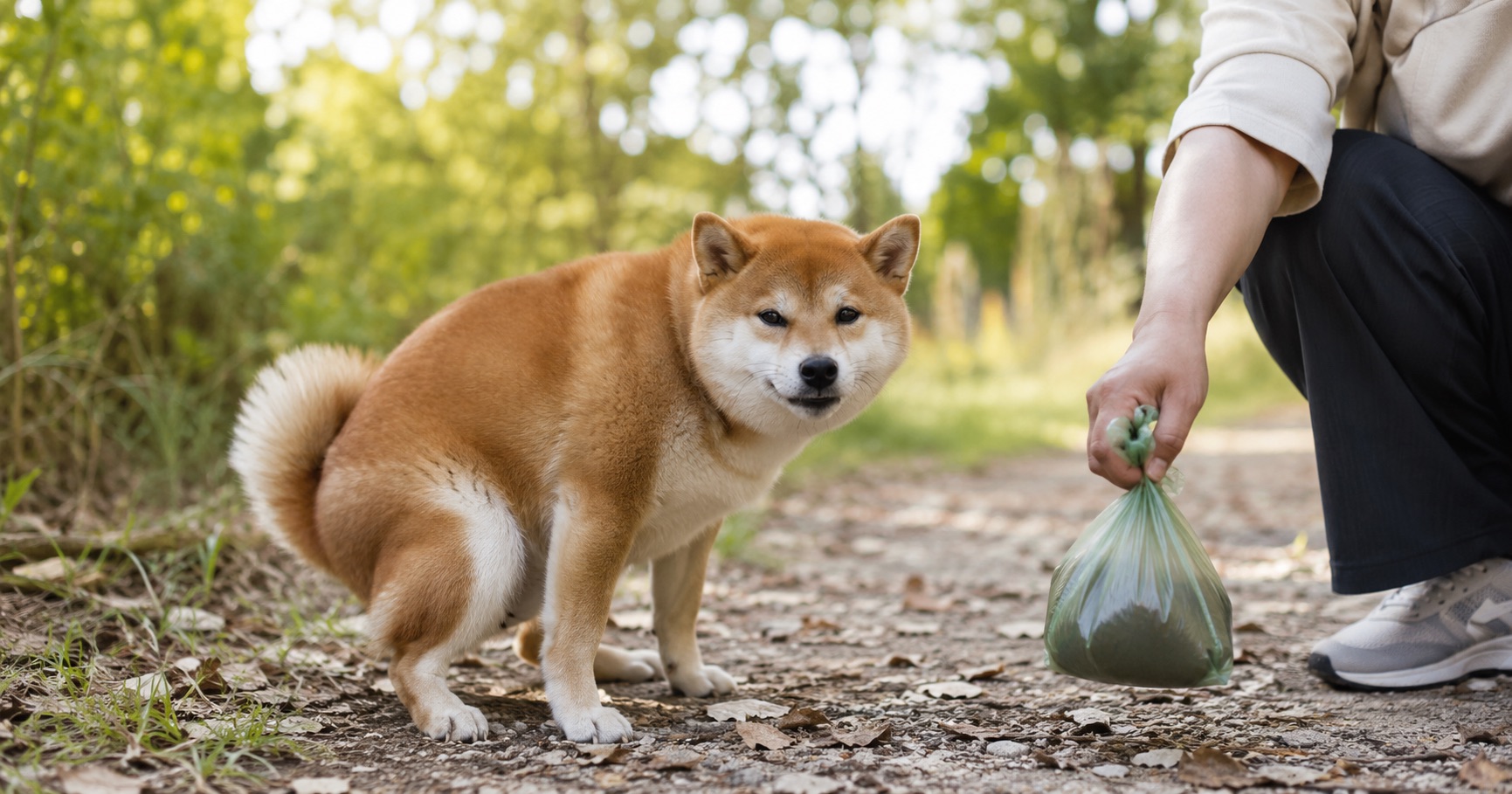
The chart: color
| Color | Meaning | Response |
|---|---|---|
| Deep brown | Normal | Carry on |
| Light brown, yellowish | Digestion, liver, pancreas possibilities | Exam if persistent |
| Greenish | Grass eating, bile-related | Exam if repeated |
| Gray-white | Bile duct, pancreas check needed | Exam |
| Black (tarry) | Possible upper-GI bleeding | Exam immediately |
| Red blood | Lower-gut bleeding, anal injury | Immediately if heavy |
The chart: firmness and contents
Firmness reads as a scale: rock-hard pellets lean dehydration or constipation: holds shape but smears when lifted: mildly soft: shapeless spread: diarrhea stage: liquid: clinic threshold. Contents carry hints too: frequent undigested kibble suggests speed-eating or weak digestion: moving white rice-grain flecks mean suspected parasites (exam now): heavy fur content points to over-licking (skin or stress trail). And if a foreign fragment shows up (plastic, toy), the question becomes whether ALL of it came out: watch appetite and vomiting for days, and go straight in at any sign of trouble.
Read the flow, not the day
Stool is yesterday's menu rendered: single days wobble. Slightly soft the morning after a new treat: routine. The meaningful signals are FLOW: changes lasting past two days, a worsening direction, and company from appetite or energy dips. Which is why the one-line mental note while scooping earns its keep: since when has it been soft, and what preceded it: that pair alone collapses the suspect list. When my dog Gureum's stool lightened the first week on a new food (it means "cloud" in Korean), three days of data would have convicted the food: a week of data watched it walk back to normal on its own.
One stool photo does real work in the exam room
Color and firmness become indescribable the moment they're bagged. On the off-looking days, post the photo to kkeung: it keeps its date, showing the clinic how many days soft, and exactly what color: and since walk records share the same dates, post-walk patterns show too.
Save a photo of today →Count and volume count too
Alongside color and firmness, count and volume changes are data. One to three daily is the common band, but every dog runs a personal rhythm: the baseline is YOUR dog's usual, not the neighbor's. Count up, volume down, long unproductive squatting: difficulty or colon irritation territory. Days of nothing: constipation or obstruction questions. And the no-delay combination: straining with nothing out PLUS vomiting: that's a drive-now pairing. A sudden large jump in volume can also flag the food's digestibility or the portion size.
The fecal test: use it freely
Where the eyeball check ends, the clinic's fecal test begins: parasites, bacteria, digestion status: a basic panel, modest cost, needing only a small fresh sample. Deploy it for repeating soft stool, for newly arrived puppies, and when signals persist despite regular deworming. One closing note: this article's charts are observation tools, not diagnostic ones. The worrying stool goes to the vet, photo in hand: that is always the final step.
Frequently asked questions
We switched foods and the stool color changed. Problem?
The smell has gotten dramatically worse.
The first morning stool is fine but the second one's soft.
They try to eat their own poop. Why?
How many stools a day is normal?
This article is general information and does not replace a veterinary diagnosis. Talk to your vet about your dog's condition.