Should Dogs Wear Clothes?
The Breed-by-Breed Warmth Test
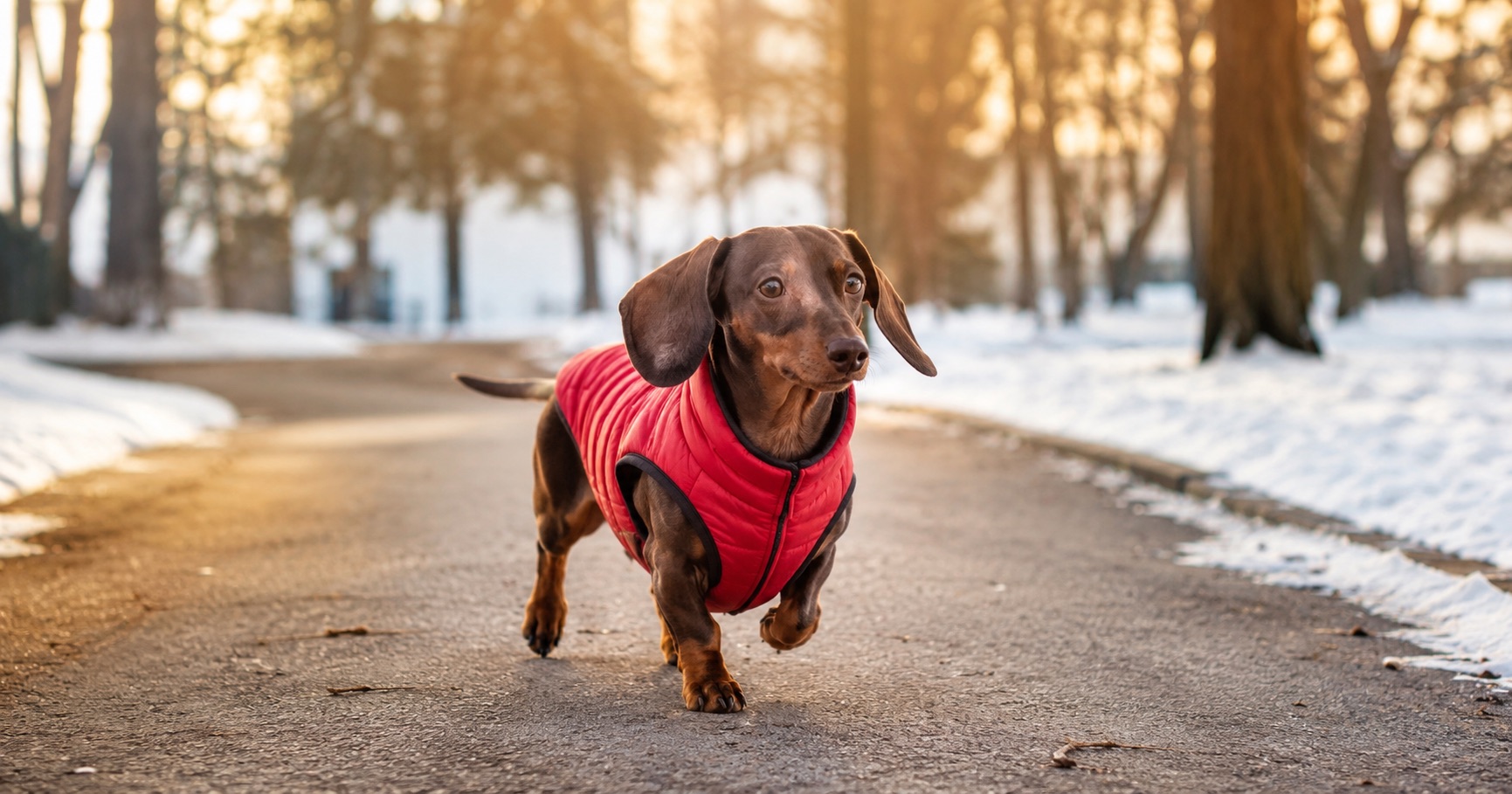
On winter walks there's a scene I love: Sausage the Dachshund in his puffer vest, walking alongside Baekgu the Jindo, gloriously bare. For one of them the coat is survival gear: for the other it would be luggage. Dog clothes look like a taste question: half of it is actually an equipment question.
Clothes earn their keep on short-coated breeds, small dogs, seniors, and the freshly-groomed: anyone who can't hold their own heat. Double-coated breeds like Jindos and Poms already wear premium insulation: added layers run hot and stifling. Decide by breed, season, and the dog's own reaction: and indoors, the default is clothes OFF.
Who actually needs clothes?
One criterion: can this body hold its own temperature? Coat structure and build make the call.
| Group | Who | Need level |
|---|---|---|
| Short-coated breeds | Dachshunds, Min Pins, Chihuahuas, Italian Greyhounds | High for winter outings |
| Double-coated breeds | Jindos, Poms, Shibas, Retrievers | Low: layers can overheat them |
| Seniors, puppies | Thermoregulation declining or unfinished | Helpful on cold days |
| Fresh from the groomer | Coat clipped short | Temporary help, any season |
| Medical management | Post-surgery, skin protection | Per the vet's instructions |
※ The rainy-day raincoat is less about warmth than about SKIPPING A BATH: for slow-drying coats especially, it's the most practical garment in the closet.
When clothes turn harmful
A thick coat on a double-coated dog traps heat: pressed-down fur blocks airflow, and skin trouble follows. And regardless of breed: no all-day indoor wear. A heated home makes clothing redundant, and long wear means matting and irritation. Then there's the veto: a dog who freezes and won't move, wrestles to escape the garment, or starts panting hard is casting it. No outfit on earth outranks that vote.
Sizing and materials
Measure three places for real: neck, chest, back length. Breed-standard sizing charts fail constantly: bodies within a breed vary that much. Fit: two fingers of slack at the chest, and an armpit-chafe check with the garment ON. Materials: low-static cotton blends are the safe zone: and velcro or buttons over zippers, which eat fur. Learned this on the job: Gureum (it means "cloud" in Korean) categorically rejects anything that goes over the head, and permits only back-fastening designs. HOW it goes on matters as much as whether it fits.
The first-outfit robot walk is a neighborhood treasure
The video of a dog's first vest: that stiff-legged robot march: is the post the whole neighborhood laughs at together. Catch the arc from awkward to sprinting and it becomes a story. Videos on kkeung keep their dates: this winter's first-outfit walk only happens once.
Show the neighborhood dogs →Clothes in practice
Converting the clothes-hater
Slice it thin, over days: garment on the floor, sniff, treat: one paw in, treat: on for a second, off, treat. And clip the walk to the end of it: clothes-then-immediately-outside makes the outfit a good omen, and conversion accelerates.
The post-wear inspection
Undressing after the walk: check armpits and neckline for chafe marks, brush out any static tangles. And clothes launder on the same schedule as bedding: regularly.
Two garments cover everything
One real winter coat, one raincoat: functional needs, fully met. Nobody's stopping the fun of a cute wardrobe: but from the wearer's side of the closet, two is plenty.
Still unsure? Watch the dog on the walk: shivering through it says dress them: trotting through it happily IS the answer. The deciding vote always belongs to the one wearing it.
Frequently asked questions
How can I tell my dog is cold?
Do double-coated breeds need coats in deep winter?
Are there dogs who should wear clothes INDOORS?
What about booties?
Harness over the clothes, or under?
This article is general information and does not replace a veterinary diagnosis. Talk to your vet about your dog's condition.