Keeping Your Dog Warm in Winter:
Floor Cold, Humidity, and the Heated-Pad Rule
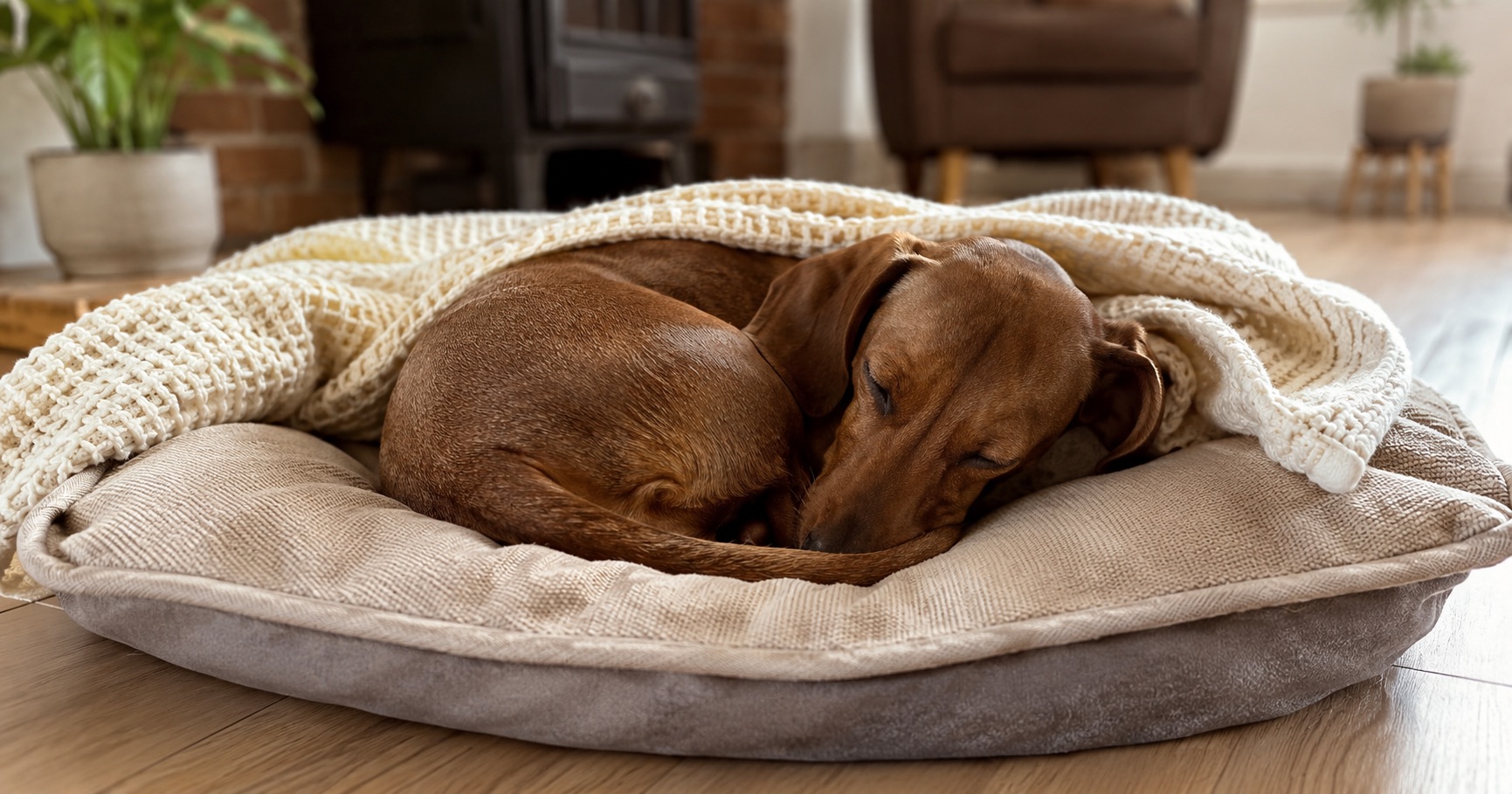
Our walk friend Sausage the Dachshund spends every winter burrowed under blankets with only his nose showing: a belly that close to the floor catches the cold with its whole surface. My dog Gureum's curly double coat buys her some slack (it means "cloud" in Korean): winter prep still happens at our house anyway.
Winter targets: around 20°C (68°F), humidity 40-60%. And as important as air temperature: BLOCKING THE FLOOR COLD: dogs live at floor level. One blanket under the bed, one move away from the draft: the felt difference is huge. Electric heating pads carry low-temperature burn risk: never direct contact, on principle.
How cold-fragile is your dog?
Breed and build swing this widely: find your dog's row first.
| Group | Who | Winter care |
|---|---|---|
| Cold-hardy | Double coats (Jindos, Poms, Retrievers) | OVER-heating is the actual risk |
| Cold-fragile | Short coats (Dachshunds, Min Pins, Chihuahuas) | Blankets: consider indoor wear |
| Extra caution | Puppies, seniors, lean dogs, fresh grooms | 1-2 degrees warmer: drafts sealed |
| Floor-cold-exposed | Short-legged breeds | Insulation under the bed: thick mats |
※ The cold signals: sleeping curled tight, blanket-burrowing, shivering, refusing walks. Any of these showing: time to raise the temperature.
The winter indoor checklist
First: the floor. Even with the heat running, plenty of homes keep a cold stripe of flooring: a blanket or insulating mat UNDER the bed cuts the cold at the source. Second: humidity. Heated winter air dries out fast, and dry air means itchy skin and parched airways: for dogs exactly as for people. Humidifier, or laundry drying on the rack: hold 40-60%. Third: drafts. Window-side and door-side sleeping spots migrate inward for the season.
Heating pads and space heaters: allowed?
Allowed: never in direct contact. Dogs famously stay put on a too-hot surface and collect low-temperature burns rather than move. The pad rules: a thick blanket always on top, lowest setting, OFF when you leave. Space heaters: positioned so the airstream can't reach the face. Learned this on the job: one extra blanket plus one smarter bed location out-performed every appliance we added: safer, too. A dog hunting the warmest patch of floor is announcing a chilly body: nudge the thermostat. A dog panting toward the cool corners is announcing the opposite. The dog IS the thermometer.
The bundled-up winter look doesn't keep
The nose-only-out-of-the-blanket sleeping pose exists for one season a year. Post it to kkeung and the date stays on it: last winter's photo lines up next to this winter's, side by side. A collection of nothing but blanket-nose shots: quietly one of the best albums there is.
Save the cozy-day photo →Winter, case by case
Winter baths and drying
Stretching the bath interval slightly: fine. The non-negotiable: on bath days, the UNDERCOAT dries completely. A half-dried dog in winter is a plunging body temperature and a skin problem on layaway.
Dry air dries the dog too
Cracking paw pads get dog-safe paw balm: static-snapping fur gets a light misting before brushing: and the water bowl gets extra check-ins, so the intake doesn't quietly slide.
The indoor-outdoor temperature cliff
Warm house straight into freezing air is a jolt to the system: pause at the door and let the body adjust: and the cold-fragile dogs wear their coats across the gap.
Winter, properly prepped, is a genuinely great dog season. Watch a dog's face meeting fresh snow for the first time and the keep-them-inside caution loses the argument on the spot. Warm and fortified at home: short and thrilling outside. That's our house's winter formula.
Frequently asked questions
My dog burrows under blankets constantly. Cold?
Winter water intake dropped. Normal?
My dog's nose is fading pale this winter. Disease?
What extra does a senior need in winter?
Are humidifiers safe around dogs?
This article is general information and does not replace a veterinary diagnosis. Talk to your vet about your dog's condition.