Blow-Drying Your Dog:
Why Half-Dried Is Dangerous
The bath takes 20 minutes: the drying takes 40. At first that math made no sense to me. So I dried my dog Gureum roughly and let the rest air out (it means "cloud" in Korean): and a few days later a red hot spot bloomed in her armpit. Curly coats, it turns out, can be dry on the outside and wet at the core. Since that day I think of drying not as the bath's epilogue: it IS the main event.
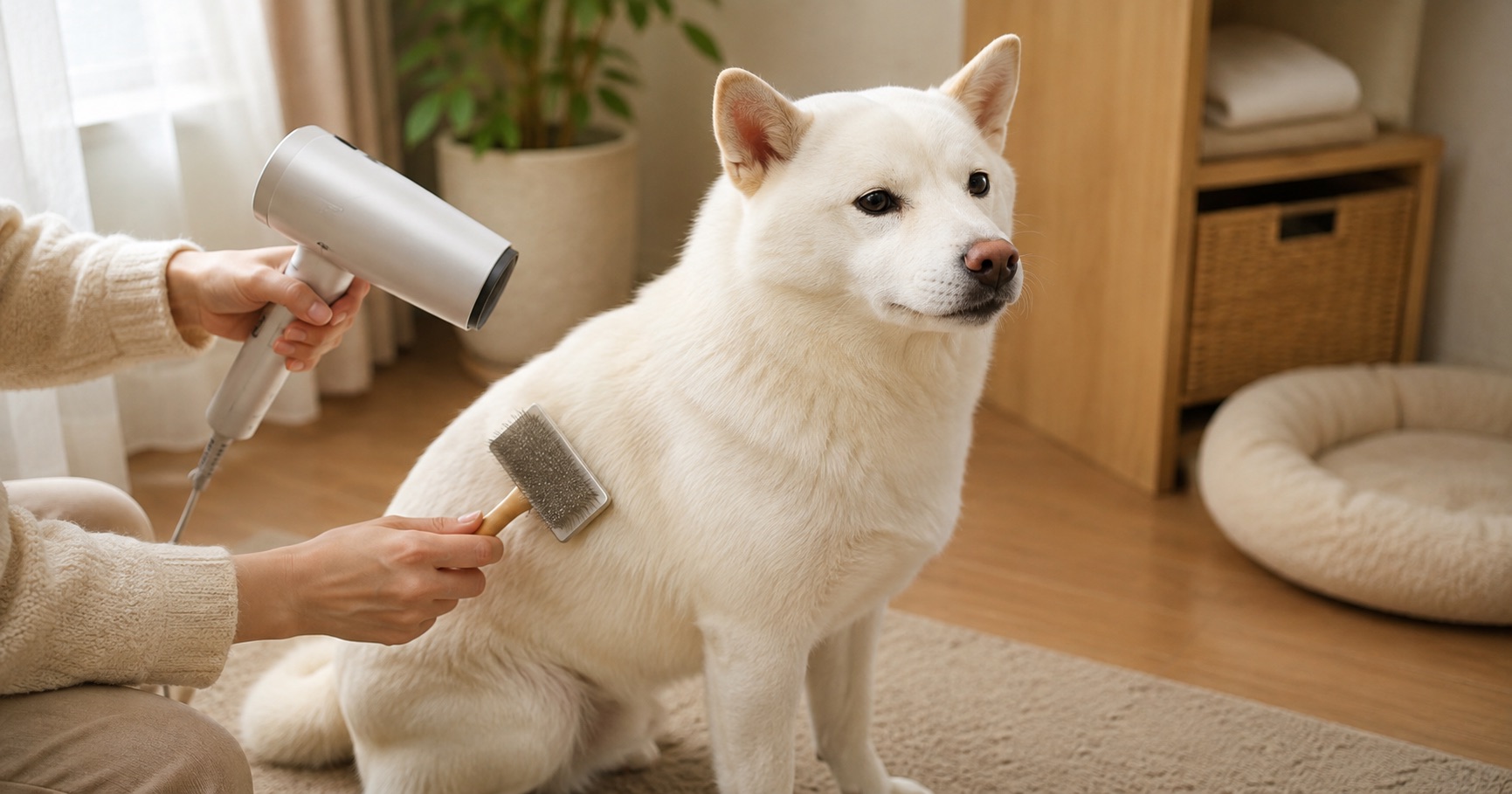
A dog's coat must be dried completely, down to the roots of the undercoat. The half-dried state: dry surface, damp core: is the single most common source of hot spots, yeast, and that musty smell. Towel off as much water as possible first, then run the dryer on low heat and weak airflow from 8+ inches away, brushing against the grain as you go.
Why is half-dried dangerous?
Leave the coat roots wet for a few hours and a humid microclimate forms right on the skin: yeast and fungus's favorite real estate. The trouble starts where hair overlaps and air can't move: armpits, groin, behind the ears, between the toes. And that trapped dampness IS the musty smell. The dog who smells the day after a bath almost always got caught here.
And this one I learned on the job: air-drying isn't really a thing dogs have. Human hair dries in a few hours: a double coat or curly long coat is still damp at the core half a day later. All that time, the skin sits wet.
What's the right drying sequence?
- Absorbent towel first. Press, don't rub: squeeze the water out. A second towel cuts the dryer time dramatically.
- Dryer on low or cool, weak airflow, 8-12 inches away, never more than 3 seconds on one spot. Dog skin is thinner than ours and burns easily.
- Blow against the grain while brushing with a slicker. It's the only way air reaches the roots.
- Order: back, sides, belly, legs, between the toes, tail: and the face last, on the weakest setting.
- Inside the ears: no dryer. Wipe with dry cotton: never blow air directly in.
| Coat type | Typical breeds | To fully dry | Point |
|---|---|---|---|
| Short coat | Dachshunds, French Bulldogs, short-haired Chihuahuas | 10-15 min | Towels do most of it: check skin folds |
| Curly single coat | Poodles, Bichons | 30-45 min | Unbrushed, it dries matted: dry and brush together |
| Long single coat | Maltese, Yorkies | 25-40 min | Brush with the grain: dry ends can hide wet roots |
| Double coat | Pomeranians, Shibas, Golden Retrievers | 45-90 min | The undercoat holds water: part it and check after the surface dries |
* The doneness test is one move: push a finger to the coat root and touch the skin. Cool to the touch means not yet.
What if they're scared of the dryer?
For most, the sound is the problem. On a no-bath day, set the dryer out switched off: treats nearby. Next, run it in another room: treats. Then brief weak airflow at the feet. Climb that staircase over days and most dogs land at tolerable. Gureum got there in two weeks with the dryer running while she worked a lick mat. Still no good: consider a quieter pet dryer, or a drying cabinet that blows from all sides. Not cheap: but in double-coated big-dog households, a legend.
The fluffy after-bath face only exists that day
The fully dried, puffed-up coat is a bath-day-only phenomenon. Photos posted to kkeung keep their dates and collect likes from the neighborhood dogs: and a feed of nothing but fluffy days shows your bath cycle at a glance.
Save a fluffy-day photo →What changes with the season and situation?
Summer
Running cool air only because it's hot stretches the drying time: and all that time the damp sits on the skin. Better: low heat in an air-conditioned room, with extra attention to armpits and groin. Most summer hot spots start there.
Winter
A wet dog loses body heat fast. Be extra thorough at the towel stage, and if they shiver mid-dry, wrap them in a blanket, rest, resume. Baths happen in daylight, in a heated room.
After rainy-day walks
No shampoo doesn't mean no dryer. Rain-soaked coat needs drying to the core all the same: between the toes especially. That's ground zero for post-rain paw infections.
Yes, drying is long and boring. But these 40 minutes prevent weeks of skin treatment. If your dog struggles to endure it, split it into two sessions. Consistently right beats perfectly once.
Frequently asked questions
Can I use my own hair dryer?
Can I skip the dryer and just towel-dry?
They keep shaking themselves mid-dry.
Is a drying cabinet worth buying?
Is there a right drying order?
This article is general information and does not replace a veterinary diagnosis. Talk to your vet about your dog's condition.