How Often Should You Bathe Your Dog?
Standards by Skin Type
When I first brought my dog Gureum home (it means "cloud" in Korean), I bathed her once a week, on the dot. Clean is good: that was my whole theory. Then one day her belly came up red and irritated, and at the clinic I heard something I hadn't considered: washing too often is also a problem. That's when I actually studied bath cycles.
For a healthy adult dog, once every 2-4 weeks is the generally recommended cycle. Oily skin leans toward 2 weeks: dry skin toward 4. Wash more often than that and the skin barrier strips away: the result, counterintuitively, is MORE odor and itching.
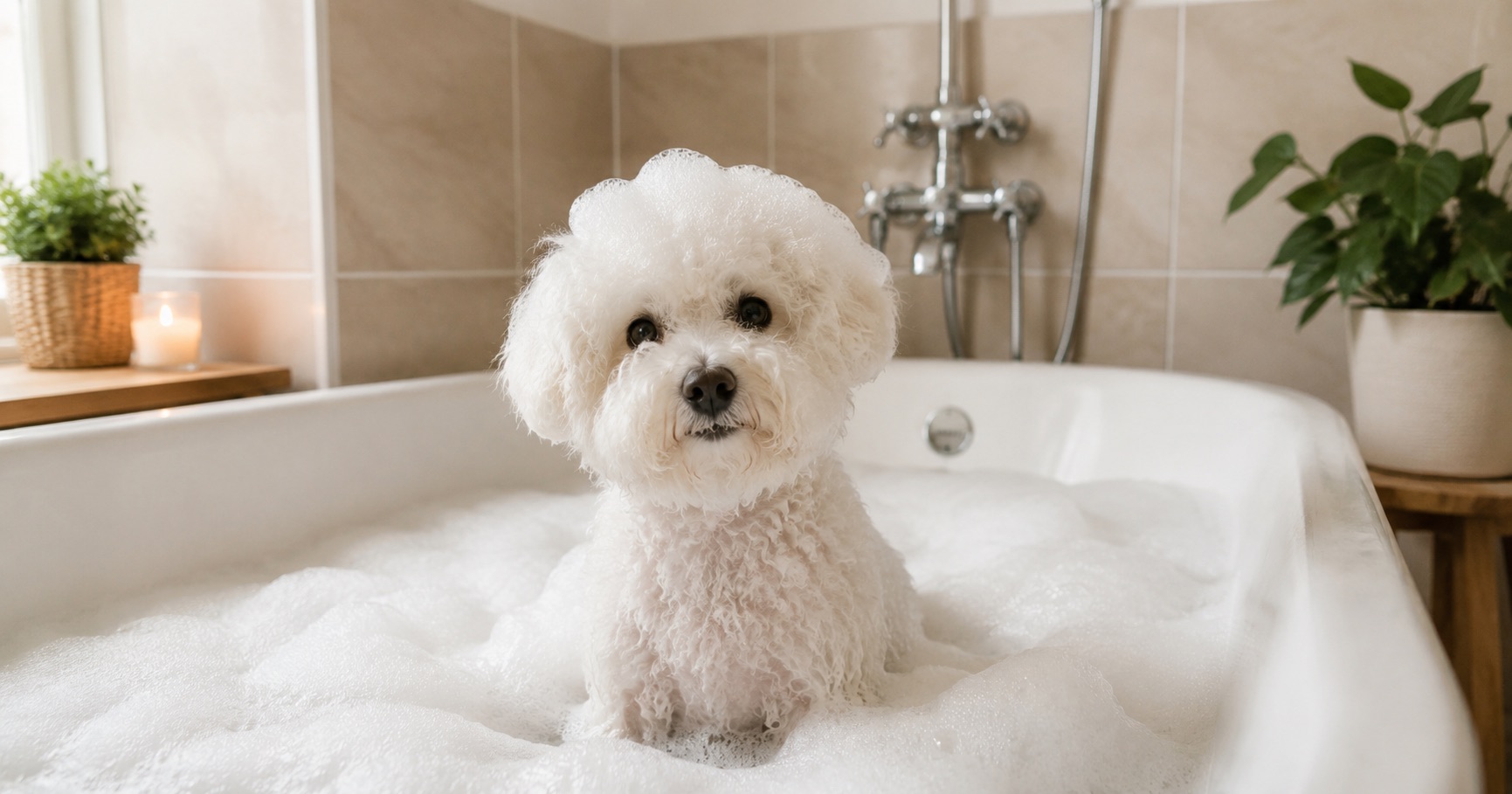
How many weeks is the standard?
The guidance you'll generally hear from veterinary sources: once every 2-4 weeks. There's a reason dogs can't be washed daily like people. Dog skin is thinner than ours, and the oil film it produces is the skin's protection: every bath washes part of that film away. It takes days to rebuild, and the gap is when the dryness and itching move in.
| Skin/coat type | Recommended cycle | Point |
|---|---|---|
| Normal skin, short coat | 3-4 weeks | Often a post-walk paw wipe is all they need |
| Oily skin, smells fast | 2 weeks | Seborrheic skin sometimes runs on prescription shampoo |
| Dry skin, dandruff | 4+ weeks | Moisturizing shampoo, moisturizer after baths |
| Curly single coat (Poodles, Bichons) | 2-3 weeks | Brushing matters more than bathing |
| Double coat (Pomeranians, Shibas) | 4-6 weeks | Long dry times: frequent baths breed hot spots |
* Dogs mid-treatment for a skin condition, or on medicated shampoo, follow the vet's schedule instead.
What goes wrong with too-frequent baths?
Learned this on the job: there's a vicious cycle where you wash because of the smell, and the washing makes the smell worse. Stripped of its barrier, the skin overproduces oil in self-defense: and that oil makes the new smell. Gureum's red belly was this exact loop. I stretched the cycle to two weeks, and within a month her skin color came back.
And for curly-coated dogs: bathing does not undo matting. The soak-and-dry cycle actually felts the tangles tighter. Brushing the mats out BEFORE the bath is the correct order.
When should baths come more often?
- They rolled in mud or stepped in something. Cycle's irrelevant: that's a wash.
- The vet prescribed medicated shampoo for a skin condition: usually specified at once or twice a week.
- Allergies mean frequent pollen and dust rinse-offs: water-only rinses work here, no shampoo needed.
- Rainy stretches soak them on every walk. Though here, the critical piece is the drying, not the shampoo.
The reverse cases exist too: a small dog living indoors through winter, a senior, or a notably dry-skinned dog can run past 4 weeks without issue. No smell and clean skin means there's no quota to fill.
Remember when the last bath was?
A bath cycle only holds if you know when the last one happened. Post the fluffy after-bath photos to kkeung and each keeps its date: one look at the feed shows how many weeks it's been, and lining up skin changes against bath gaps gets easy too.
Save a fluffy-day photo →How do you bridge between baths?
Spot washes after walks
Just the paws, belly, and rear: rinsed in lukewarm water and dried well. Unlike a full bath, it barely touches the skin barrier. Our house keeps a small basin by the door: paws in, paws out.
Brushing
Brushing lifts out dust and dead coat and spreads the skin oils evenly. Honestly, for odor control, daily brushing outperforms bathing. Five minutes does it.
Waterless shampoo and wipes
In a pinch, a dog-specific dry shampoo or fragrance-free pet wipes over the torso covers it. Skip human wipes: the fragrance and alcohol are the problem.
One last thing. If chasing the perfect cycle teaches your dog to hate baths, the whole project is upside down. For a water-fearful dog, stretch the cycle a little and go slow on the adaptation instead. This is, after all, a lifelong activity.
Frequently asked questions
When can a puppy start getting baths?
If I can't bathe them often, won't they smell?
Can I rinse with water only, no shampoo?
Should summer mean more baths?
How do spot washes between baths work?
This article is general information and does not replace a veterinary diagnosis. Talk to your vet about your dog's condition.