How to Choose a Dog Shampoo,
and Why Human Shampoo Fails
One rushed day, I washed my dog Gureum with my own shampoo (it means "cloud" in Korean). It smelled wonderful, so I figured it was probably fine. Two days later her back was a field of dandruff. That was my introduction to the fact that dog skin and human skin are different things: and the day I picked up the habit of reading the backs of shampoo bottles.
Dog skin sits at roughly pH 7: neutral: while human skin runs acidic at about 5.5, so human shampoo strips a dog's skin barrier. Always use a dog-specific shampoo: dry skin gets a moisturizing formula, oily coats with fast odor get a seborrhea-specific one, and red or reactive skin gets fragrance-free hypoallergenic. Medicated shampoos are used only under veterinary direction.
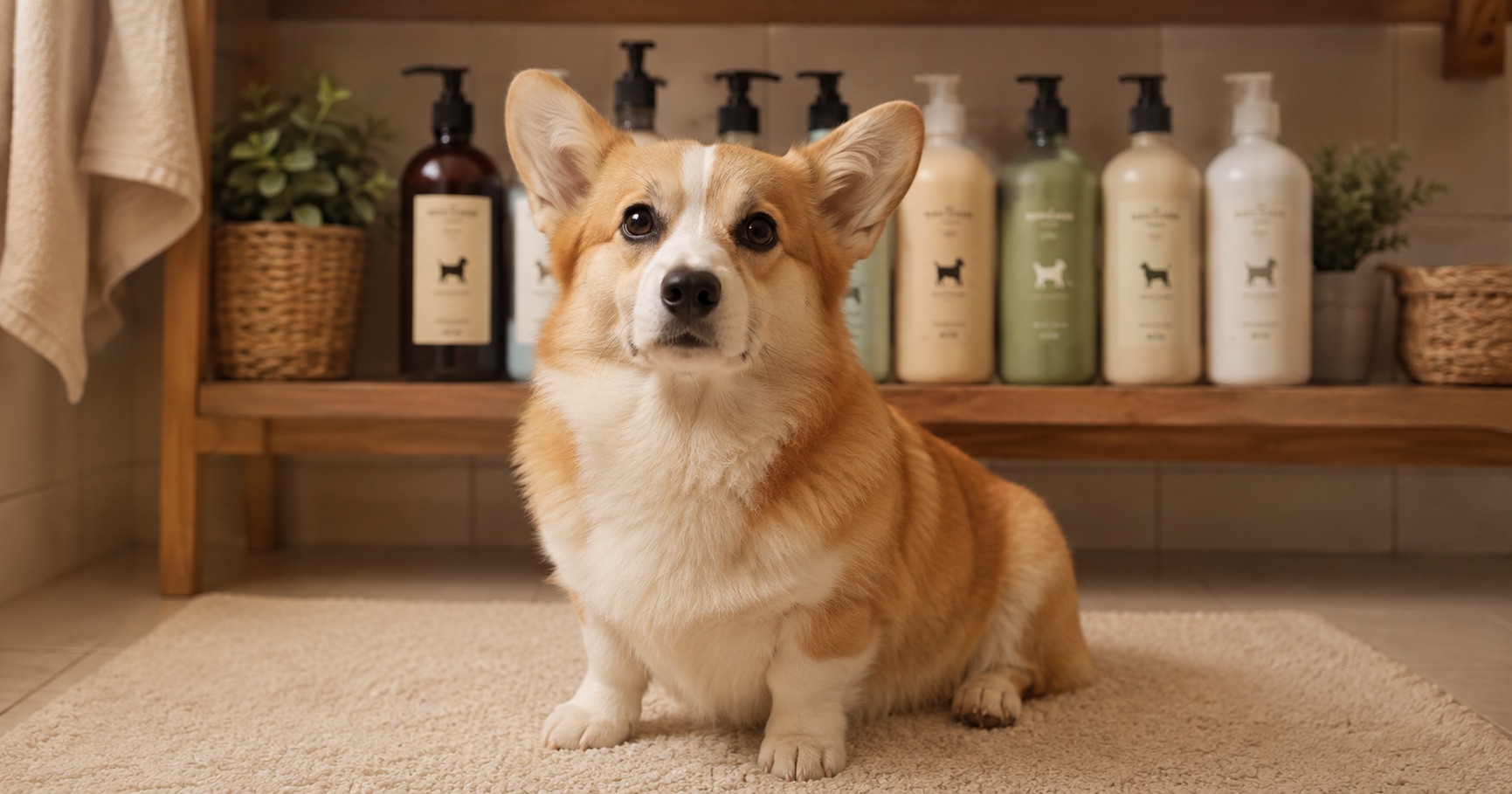
Why can't human shampoo go on a dog?
Human skin is mildly acidic, so human shampoo is engineered to match. Dog skin runs close to neutral: and it's only about a third as thick as ours. When an acidic shampoo hits it, the protective film on the surface strips away, and bacteria and yeast move into the vacancy. One wash can look harmless: repeat it and the road leads to dryness, dandruff, and itching. The dandruff field on Gureum's back was exactly this.
Fragrance is its own problem. A human shampoo's scent lands far harder on a dog's nose, and the fragrance compounds themselves irritate many dogs' skin. Baby shampoo is no exception: gentle, yes, but the pH is calibrated to humans.
Which shampoo fits which skin type?
| Skin type | Signals | Shampoo to pick | Avoid |
|---|---|---|---|
| Normal | No dandruff, little odor | Fragrance-free or lightly scented gentle formula | Strong fragrance, deep-clean claims |
| Dry | White dandruff, itchy after baths | Moisturizing ingredients like oatmeal, ceramides | Deep-cleansing, deodorizing formulas |
| Oily (seborrheic) | Greasy coat, smells fast, tacky skin | Seborrhea-specific; vet-prescribed medicated if needed | Moisture-heavy formulas (more grease) |
| Sensitive, allergic | Redness, frequent scratching, post-bath hives | Fragrance-free, dye-free, hypoallergenic label | Fragrance, dyes, essential oils |
| Puppy | Under a year old | Puppy-specific or gentle fragrance-free | Medicated, adult deodorizing formulas |
* Medicated shampoos (antifungal, antibacterial, keratolytic) come with a diagnosis, and the vet sets the schedule. On healthy skin they dry things out instead.
What to look for on the label
- The first five ingredients are most of the bottle. Fragrance or alcohol up there: pass.
- "Natural" has no legal standard. Essential oils are natural: and tea tree, for one, can irritate dogs.
- If a pH is printed, look for 6.5-7.5. No pH printed doesn't make it bad.
- Two-in-one shampoo-conditioners are convenient, but curly and long coats detangle better with a separate conditioner.
- The criterion isn't the price: it's your dog's skin reaction. The expensive shampoo isn't automatically the right shampoo.
Learned this on the job: switch shampoos and the skin gives you the verdict in two days. More dandruff, redness, or scratching: that shampoo is out. Nothing happening: congratulations, that's your dog's shampoo.
The day you switch shampoos, check the skin two days later
Which shampoo left the skin in what state: that memory fades within days. Post bath-day photos to kkeung and each keeps its date, so when dandruff or a red patch shows up later, you can scroll the feed back and find exactly which shampoo switch it followed.
Save a fluffy-day photo →How do you use shampoo so it actually works?
Dilute it
Most dog shampoos, applied straight, pile up in one spot and fight the rinse. Mix shampoo and lukewarm water at 1:3 to 1:5 in an empty bottle, work up the lather, then apply: it spreads evenly and rinses easily. If the label lists a dilution ratio, follow that.
Rinse double
Leftover shampoo is where the itching and the smell begin. From the point the foam disappears, rinse once more: until the water runs without slickness. Armpits, groin, and between the toes are the easy misses.
The face gets its own routine
Shampoo in the eyes irritates the cornea. Handle the face separately: wipe with gauze dampened in shampoo water, then rinse with clean wet gauze.
No single shampoo cures a skin condition, and no single shampoo causes one. But months on the wrong shampoo erodes skin slowly. Read the back once, check the skin two days later: those two habits are enough.
Frequently asked questions
Human baby shampoo is gentle: isn't that fine?
Can I wash them with bar soap or dish soap?
Can I keep using a medicated shampoo indefinitely?
Does the skin need an adjustment period after switching shampoos?
How long should I rinse?
This article is general information and does not replace a veterinary diagnosis. Talk to your vet about your dog's condition.