Setting Up Your Home for a Senior Dog:
Slips, Steps, and Lighting First
Visiting Barley the Golden Retriever's house, the living room had transformed: mats covering the whole floor, a gentle ramp parked at the couch. The renovation came AFTER the day Barley's legs gave out on a dismount. Here's everything that would have been better installed before the incident: with his family's trial and error included.
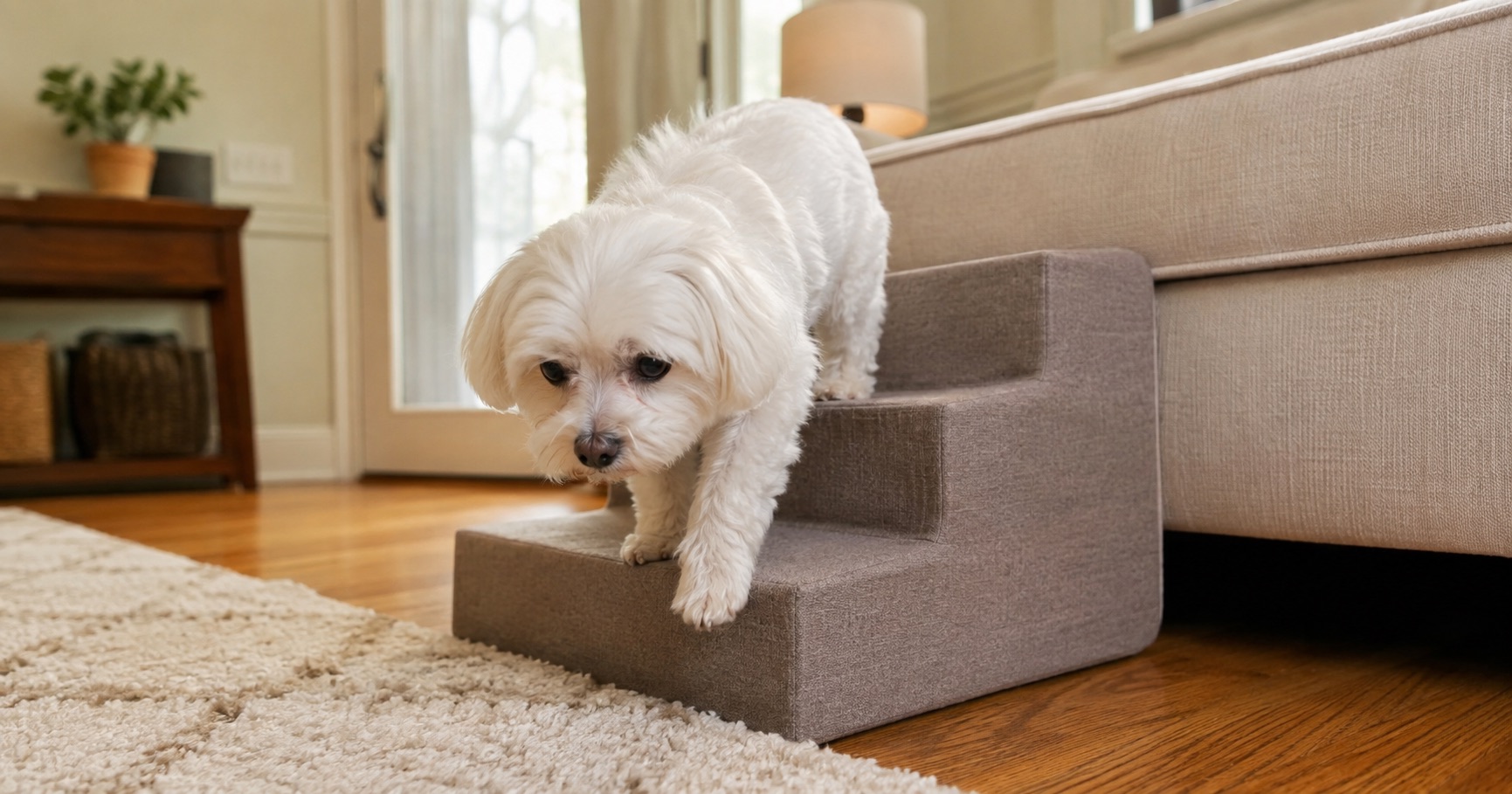
The senior home renovation, in priority order: kill the slipping, kill the ledges, light the paths. Mats on the slick floors: stairs or a ramp at the couch and bed: soft lighting along the night routes. Add scattered water stations and a frozen furniture layout, and the majority of senior falls and joint injuries get prevented at home: before they happen.
Why floors, ledges, and lighting first?
Most senior injuries happen INSIDE the house: weakened legs on slick hardwood, worn joints absorbing couch dismounts, dimming eyes navigating dark hallways. And the three feed each other: a slippery floor amplifies landing impact: dim eyes can't judge the footing. Which is why they get fixed as a SET: piecemeal fixes leak.
| Zone | The hazard | The fix |
|---|---|---|
| Living room floor | Slick hardwood and tile | Non-slip mats along the full travel routes |
| Couch and bed | Jump-up, jump-down impact | Dog stairs or a ramp: or block access entirely |
| Hallways | Night-travel collisions | Nightlights or sensor lights at paw level |
| The bed | Thin, hard, low cushioning | Thick orthopedic bed, out of the drafts |
| Water and food | One distant station | Two or three water spots: slightly raised bowls |
| Entry and balcony | Thresholds and level changes | Gentle threshold ramps, mats at the steps |
The room-by-room work
- Lay mats along the ROUTES, continuously: bed to water, water to potty, unbroken. Scattered islands of mat just relocate the slipping to the gaps.
- Stairs and ramps aren't done at installation: days of treat-training make them real. If the dog keeps jumping anyway: blocking the couch beats the jumps, joint-wise.
- Lighting goes on the midnight water route first: two plug-in sensor lights cover most homes.
- Keep paw-pad fur and nails short: long pad fur slides on ANY surface, mats included. The hidden other half of floor management.
- The bed: a corner with family sightlines but little foot traffic. Nobody should get stepped on mid-dream.
After the mats went in, Barley reportedly started striding around the house again: the memory of slipping had been making him timid. The floor wasn't just a fall risk. It was a confidence tax.
For fading eyes and ears
For a dog with dimming vision, the greatest kindness is a FROZEN floor plan: seniors navigate by a memorized map of the house, and one relocated couch means collisions and confusion. Pad the sharp furniture corners. For fading ears: no touching from behind: enter the field of view first, or announce yourself with a floor thump. Repeated startling can turn into defensive snapping: the habit protects everyone.
Change the house, change the stride
Once the mats go down, a dog who'd grown afraid of walking starts padding the walks back on. Log walks in kkeung and the distances and dates stack up, each walked day stamping a paw print: the stamps visibly thickening again is the whole reward. For a senior, every single walked day is worth keeping.
Check this week's walks →Free fixes that start today
Raid the house for floor coverage
No dedicated mats yet: yoga mats, retired carpets, and rugs start the job fine. What matters isn't the material: it's covering the routes and pinning everything down. A curled edge is its own tripping hazard: tape it flat. The day after visiting Barley's house, a folding mat appeared in front of our own couch: my dog Gureum still jumps (it means "cloud" in Korean), but she already knows the mat lives there. The runway is ready before the landing gear ages.
A couch cushion as interim stairs
Before buying stairs: a firm cushion or folded mattress topper at the couch front already cuts the impact. If the dog takes to it, upgrade to the real thing then: no rush.
Move one water bowl
One extra water bowl near the bed: today's easiest change, outsized returns. More drinking helps the kidneys: shorter night trips cut the fall risk. One bowl, two wins.
Changing the house means admitting the dog is aging: and that can sting. But flip it over: it means there is still THIS much we can do, so they keep walking strong, longer. The list is long. That's the good news.
Frequently asked questions
How do I choose non-slip mats?
Stairs or a ramp?
Should I just block the couch entirely?
They keep bumping into walls at night. Will lighting fix it?
How warm should the heated floor run?
This article is general information and does not replace a veterinary diagnosis. Talk to your vet about your dog's condition.