Luxating Patella:
What Every Small-Dog Owner Must Know
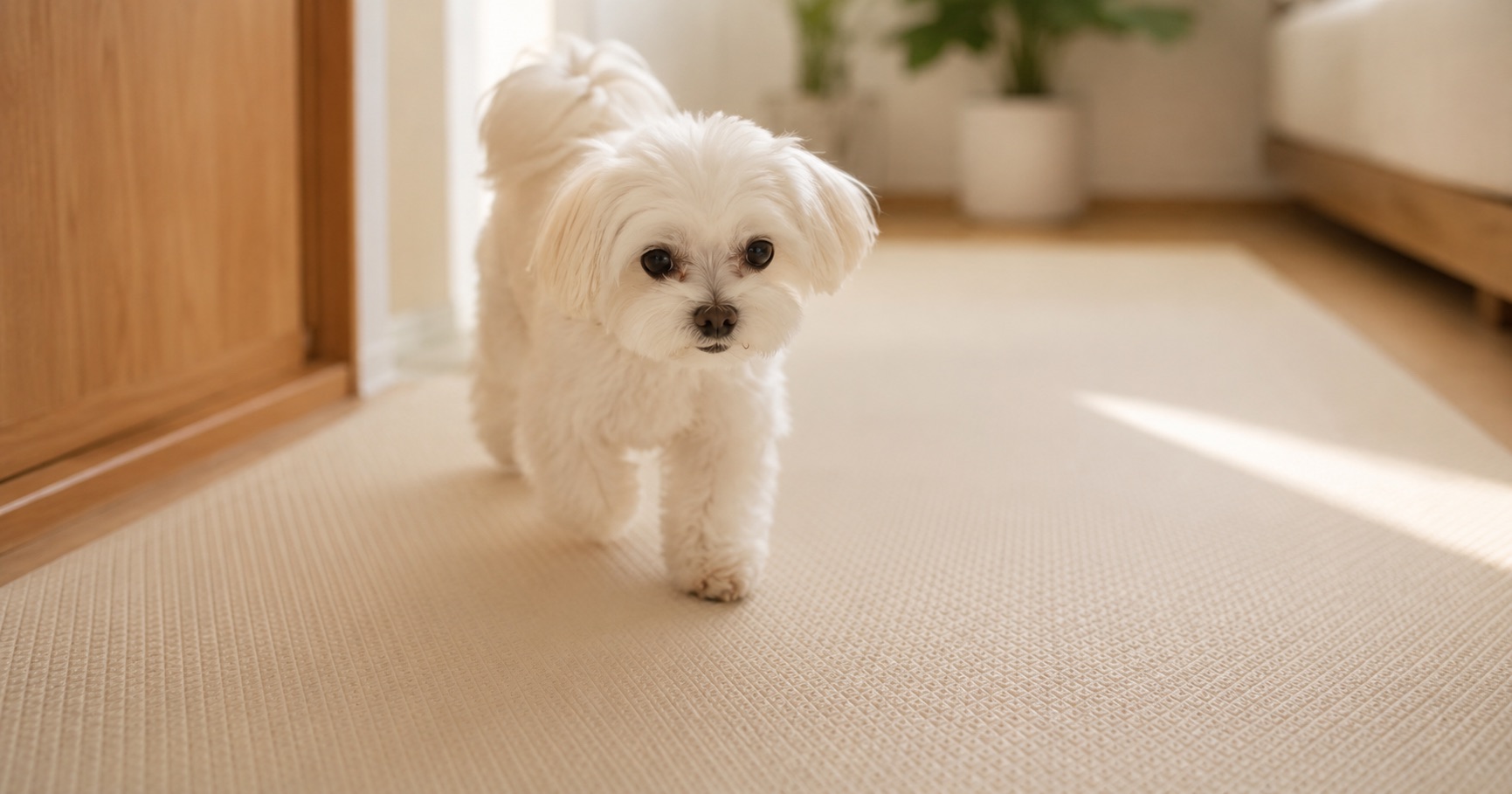
Mid-walk, one hind leg suddenly lifts: three-legged hop for a few strides: then back to normal as if nothing happened. If you live with a small dog, you've probably seen it. The first time my dog Gureum did that skip after hopping off the couch (it means "cloud" in Korean), my heart dropped. Luxating patella: a problem to understand precisely, not to fear.
A luxating patella is the kneecap slipping out of its groove: common in small breeds whose grooves run genetically shallow (Maltese, Poodles, Pomeranians, Bichons, and others). It's staged grades 1-4: grades 1-2 usually get progression-slowing management (weight, environment): grades 3-4, or clear pain, put surgery on the table. Grading and treatment direction come from the vet's palpation and X-rays.
The grades, and what each means
| Grade | State | Typical response |
|---|---|---|
| Grade 1 | Slips when pushed, returns on its own | Regular checks + environment, weight |
| Grade 2 | Slips out spontaneously at times (the skip) | Tighter management, progression tracking |
| Grade 3 | Out most of the time; reducible by hand | Surgery-consult stage |
| Grade 4 | Always out, not reducible | High surgical need; gait deformity |
Important: the grade doesn't map perfectly onto pain. Grade-2 dogs can hurt often; grade-3 dogs can be doing fine. So the surgery decision weighs pain frequency, age, activity, and muscle condition alongside the number. A grade 1-2 finding at a checkup is not a sentence: it's the starting gun for management.
The home-management three-piece set
One: floors. Slick hardwood stresses those knees every single day: lay non-slip mats along their routes. It's why our living room became a patchwork quilt of mats. Two: weight. The single surest way to cut the load those knees carry. Three: muscle. The muscles around the knee are the joint's brace: steady flat-ground walks maintain the hind-leg strength that holds everything in place. Add stairs or a ramp at the couch and bed, and redesign the games that involve standing tall and jumping.
The signs that say checkup time
The mid-walk skip with one hind leg lifted; sitting with one leg swung out sideways; a click from the knee; disliking touch there; repeatedly sitting down mid-walk. Any of these recurring: get the exam. And since the symptom is momentary: the dog often looks perfect at the clinic: film that gait and bring it. It does serious diagnostic work.
The knee's report card is the walking video
Patella management is measured by one thing: whether the gait holds. Post short clips of their walking from behind to kkeung: each keeps its date, showing the checkup whether the skipping has increased: and with distance and time logged per date, the too-hard days show up too.
Save a video of your dog →If surgery has been recommended
The word surgery whites out the mind: so here's the pre-decision checklist. Current grade and pain frequency. The expected course WITHOUT surgery. The surgical method and rehab timeline. BOTH knees' condition (one-side surgery loads the other side). And for an operation this size, a second opinion is a completely natural move. If surgery proceeds, half the outcome is rehab: also assess whether your household can genuinely hold the weeks of activity restriction and the staged exercise program that follow.
Prevention starts in puppyhood: guilt doesn't
The major cause of patella luxation is inherited structure: this is not a disease owners can fully prevent. It did not happen because you skipped the mats. What we CAN do is slow the progression, and the three-piece set above does that meaningfully. Small-dog owners: request a knee check at every annual exam even without symptoms, and track the grade over time. The quality-of-life gap between the dog managed from an early grade and the dog discovered at grade 4 is enormous.
Frequently asked questions
They skip a step but recover instantly. Vet-worthy?
Will joint supplements fix the luxation?
Should walks decrease, or increase?
Does surgery cure it?
What should change inside the house?
This article is general information and does not replace a veterinary diagnosis. Talk to your vet about your dog's condition.