The Puppy Socialization Window:
The Experiences That Matter in Weeks 3-14
My dog Gureum isn't afraid of the vacuum (it means "cloud" in Korean). Umbrellas opening, though: full panic. Looking back, the math is exact: during her socialization window, the vacuum ran daily and an umbrella never once appeared. What those 11 weeks contained: and didn't: runs the whole life. Which is why this is the first article I'd press into any puppy owner's hands.
Weeks 3-14 are the only period when the unfamiliar gets met with curiosity before caution. When the window closes, novelty defaults to fear. Even mid-vaccine-series: carry them out for the sounds, the sights, the people: and at home, build ease with paw handling, brushing, and household noise. More important than the count: every experience ends as a GOOD memory.
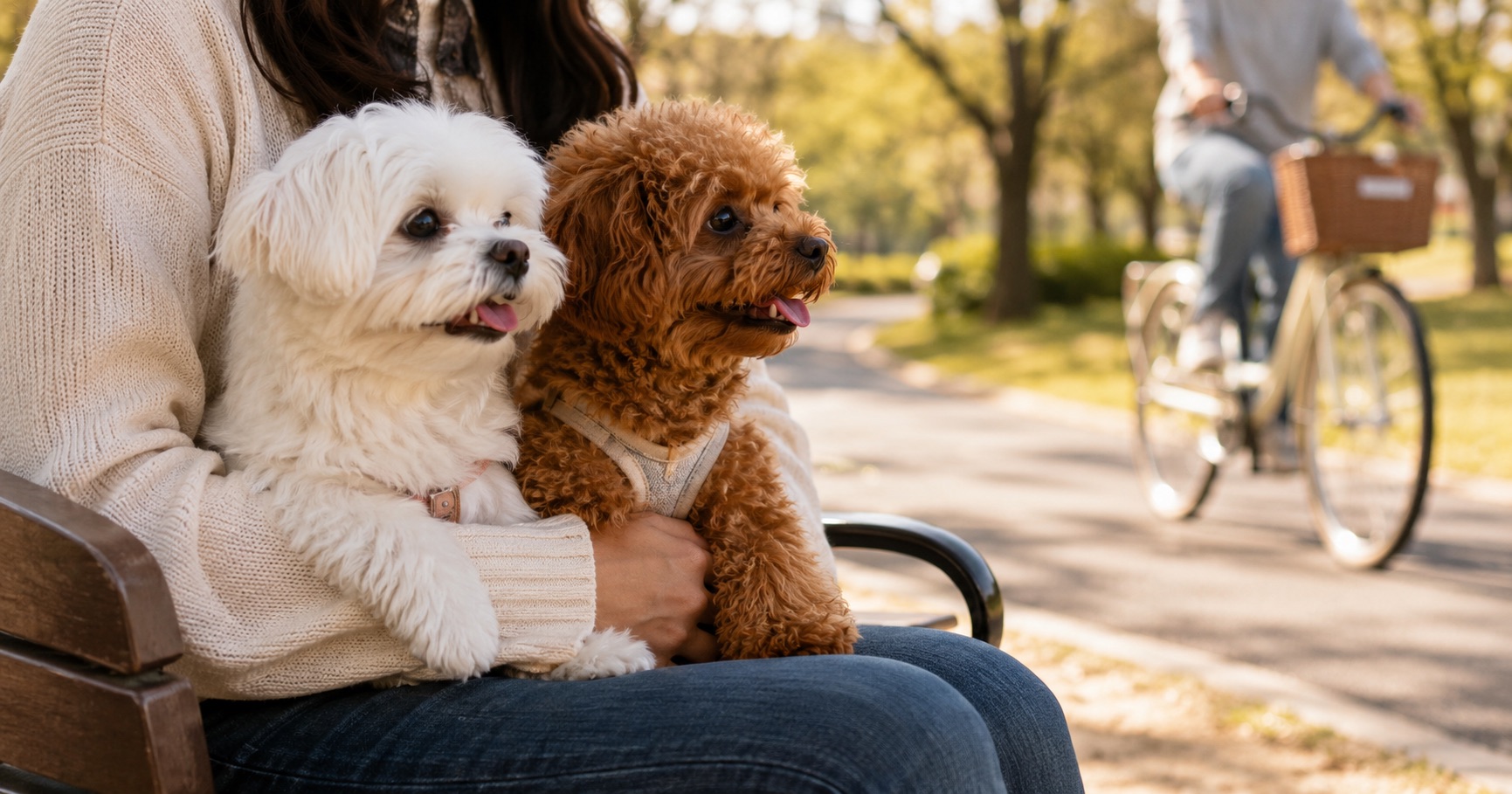
What happens inside the window?
From week 3, the brain absorbs the world like a sponge: around week 14, the default flips to wariness-first: survival wiring, and hard to reverse by training. Which means the same experience carries a different price by date. A motorcycle met at 12 weeks files under "loud something." A motorcycle first met at 8 months files under "monster."
| Domain | The experiences | The technique |
|---|---|---|
| People | All ages, hats, glasses, beards, umbrella-carriers | Hand THEM the treats: puppy approaches: no forced holding |
| Sounds | Vacuum, doorbell, dryer, recorded thunder and fireworks | Low volume plus treats: raise it by degrees |
| Places | Elevators, car rides, the vet, cafe fronts | Make no-treatment vet visits: treats only, then home |
| Dogs | Vaccinated gentle adults, fellow puppies | Friends' vaccinated dogs first: overexcitement means pause |
| Handling | Paws, ears, mouth, tail, brushing, being held | One minute daily: touch-then-treat, the eternal formula |
| Objects | Umbrellas, carriers, strollers, bicycles, plastic bags | Let the puppy's nose go first |
Going out before the shots finish?
The most-asked question, and the answer is: carried outings, yes: actively yes. The window closes at 14 weeks: the vaccine series usually completes after 16. Waiting for completion forfeits the whole golden period. The safety rules:
- No ground contact: arms, a bag, or a stroller: seeing and hearing already IS the experience.
- Skip the grass patches and utility poles where other dogs' waste collects.
- Postpone contact with dogs of unknown vaccine status: friends' fully-vaccinated dogs go first.
- Ten to fifteen minutes at a time: home before the puppy runs out of battery.
I carried Gureum through the market streets of Paju on a daily lap: and whether it was the handcarts and the loudspeakers she absorbed there, she's unshakeable in noisy places to this day.
The signs it's working
Meeting something new without freezing, tail swinging at half-mast: the course is good. Persistent barking, hiding, or dribbling urine at a specific trigger: that stimulus needs a hard intensity cut and a re-approach. Shoving a puppy at what scares it isn't socialization: it's trauma manufacturing. Leave the exit open, wait until they choose to approach. They're busy reading the world right now: let them read at their own pace.
Half of socialization starts in the neighborhood
The biggest contributor to a puppy's socialization is often not a trainer: it's the neighborhood's gentlest adult dog. Spot a nearby dog's completed walks on the kkeung neighborhood feed, then actually cross paths on a walk: that's how the first dog friend happens. Neighborhood friends made young tend to last a lifetime.
Meet the neighborhood dogs →What if the window's already closed?
Past 14 weeks is not past hope
After the window, the RATE slows: the possibility doesn't vanish. Adult dogs change too, through good experiences stacked in very small units. The honest adjustment: what a puppy learns in a week may take months. Accept that, and start anyway.
Distance is the first dial
For a feared trigger, find the no-barking distance first: feed treats there: close one step every few days. Trying to close it all in a day is the single biggest cause of failure.
Puppy classes are a legitimate route
No access to peers: look for a puppy class that actually verifies vaccinations. But high-headcount, low-supervision operations manufacture bad experiences: observe a session first, then decide.
Socialization, in the end, is one long message: the world is safe. No rushing required. One good experience today: that's a fully sufficient day.
Frequently asked questions
Why weeks 3-14 specifically?
How many experiences per day?
What about an unusually fearful puppy?
A puppy raised long with littermates: fully socialized?
What if something scary happens during the window?
This article is general information and does not replace a veterinary diagnosis. Talk to your vet about your dog's condition.