The Hand-Biting Puppy:
Teaching Inhibition with the Play-Pause
Puppy bite training has an order of operations: BITE SOFTLY comes before DON'T BITE. It sounds backward: but the dog who first learns force control (inhibition) carries a safe mouth for life. When adulthood brings the startled moment or the painful one and teeth make contact anyway: the dog with force control baked in and the dog without produce outcomes a world apart.
Bite inhibition is what littermates teach through play: with humans inheriting the job. The tool is the play-pause technique: 1) soft mouthing: play continues: 2) a painful bite: a short OW + full 3-10 second freeze (hand still, gaze withdrawn): 3) resume: another hard bite means leaving the room (30-60 second time-out): 4) gradually lower the allowed force until play involves no teeth at all. The core: the body-level cause-and-effect that hard biting switches off the most fun thing in the world.
The play-pause execution table
| Situation | Action | Caution |
|---|---|---|
| Soft mouthing | Play continues | Allowing this stage IS the learning material |
| One hard bite | OW (short, low) + 3-10 sec freeze | Don't yank the hand (triggers prey drive) |
| Repeated biting | Rise silently, leave 30-60 sec | Return as if nothing happened |
| Bites the TOY | Big praise, enthusiastic play | Make the correct answer obvious |
The details decide it
Households that know the method still lose it in the details. One: never yank the hand. A fast-moving hand is fleeing prey: the biting only gets more fun. Bitten: freeze the hand in place, and withdraw slowly the moment their jaw softens. Two: the OW needs acting chops. High and excited reads as play-along: it must be short, low, and abruptly CUT. For the puppy who gets MORE excited by sounds, drop the sound and use the freeze alone. Three: time-outs stay short. Vanish for minutes and the puppy forgets what triggered it: 30 seconds delivers the message fully. Four: resume grudge-free. The pause is a rules bulletin, not a punishment: post-return frostiness only confuses.
The biting urge needs a legitimate outlet
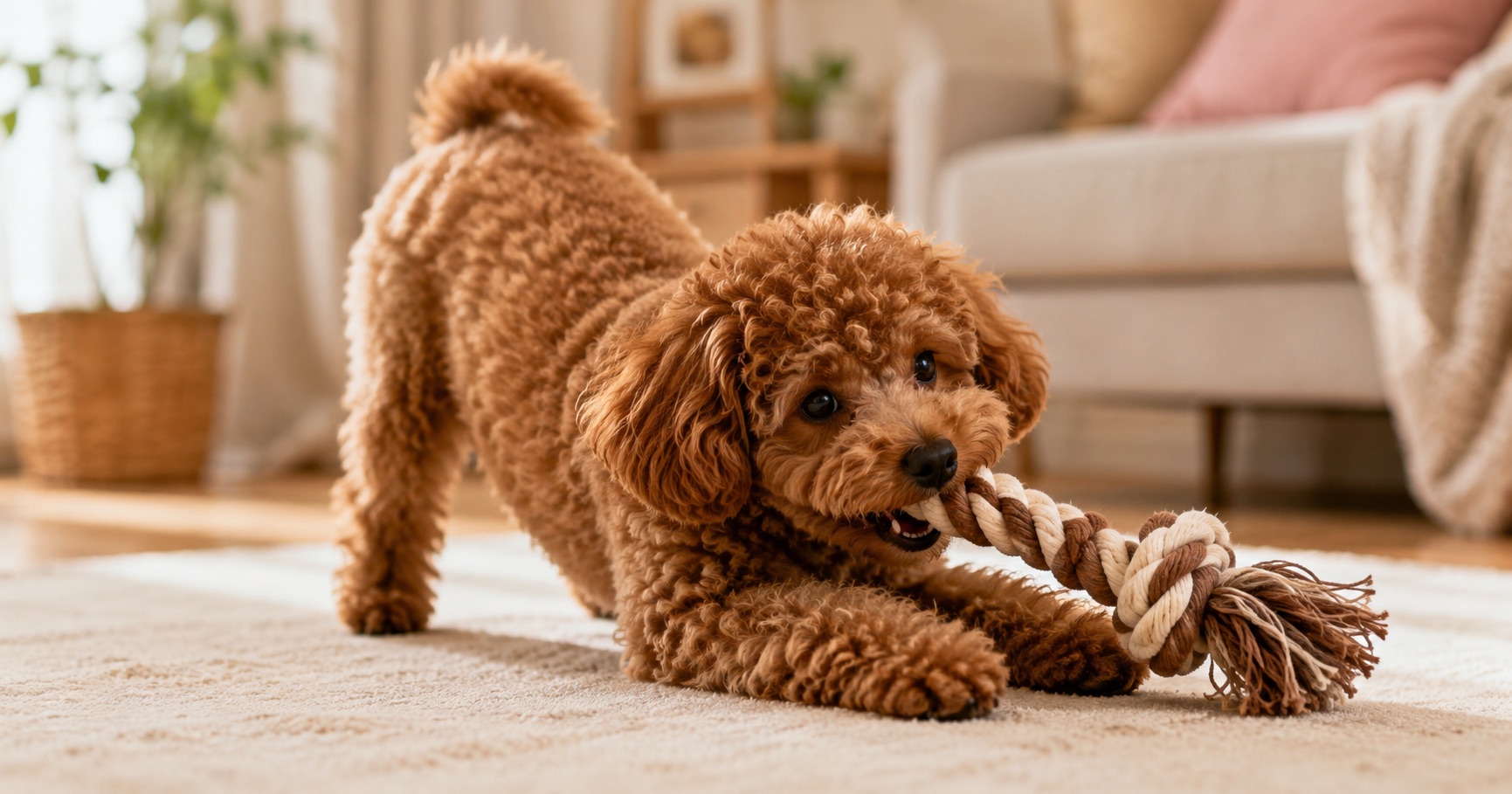
Inhibition training carries a hidden premise: the urge itself is innocent, and it MUST discharge somewhere. Puppy biting is exploration, teething relief, and play in one. To shrink the hand-directed share, open official channels generously: tug toys, chew toys, scent games. Suppress without outlets and it's balloon-squeezing: the pressure erupts elsewhere: chair legs, socked toes. Our house lived a full season where my socked feet were prey the moment socks appeared: my dog Gureum's toe-hunting era (it means "cloud" in Korean) ended only when a 15-minute evening tug session entered the routine. Half of this training is outlet design.
Bite-force change only shows on video
Inhibition training's entire result is force declining: felt only across weeks. Post short clips of play-biting to kkeung and each keeps its date: week one beside month one, the hard-biter visibly gone soft.
Save a video of your dog →One family, one rulebook
This training's biggest variable isn't the puppy: it's the family. Dad runs the pause technique while someone else plays hand-wrestling, and the puppy faces a different rulebook per human: infinite reset. Children especially tend to shriek and run when bitten: to a puppy, the world's best chase-game starting gun. Three family-meeting resolutions: hands are never toys at ANY force: when bitten, freeze like a tree: play happens through toys only. Teach kids be-a-tree: silent, arms folded: as a game beforehand, and it holds up under live fire.
What crossing this bridge buys
Inhibition training demands weeks-to-months of steadiness: the dividend runs for life. The force-calibrated dog develops the soft mouth that takes treats without tooth contact: becomes the safe patient for groomers and vets: widens the trust radius with children. Miss the window, and adult bite problems cost multiples to correct. The season of shiny baby teeth is the cheapest tuition there will ever be: that's the conclusion worth handing every puppy owner. With one boundary note: an adult dog's serious biting (aggression) is outside this article's range: that belongs to the professionals.
Frequently asked questions
I yelp and freeze: they tilt their head, then bite again. Is it failing?
What about holding the muzzle or clamping the mouth shut?
Does bitter spray on my hands work?
When they're wound up, training means nothing: they just lunge and chomp.
Are there puppies the pause technique just doesn't work on?
This article is general information and does not replace a veterinary diagnosis. Talk to your vet about your dog's condition.