Dog Brushes by Coat Type:
What Slickers, Pins, and Combs Each Do
In my first month with my dog Gureum (it means "cloud" in Korean), I bought five brushes. Every one came recommended. The two I actually use now: a slicker and a comb. The other three sleep in a drawer. If I'd known the coat decides the brush, I'd have kept the money. Here's that guide, on the house.
The coat type picks the brush. Curly single coats: slicker plus comb. Double coats: undercoat rake plus slicker. Short coats: a rubber brush. Two brushes cover most breeds. Frequency: daily for long and curly coats, 2-3 times a week for double coats (daily in shedding season), and 1-2 times a week for short coats.
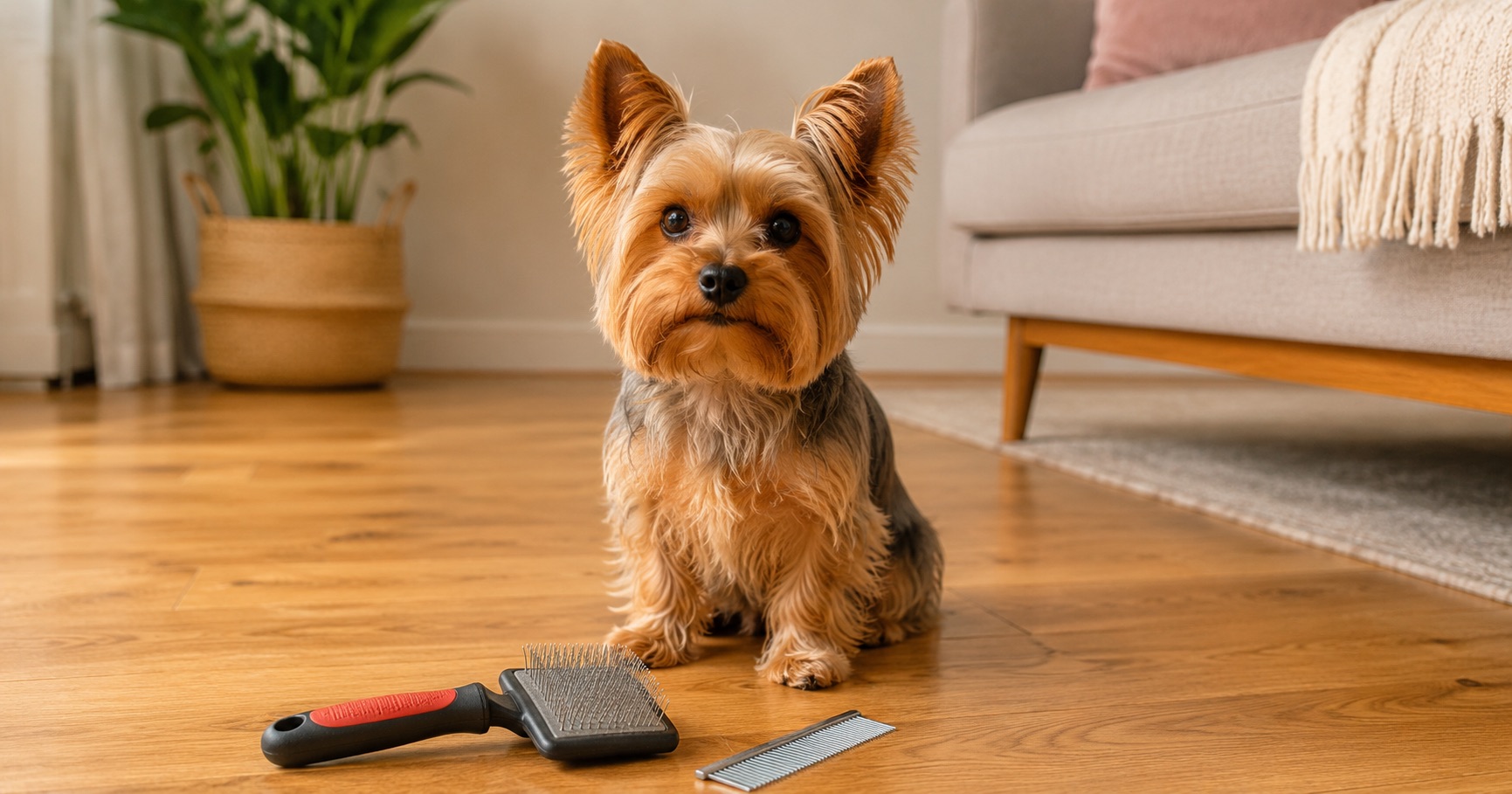
What does each brush actually do?
Every brush has a different job: opening tangles, lifting dead coat, finishing, verifying. Buy without knowing the jobs and your drawer fills up like mine did.
| Brush | Looks like | Job | Right coat |
|---|---|---|---|
| Slicker | Fine, dense wire pins, slightly bent tips | Opening tangles, lifting dead coat, standing the coat while drying | Curly, long, double coats |
| Pin brush | Long pins with rounded tips | Smoothing, finishing, dusting off | Long single coats (Maltese, Yorkies) |
| Comb | Metal teeth, fine on one end, coarse on the other | Tangle verification, face and paw detail, final check | All long and curly coats |
| Rubber brush | Rubber nubs | Dead-coat removal, massage | Short coats (Dachshunds, French Bulldogs, Beagles) |
| Undercoat rake | One row of long teeth | Pulling only the undercoat | Double coats (Pomeranians, Shibas, Goldens, Corgis) |
| De-shedding tool | Fine blade | Bulk removal of dead undercoat | Double coats in shedding season: overuse damages topcoat |
* De-shedding tools are efficient but cut topcoat too: frequent use leaves the coat brittle. Shedding season, about once a week.
Which combo fits which breed?
- Curly single coats: Poodles, Bichons, Maltipoos. Slicker to open, comb to verify: that's the whole kit. Wherever the comb snags, a tangle remains.
- Long single coats: Maltese, Yorkies, Shih Tzus. Pin brush with the grain, comb to check: add a slicker for serious tangles.
- Double coats: Pomeranians, Shibas, Golden Retrievers, Corgis. Undercoat rake for the undercoat, slicker to finish: de-shedding tool weekly in shedding season.
- Short coats: Dachshunds, French Bulldogs, Beagles, short-haired Chihuahuas. One rubber brush. Used pre-bath, it pulls a whole load of dead coat at once.
- Puppies: anything soft. The goal is learning to LIKE the brush: the slicker's wire pins can wait.
Learned this on the job: the right brush matters far more than the good brush. Put a pin brush on a curly coat and the surface turns lovely while the inside keeps matting. I fell for that one for months.
What order, and how often?
The order: ends to roots. Open the tips a little at a time and work upward: start at the roots and one snagged tangle teaches them to hate the whole enterprise. Zones: back, sides, belly, legs: then the mat factories: armpits, behind the ears, groin, under the tail. Finish with one comb sweep: no snags, you're done. Frequency: 5-10 minutes daily for curly and long coats, 2-3 times a week for double coats, 1-2 for short. Gureum grows a pea-sized armpit mat the day after any skipped day: so ours is daily.
Five minutes of brushing: the hard part is doing it daily
A brushing habit collapses back into tangles after a few skipped days. Post the sleek after-brushing photos to kkeung and each keeps its date: the feed shows exactly how many days you skipped. The neighborhood dogs' likes make decent motivation for tomorrow's five minutes.
Save a photo of today →How do you open a matted spot?
Small tangles
A light spray of detangler or conditioner, split the mat halfway with your fingers, then slicker from the ends inward, a little at a time. Hold the root side with your other hand so the skin never takes the pull.
Big mats
If fingers can't split it, don't force it. The pain teaches brush-hatred, and the skin under a serious mat is often already raw. Clippers at the groomer's is the correct answer.
Bathe AFTER detangling
Water hits a mat and it felts tighter. That's why pre-bath brushing outranks post-bath brushing. Back when I bathed first and brushed never, Gureum's armpits stayed permanently clumped.
Brushing is grooming's most boring line item and its most important one: half of all skin disease starts under a mat. Tonight, five minutes in front of the TV. That's the start.
Frequently asked questions
They try to bite the brush.
Doesn't a slicker hurt when it touches skin?
Brushing seems to make MORE hair fall out.
Isn't there one universal brush that does everything?
Do I brush before the bath, or after?
This article is general information and does not replace a veterinary diagnosis. Talk to your vet about your dog's condition.