Human Food: The Real Reasons
Dogs Shouldn't Have It
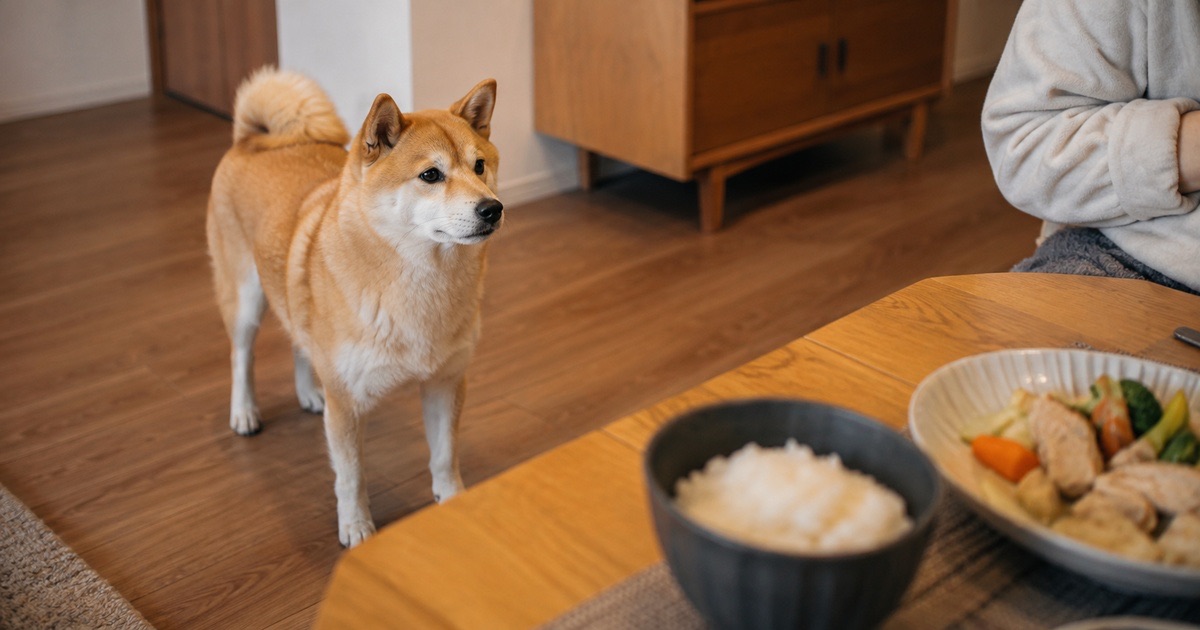
The instant fried chicken hits the air, there they are at your feet, eyes shining. One bite couldn't hurt, right? I've wobbled under my dog Gureum's stare more times than I'll admit (it means "cloud" in Korean). But human food isn't a problem only when it's toxic. The REAL reasons are two: salt, and habit.
Human food is a three-layer problem: toxicity, salt, and habit. Dishes with onion or garlic are the toxicity layer; even without them, human seasoning means sodium far past a dog's needs. A dog's sodium requirement runs at a small fraction of human-diet levels: a few spoonfuls of seasoned broth can exceed a day's worth. And one success builds a lifetime of table begging. Want to share? Give unseasoned ingredients, dog-style.
The three layers
| Layer | Problem | Examples |
|---|---|---|
| 1. Toxicity | Harmful ingredients hide in dishes | Onion in broth, garlic seasoning, xylitol in sauces |
| 2. Salt and seasoning | Sodium excess, spicy irritation, grease | Soups, stews, fried chicken skin, marinated meats |
| 3. Habit | Table begging, picky eating, food theft learned | One single success |
Salt: more dangerous for being invisible
Toxic ingredients can be avoided by name: salt soaks into EVERYTHING humans cook. A dog's daily sodium allowance varies with weight and diet, but against human-food levels it's tiny, and their food already carries the engineered amount, so every human bite is pure surplus. No immediate crisis, but salty handouts accumulate into heart and kidney load, and the first visible signs are heavy drinking and more urine. With fried chicken, the batter, skin, and seasoning form the problem in concentrate: if you must, a rinsed piece of the inner meat in a small amount is the least-bad option, and still not the recommendation.
The butterfly effect of one bite: habit
See it from the dog's side: waited by the table, and fried chicken fell from the sky. That's a lottery win, and one is all it takes. From then on: mealtime stationing at your feet, escalating to whining, escalating to paws on the table. And the habit travels: to the guest's plate, the child's snack, the neighboring campsite. Only the dog who has learned that begging NEVER pays rests easy in their own spot at dinner. That's peace for everyone.
Instead of your table, make THEIR table special
The day you plate a proper dog-style special instead of passing scraps photographs wonderfully. Snack posts on kkeung keep their dates and collect likes from the neighborhood dogs, and the local feed's special-meal brags seed your next idea.
Show off the snack time →If the begging habit already exists
The good news: habits erase by the same mechanism that built them. One principle: at the table, NOTHING ever drops, no matter what. The whole family enforces it simultaneously, and a single exception restarts the clock. Early on comes the extinction burst, begging that intensifies right before it dies: that spike is the signal you're almost through. Handing them a scatter-feeding toy or a long-lasting chew at their own spot during dinner makes the crossing far smoother.
The urge to share doesn't need suppressing
Banning human food isn't banning the joy of sharing: change the method. On steak night, grill a few unseasoned pieces separately for them; before seasoning the soup, ladle out a little plain broth for their bowl. Same ingredients, prepared dog-style. Because it arrives in THEIR bowl rather than down from your table, no begging habit forms either. Share the heart, not the seasoning. That's as close to the right answer as this gets.
Frequently asked questions
If it's unseasoned, is everything fair game?
After something salty, does lots of water fix it?
How do I stop grandma from feeding from the table?
Dogs used to live long on table scraps, didn't they?
How do we fix the mealtime begging habit?
This article is general information and does not replace a veterinary diagnosis. Talk to your vet about your dog's condition.