The Top 10 Foods Dogs Must Never Eat,
in Order of Danger
The thunk of something hitting the kitchen floor, and the four-legged bullet already in motion. If you've lived that one second, you know the vertigo. The day my daughter dropped a grape, our entire family dove for the floor. Know which foods are how dangerous, in order, and in that second your body moves before your brain.
The highest danger tier: xylitol, chocolate, grapes (raisins included), onion and garlic, macadamia nuts. One piece of xylitol gum, or a little dark chocolate in a small dog, can be a genuine emergency. If eating is confirmed: do NOT force vomiting; call the vet immediately with what and how much was eaten. That's the first move.
The danger top 10
| Rank | Food | Why dangerous | Caution |
|---|---|---|---|
| 1 | Xylitol | Acute hypoglycemia, liver damage | One piece of gum counts; all sugar-free products |
| 2 | Chocolate | Theobromine poisoning | The darker, the deadlier |
| 3 | Grapes, raisins | Acute kidney failure | No safe dose established: total ban |
| 4 | Onion, garlic, scallions | Red blood cell destruction, anemia | Cooked and powdered forms count |
| 5 | Macadamia nuts | Vomiting, weakness, tremors | Caution with all nuts |
| 6 | Alcohol | Central nervous system depression | No amount is safe |
| 7 | Caffeine | Heart rhythm trouble, seizures | Coffee, green tea, energy drinks |
| 8 | Cooked bones | Splinter, perforate intestines | Chicken bones the classic case |
| 9 | Avocado | Persin content | Pit swallowing a hazard too |
| 10 | Raw dough | Expands in stomach, produces alcohol | Home-baking days: beware |
If they ate it: this exact order
First: establish what, how much, when. Keep the wrapper if there is one. Second: call your vet or a 24-hour ER immediately. With the weight and amount, they'll judge the urgency. Third: do NOT induce vomiting at home with salt water or hydrogen peroxide without clinic instruction. Esophageal damage and aspiration risks mean clinics themselves no longer recommend it.
The most dangerous move is relaxing because there are no symptoms. Grape kidney damage and onion anemia often surface a day or two later. Confirmed ingestion of a dangerous food means consulting the vet, symptoms or none.
Half of all accidents happen under the table
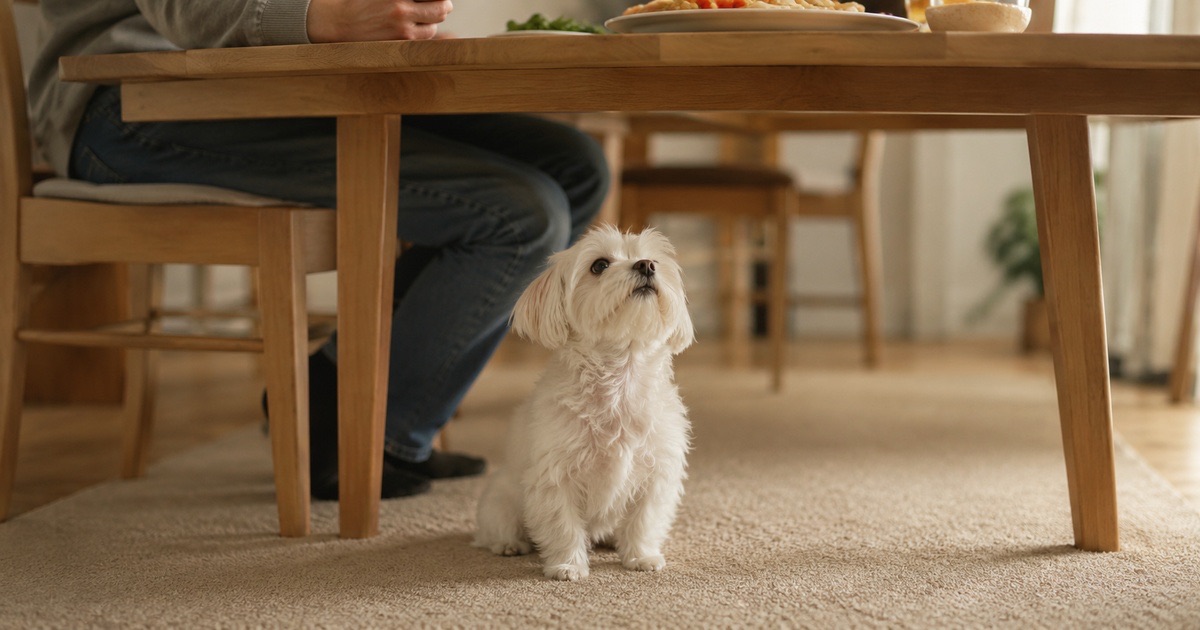
After our grape incident, a house rule was born: on dangerous-food days, my dog Gureum waits in another room (it means "cloud" in Korean), or if something drops, NOBODY moves until a human picks it up. It sounds excessive, until you price one grape at one kidney: then it sounds exactly right.
The unexpected weak points: guests and children. The guest who folds under puppy eyes and slips a bite from the table; the child trailing crumbs through the house. The accident-free households are the ones that brief everyone, guests included, on the banned list. A copy on the fridge door works.
In an emergency, everyday records are what you'll wish you had
The clinic asks what and how much, and also their usual weight and condition. Post everyday photos to kkeung regularly and each keeps its date, so in an emergency you can show exactly when things changed.
Save a photo of today →The confusing borderline foods
Know the conditionals too: not banned outright, but ruled. Milk brings diarrhea to the many dogs who can't digest lactose. Cheese is fine in small amounts but salty. Cooked egg is a good treat; raw egg white is worth avoiding. Tomato's ripe red flesh is fine; the green parts and stem are the danger. Because the line often runs through the middle of a single food, the safe habit is universal: any first-time food starts tiny, with a day of watching after.
"Made for dogs" isn't automatically safe either
Even dog treats have produced incidents: rock-bottom jerky of unclear origin, heavily dyed products. Choose treats with clearly named ingredients, and remember that an opened bag ages like human food does. A summer-dampened treat gets thrown out, however it hurts.
If this all sounds frightening: knowing the list actually brings calm. Avoid precisely what must be avoided, and you get to relax in front of everything else the world serves.
Frequently asked questions
They licked a tiny bit of chocolate. Vet visit?
They ate a grape but seem perfectly fine. Watch and wait?
They had a little broth that contained onion.
The nearest 24-hour ER vet is far. How do we prepare?
They ate a banned food but show no symptoms. How long do we watch?
This article is general information and does not replace a veterinary diagnosis. Talk to your vet about your dog's condition.