The Real Reasons Dogs Show Their Belly:
Trust, Surrender, or Comfort?
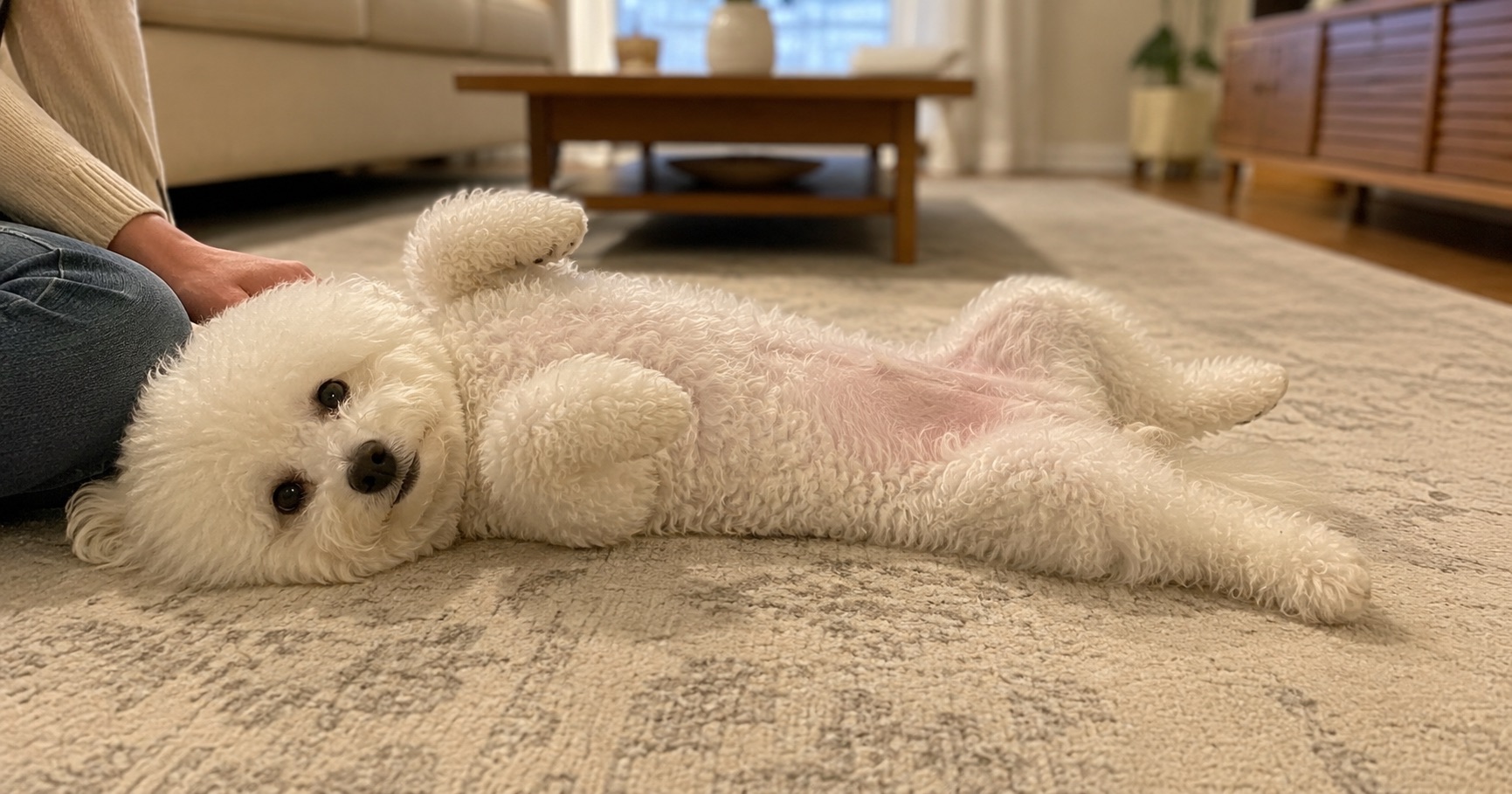
When my dog Gureum shows me her belly, the legs stretch long and the eyes close (it means "cloud" in Korean). But the day she first met Baekgu the Jindo, she showed her belly too: with her eyes locked on him the entire time, tail tucked between her legs. Identical pose. One meant rub me. The other meant I'm not a threat, please.
Belly-showing is one of four things: trust, conflict avoidance, surrender, or comfort. A body gone soft with the mouth hanging open: that's the rub-me trust version. A rigid body, tucked tail, and averted eyes: that's fear wearing the same costume: and petting THAT belly makes the fear worse. Check three things before your hand moves: eyes, tail, and how much tension is in the body.
Why show the most vulnerable spot?
The belly is the least defended real estate on a dog's body. Exposing it always says I have no plans to attack you: but the REASON splits: sometimes it's deep comfort, sometimes it's fear. Human hands move reflexively toward any visible belly: build the habit of running the table below first.
| Type | Situation | Body tension | Eyes and tail | Response |
|---|---|---|---|---|
| Trust, affection | Resting beside you | Limp, legs stretched | Eyes closed or half: tail lazy | Slow belly rubs |
| Conflict avoidance | Another dog approaching | Slightly tense | Side-eyeing the other: tail low | Watch: don't intervene |
| Surrender, fear | Being scolded: strangers | Rigid, legs pulled in | Gaze averted: tail tucked tight | Step back: no touching |
| Comfort, cooling | Hot days, cool floors | Fully released | May fall asleep | Leave them to it |
The pettable belly versus the untouchable one
The pettable belly comes with frog legs: hind legs flopped open, front paws folded loose, mouth slightly open, sometimes tongue visible. The untouchable belly: hind legs pulled IN toward the stomach, front paws pressed to the chest, body twisted slightly to one side: and the eyes never leave you even while the belly is up. Reach into THAT pose and you can get submissive urination or a startled snap: fear responses, not offenses, so nothing to scold. Can't tell which you're looking at? Don't reach: take one step BACK. Trust unfurls the body further. Surrender uses the space to get up and leave.
Learned this on the job: when an unfamiliar guest rubs Gureum's belly, she freezes in position. Read that as what a calm dog and keep rubbing: and from then on, that guest's footsteps send her into the other room. A shown belly was never a signed permission slip.
Belly-up in front of other dogs
The old label was rank submission: the current read is conflict-avoidance as a social skill: I'm not fighting, so stop advancing. Small dogs deploy it in front of big ones: and mid-play, it also serves as a let's-take-a-beat. If your dog offers it, don't swoop in for a rescue lift: that cuts the conversation off mid-sentence. The other dog sniffs, backs off: that's the transaction completing normally. Only intervene when the other dog keeps climbing on, or yours starts screaming.
The first belly photo marks the day the heart opened
The first day a dog stretches out belly-up is the day they decided this home is safe. Post it to kkeung and the date stays on the record: the question when did she start trusting you gets a documented answer. Week three or month three: it's right there.
Save a photo of today →Belly-rub technique notes
Hand position and pressure
Full palm, slow strokes, chest sweeping down toward the belly. Fingertip scratching and firm pressure near the navel: mostly unwelcome. Inner thighs are sensitive territory: first-time acquaintances should stay clear.
About the kicking leg
Some dogs bicycle a hind leg when you hit a flank or belly spot: that's a spinal reflex arc, not an ecstasy meter. Cute, yes: but parking on that spot can be more itch than bliss: migrate the hand.
The stop signals
Mid-rub: body stiffening, head lifting to watch your hand, a lip-lick: that's enough now. Hands off: if they settle back in, resume: if they get up and go, the session's over.
Showing the belly is one of the biggest sentences a dog can say. Sorting whether it reads I trust you or I'm scared is, by itself, a safety upgrade for the dog. Hold the reaching hand for three seconds: read the eyes first.
Frequently asked questions
My dog shows the belly and dribbles urine. Why?
My dog never shows the belly. Trust issue?
What about sleeping belly-up?
My dog growls when I rub the shown belly.
My dog rolls over for every dog they meet. Too submissive?
This article is general information and does not replace a veterinary diagnosis. Talk to your vet about your dog's condition.