What Tail Wagging Really Means:
6 Signals Beyond Happy
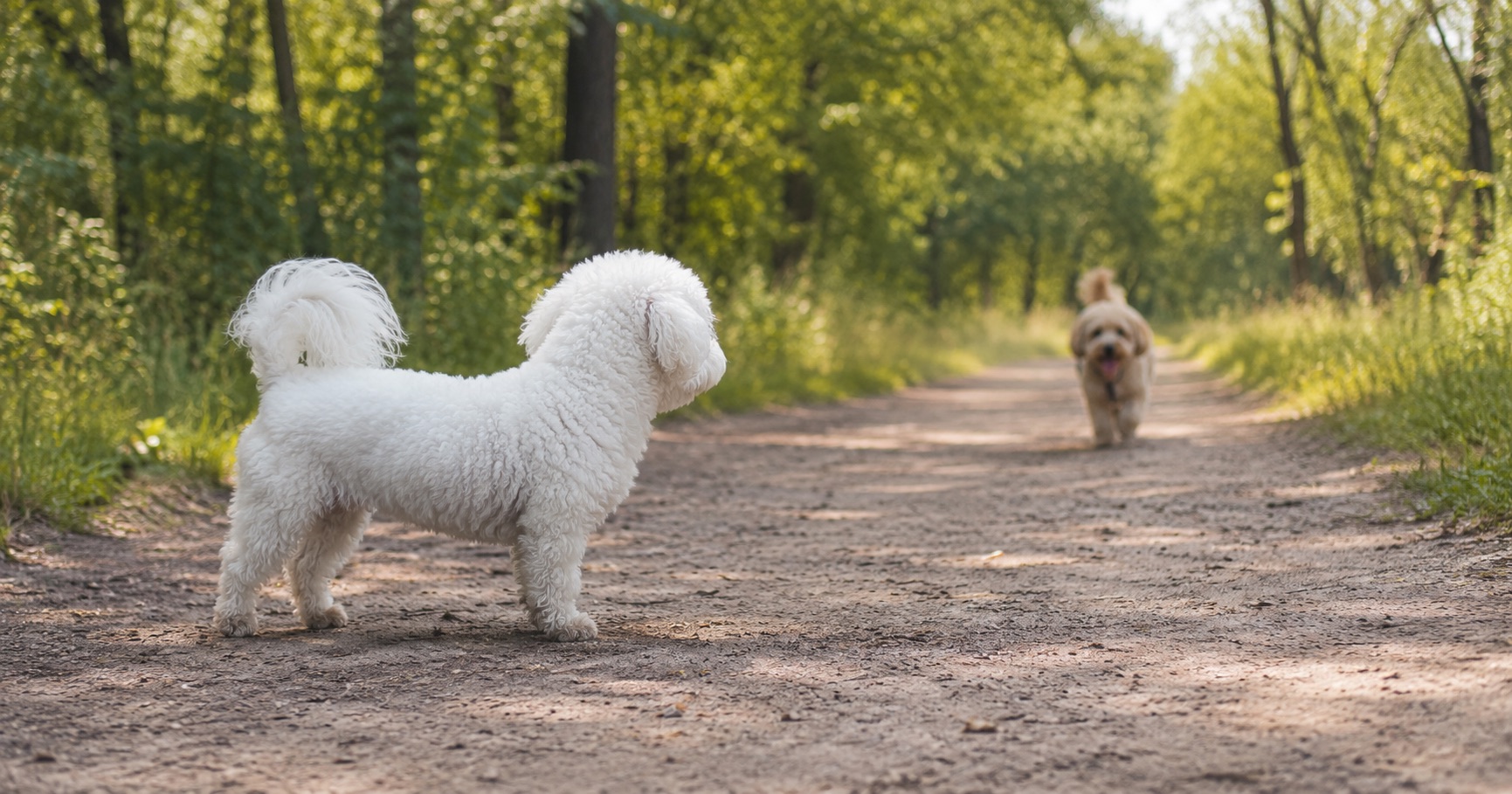
The day my dog Gureum first met Haru the Shiba, his tail was wagging: so I read it as friendly and let her approach (Gureum's name means "cloud" in Korean). Seconds later: growling. That was the day I learned the lesson this whole page is about: it's never WHETHER the tail wags. It's HOW.
A wag is not automatically joy. Read four things: height, speed, direction, and body tension. A low, wide wag that swings the whole rear end: that's a greeting. A tail held HIGH with a fast, short quiver: tension or wariness. And a wagging tail on a rigid body means do not approach.
What is a wag actually saying?
The tail is a dog's broadcast antenna: but unlike a human smile, it doesn't carry one meaning. It's closer to a volume dial for emotion: joy, anxiety, and wariness all get transmitted through it. Read only the fact of wagging, and you'll misread three out of ten. Height, speed, and the body underneath belong in every reading.
| Tail | Speed | Body | Meaning |
|---|---|---|---|
| Mid-height, big side-to-side sweeps | Moderate | The rear end swings along | Greeting, comfort |
| Low, big and slow | Slow | Body low and soft | Friendly, a touch careful |
| Held high, short quiver | Very fast | Rigid, weight forward | Arousal, wariness, pre-conflict |
| Horizontal, one or two slow strokes | Slow | Head tilt, fixed gaze | Assessing: undecided |
| Tucked between the legs, tip only | Fast, small | Crouched | Fear, surrender |
| The whole body draws circles | Fast | Everything gone loose | Peak joy |
Does left versus right actually mean something?
This is a well-known research finding: at the sight of someone beloved, the wag skews RIGHT of center: at a strange dog or a threat, it skews LEFT. The explanation runs through the brain's hemispheres splitting the emotional workload. It's hard to catch live: but film from the front and play it slow, and the skew sometimes shows. The best part: OTHER DOGS read the difference. Dogs watching a left-skewed wag showed raised heart rates and visible tension.
Learned this on the job: when I come through the front door, Gureum's wag pulls so hard right her whole body bends into a comma. At the delivery courier's footsteps: tail straight up, short fast quiver. The same word, "wagging": two completely different sentences.
Wagging: and then a bite. Why?
He was wagging and then he bit: the story usually starts with a high, fast, quivering wag read as friendliness. That wag means arousal at the threshold: and good excitement versus bad is one sheet of paper apart. A stranger's hand descending from above, or direct eye contact on approach, tips it over into wariness. High tail plus rigid body: don't approach: stand side-on and let the dog do the sniffing on its own initiative.
- Wagging with the mouth clamped shut: a tension signal.
- Wagging while holding an unbroken stare: wariness.
- Wagging with the weight loaded onto the front paws: pre-launch.
- Wagging with the hackles up along the spine: arousal at its ceiling.
Your dog's tail language shows best on video
Greeting or wariness reads far more clearly in a short clip than a photo. Post walk videos to kkeung and rewatch a few days later: whether the body was rigid or loose that day is suddenly obvious. Each post keeps its date, so a handful of clips becomes a tail dictionary for this one specific dog.
Save a video of yours →What to read alongside the tail
Ears and mouth
Ears settled naturally back with the mouth slightly open: relaxed. Ears pricked forward over a clamped mouth: tense, whatever the tail is doing. Never read the tail solo: the face is part of the sentence.
Breed-shaped tails
Curl-tailed breeds like Shibas and Jindos carry high by DEFAULT: easy to misread as flagging. Drop-tailed breeds like Greyhounds wag low even when thrilled. Docked dogs: read the rear end and body tension instead. Step one is always knowing YOUR dog's resting tail height.
When the tail stops entirely
A motionless tail on a frozen body in a strange place: that's a freeze state. Touching a frozen dog can draw a defensive bite: soften your voice, add distance, and give them the time to thaw on their own.
There's no universal answer key for tails: the table above is a starting point. The real reference is how YOUR dog wags when everything's fine: a language only the person who watches every day can read. Which is, when you think about it, the owner's particular privilege.
Frequently asked questions
My dog wags AND growls. What does that mean?
Why does my dog wag in their sleep?
Are there dogs that barely wag?
The tail suddenly hangs limp. Injury?
Can you actually SEE the left-right wag difference?
This article is general information and does not replace a veterinary diagnosis. Talk to your vet about your dog's condition.