The Top 7 Things Dogs Hate
(That Humans Keep Doing)
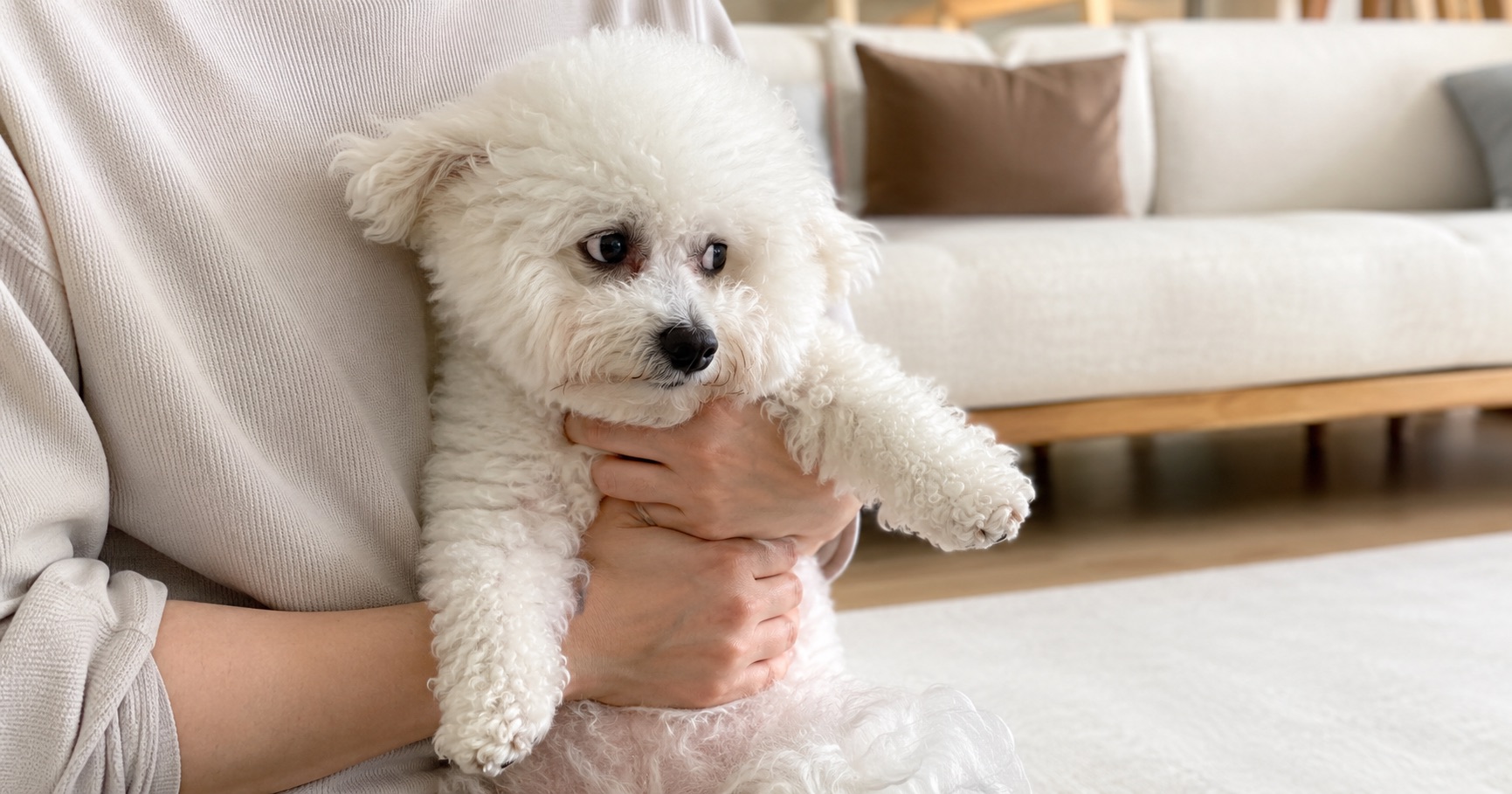
I have a whole album of photos where I'm squeezing my dog Gureum in a hug (it means "cloud" in Korean). Looking back through them recently: her ears are pinned flat in every single one, eyes sliding sideways. I was loving her. She was enduring me. A lot of human affection is, to a dog, plain rudeness. Here are the seven to know.
The big seven: reaching over the head, tight hugs, direct eye contact, head-on approaches, loud voices, waking them by touch, and continuing to pet through the no. The common thread: each one confiscates the dog's escape route and their choice. Instead: approach from the side, pet under the chin or on the chest: three seconds, then hands off to see if they ask for more.
The seven offenses
Humans express love in three dimensions: CLOSE, HARD, and LONG. To a dog, all three are threat grammar. Dogs don't hug each other, don't put paws on each other's heads, don't hold eye contact. When yours puts up with it, that's trust: not enjoyment. Ranked by how often owners commit them:
| # | The offense | To the dog | Do instead |
|---|---|---|---|
| 1 | Hand descending from above | An incoming pounce | Hand low: chin and chest first |
| 2 | The tight hug | Movement confiscated | Sit beside them: offer your back |
| 3 | Sustained direct eye contact | A challenge: a hard stare | Slow blinks, gaze angled away |
| 4 | Fast head-on approach | A charge | Curve in slowly from the side |
| 5 | The big voice | An attack signal | Low, short, quiet |
| 6 | Waking them by touch | An ambush | Say the name: let them surface |
| 7 | Petting through the retreat | The no, overruled | Three seconds, then hands off |
Why does human love read as rude?
Take the hug: humanity's flagship affection move. In the canine dictionary, wrapping a body and pinning its movement is a domination maneuver. The held dog's checklist: ears pinned, mouth clamped, gaze averted, a yawn, a body gone stiff: all of it says enduring. The head-pat runs the same way: a hand dropping from above VANISHES from the dog's field of view right before covering their head: most dogs flinch, blink, or duck. And we read that flinch as aww, she closes her eyes because she loves it.
Learned this on the job: when I pet Gureum from above, her head drops. When I scratch under her chin, her head RISES. Same hand: one direction reversed: opposite response. Ever since, my standing brief to guests is three words: under the chin.
The I-don't-like-this signals
- Ears flatten backward.
- The white of the eye shows: head still, eyes sliding sideways.
- Mouth clamps shut: at ease, it hangs slightly open.
- The body goes rigid: or goes limp and stops moving entirely.
- A yawn, or a nose lick.
- They pull away from the hand, or leave the room.
Two or more of these: stop what you're doing. And here's the payoff: a dog who learns that NO works becomes a dog who never needs to say it with teeth.
Collect only the likes, and watch the face change
Stop doing the hated things and the photos transform on their own: ears up, mouth softly open, the genuinely relaxed face. Posts on kkeung keep their dates: and the comfortable-face photos reliably collect more likes from the neighborhood dogs. Ease in a dog's expression: other dog people spot it instantly.
Show the neighborhood dogs →Briefing the guests and the kids
When guests come
The advance brief: sit down, look to the side, and she'll come to you. Blocking the extended-hand approach alone eliminates most of the rudeness. When the dog initiates the sniff inspection: chin scratches are now open.
When small kids are around
Kids hug, climb, grab tails, and dive onto sleeping dogs: the majority of bite incidents live in exactly these scenes. Install the rule: dogs are for sitting NEXT TO, not hugging: and never leave the two unsupervised in one room.
And for yourself
We're habitual offenders too: the from-above pets, the scooping-up of sleeping dogs. Once a day, pet them while actually watching the face. The map of loved spots and merely-tolerated spots is sharper than you'd think.
Gureum still endures my hugs. But these days, when I sit on the couch, she comes and presses her back against my leg and lies down. That, it turns out, is a hug in her dialect. Learning to be loved in THEIR language instead of ours: that might be the whole job of living together.
Frequently asked questions
Some dogs LOVE being hugged, don't they?
So I can't pet my dog's head?
They hate nail trims and tooth brushing. Those still have to happen.
Do dogs hate wearing clothes?
What happens if I just ignore the dislike signals?
This article is general information and does not replace a veterinary diagnosis. Talk to your vet about your dog's condition.