7 Traits of People Dogs Love,
by Voice and Body Language
There are strangers my dog Gureum walks straight up to and sits beside (it means "cloud" in Korean). Mungchi's owner is one: the owner of our neighborhood dry cleaner is another. I studied the two of them for the common thread, and found it: neither one makes a SOUND when they see her. They just sit down and look off to the side. It turns out the people dogs love share a very specific profile.
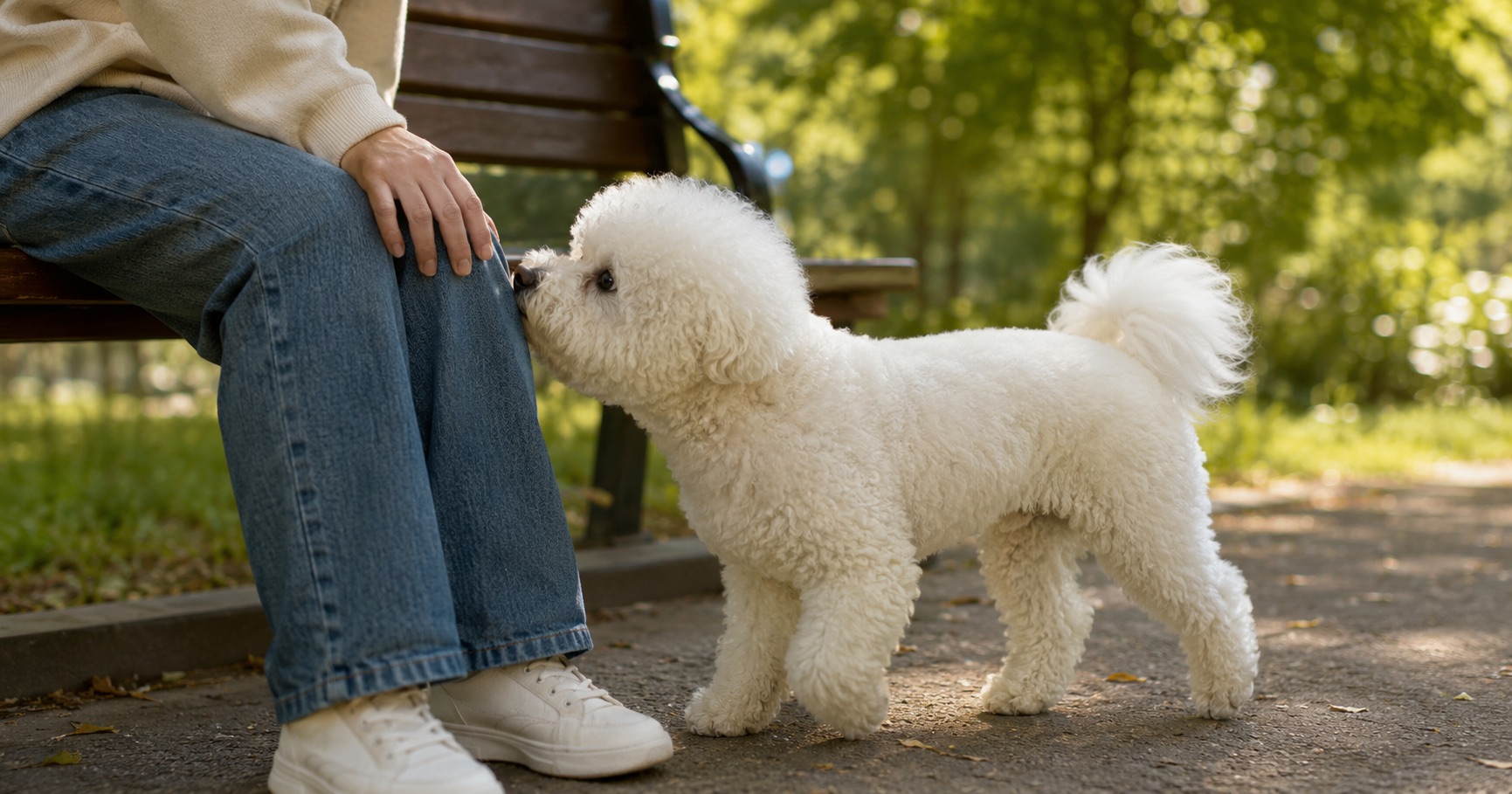
The common traits: a soft high voice, slow movement, short gazes, a lowered posture, and waiting. Dogs approach the person sitting sideways, waiting to be approached: not the one squealing and rushing in. Add a calm scent (light on smoke and perfume) and the same demeanor every single time, and you become the person dogs seek out first.
The seven traits
Dogs read intent from the voice and the body: and here's the cruel irony. Human affection for dogs usually exits BIG, FAST, and HEAD-ON: which is the complete canine threat-signal starter pack. Hence the paradox of the dog lover the dogs avoid. The seven below recur across research and trainers' field notes alike.
| # | Trait | To the dog | The opposite |
|---|---|---|---|
| 1 | Soft, high voice | No threat: play frequency | Loud low tones, sudden shouts |
| 2 | Slow movement | Predictable: safe | Fast approach, darting hands |
| 3 | Short gazes | Not a challenge | The head-on stare |
| 4 | Low, side-on posture | No pounce incoming | Looming from above |
| 5 | Waiting, not touching | I get to choose | Straight to the head-pat |
| 6 | Calm scent | Information stays readable | Heavy perfume, smoke, alcohol |
| 7 | The same demeanor, every time | Trustworthy | Mood-dependent |
Does voice tone really matter that much?
In the research, dogs attended longest to high, slow, big-inflection speech: the register people use with babies: and the effect peaked when that voice carried dog-relevant words (walk: good girl). The same words in a flat low register lost the room. So yes: the people who coo at dogs have it right. One refinement: keep the VOLUME down. High and loud whips up arousal: high and soft draws them in.
Learned this on the job: the dry cleaner who owns Gureum's heart raises his pitch an octave and cuts his volume in half, every time: Gureum, you're here! On that one line, she crosses his threshold like she owns the place. I've copied the technique. It works.
Do scent and temperament factor in?
Scent is the first channel dogs file people under. Heavy perfume, smoke, and alcohol don't just repel: they MASK your actual scent, making you unreadable. Meanwhile the person carrying another dog's smell, or a pocket of treats, gets approached early and often. Temperament rides on tension: an anxious person's body stiffens and moves in bursts, and dogs mirror the tension. As for dogs beelining toward the people who fear them: the leading read is that fear LOOKS like freezing plus staring plus sudden movement: a puzzle the dog approaches to solve.
When your dog picks a person, that person picks them back
Post the photo of the wait outside the dry cleaner's and don't be surprised when the owner becomes a follower. kkeung lets people WITHOUT dogs join as fans, so a dog's posts collect likes from all over the neighborhood. Watching the local fan club grow, one shopkeeper at a time: that's its own reward.
Show the neighborhood dogs →Becoming the person dogs choose
Meeting a new dog
Don't approach on sight. Sit or crouch, angle sideways, hands on knees: and wait for the sniff inspection to come to you. When it does: three seconds under the chin or on the chest, then hands off. They lean back in: continue. They step back: done. That protocol alone brings eight dogs in ten back for more.
When your own dog seems to like you least
If you're the one family member the dog avoids, audit your voice and speed: too low and loud, too fast, or permanently cast as the house disciplinarian. Claim one meal or the walk, lift the pitch, and hand the scolding duties to someone else: weeks, not months, and it shifts.
What to teach kids
One sentence covers it: around dogs, talk small and move slow. Kids charge in shrieking: dogs flee: kids chase: repeat. But let a child experience ONE dog choosing to approach their stillness, and they run the protocol themselves forever after.
The person dogs love is, in the end, the person who hands the dog the choice: whether to come, whether to be touched. Brutal discipline for those of us bursting to express the love NOW: but wait three seconds, and the dog crosses the gap first. Those three seconds are the entire secret.
Frequently asked questions
Do dogs really prefer women to men?
Why do dogs gravitate toward people who FEAR them?
Can dogs recognize bad people?
Is winning them over with treats cheating?
My dog hates one specific person. Why?
This article is general information and does not replace a veterinary diagnosis. Talk to your vet about your dog's condition.