Moving With a Dog:
The Packing Order and the First-Day Routine
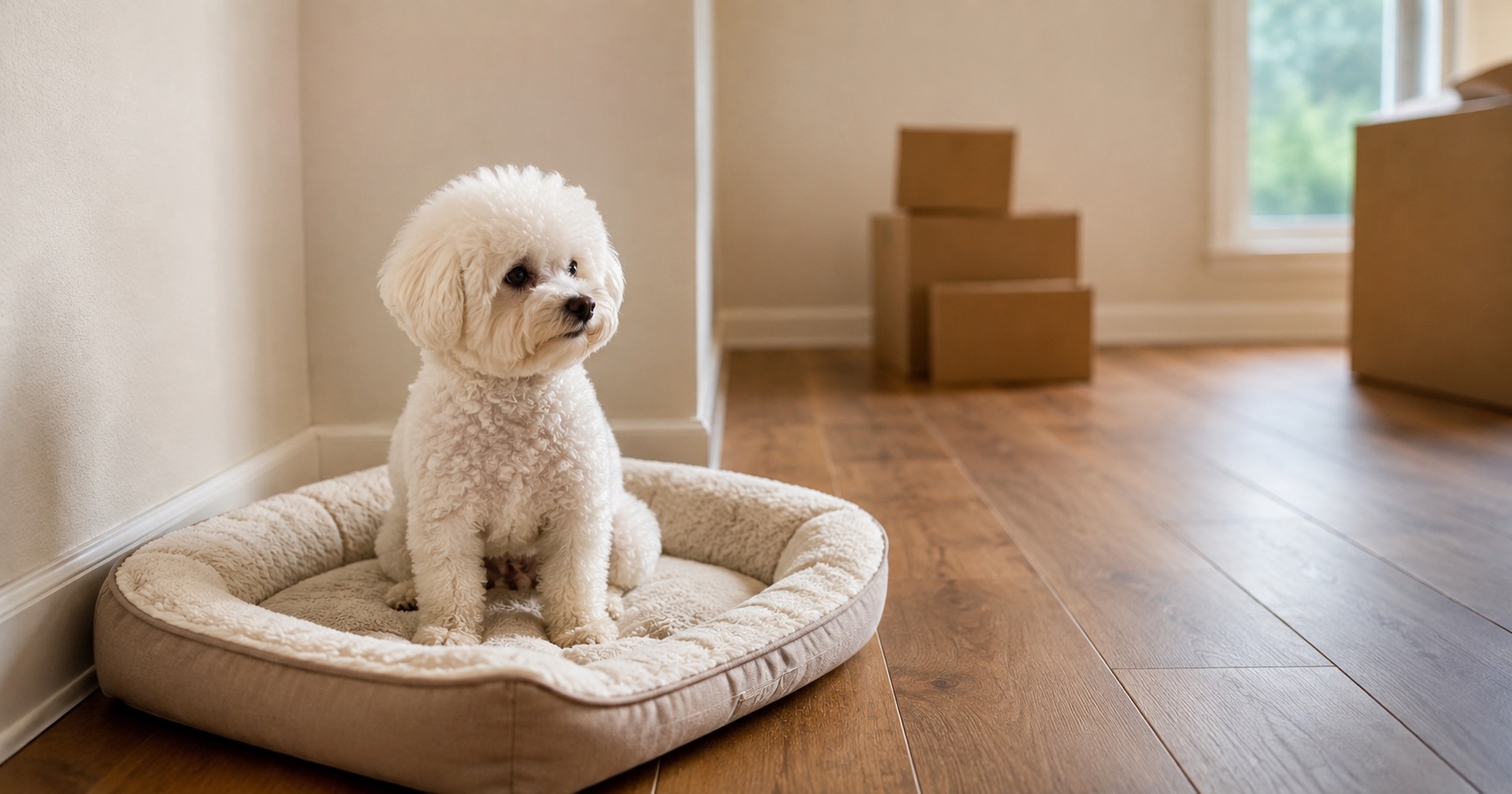
The day we moved to Paju, my dog Gureum stood in the middle of the emptied-out old living room and looked up at me (it means "cloud" in Korean). Her bed and bowls were already on the truck. I've never forgotten that face: and that one mistake came back as a week of potty accidents. If I ever move again, the ORDER changes completely.
The core rule: the dog's things get packed LAST and unpacked FIRST. Bed, bowls, toys, and potty pads stay in place until moving-day morning: at the new home, they go down in one room BEFORE the furniture comes in, in the old arrangement. Board the dog with a friend or sitter for moving day itself: and on night one, meals and walks run on the OLD schedule, to the minute. First-week accidents and barking are normal: no scolding.
The two-week pre-move sequence
To a dog, a move is the home DISAPPEARING: every familiar smell and station boxed up, one per day, in plain view. So their things stay put until the end: and as the box towers rise, meals and walks run MORE precisely on schedule, not less. Start two weeks out.
| When | Do | Why |
|---|---|---|
| 2 weeks out | Set out a few empty boxes: hide treats in them | Boxes stop predicting doom |
| 2 weeks out | Scout the new area's vet and walking routes: prep the registration address change | No scrambling after arrival |
| 1 week out | Book moving-day care (friend, boarding, sitter) | Prevents the day's escapes and accidents |
| Day before | Finish all packing EXCEPT the dog's things: take a long walk | A tired dog sleeps through stress |
| Moving morning | Meal and walk at the usual times: THEN drop-off | The routine held: that's the message |
| Last of all | Bed, bowls, toys, pads into ONE bag | Unpacked the moment you arrive |
Moving day, and the first day in the new home
On moving day the front door stands open for hours with strangers streaming through: it's the single biggest escape day there is. If boarding isn't possible: one closed room, bed and water inside, a sign on the door: DOG INSIDE, DO NOT OPEN. At the new home, before any furniture: pick one room and lay out the dog's things in the OLD arrangement. Start them in that room and let the rest of the home get explored over a day or two, at their pace. Day-one meals and walks: old-home times exactly. Dinner sliding late because of box-chaos is the most common first-day mistake there is.
Learned this on the job: Gureum barely left her bed for three days in the new place. I kept scooping her up for guided house tours: precisely wrong. I should have left her alone. On the fourth morning she walked herself to the kitchen: and after that, the whole map filled in almost overnight.
The post-move problem list
- Potty accidents: the new home carries none of their scent, so they're adding some. Old pads, UNwashed, in the same relative spot: fastest fix there is. Scolding only stretches it out.
- Barking: new sounds: elevators, neighbor footsteps, pipes. Week one: sit with them quietly through it. Past two weeks: start desensitizing the specific sound.
- Refusing food: a day or two is normal. Past three days: vet.
- Velcro mode: whining the moment you leave sight. Week one: minimize alone time, then rebuild from short absences.
- Escape attempts: some dogs try to walk back to the old house. No off-leash anywhere in the new area: and update the registration address and ID tag immediately.
New neighborhood? Learn it by paw stamp
In the first month after a move, short walks in a DIFFERENT direction each day are the fastest route to at-home. Log walks in kkeung and the distance and time stack by date: you can literally watch the new neighborhood become YOUR neighborhood. When neighbor dogs start appearing in the feed: adaptation complete.
Log today's walk →Settling into the new area
Week one: short walks, same route
A new neighborhood's scent load is astronomical: long walks exhaust them early on. One lap around the block, same route, several days running: establish THIS IS OUR PATH first, then widen. In this phase, sniffing time matters more than distance.
Pre-register at the new vet
Move-month stress produces its share of diarrhea and vomiting. Find the vet BEFORE you need it: and make one hello-only visit where the only thing that happens is a treat. The vet files under good places from day one.
Introduce the neighbors: both species
In an apartment, give the adjacent neighbors a heads-up that a dog lives here now: and start slow greetings with the dogs you keep seeing on walks. The day your dog makes one local friend is the day the new neighborhood becomes home.
About a month into Paju, Gureum slept belly-up in the new house for the first time: and I finally thought, NOW the move is over. A move doesn't end when the boxes are empty. It ends the day the belly shows. Until then, you just stay close.
Frequently asked questions
How long until a dog settles after a move?
Can the dog ride along on moving day?
They bark all night in the new place.
When can I replace the old worn-out gear?
What's different about long-distance or international moves?
This article is general information and does not replace a veterinary diagnosis. Talk to your vet about your dog's condition.