Dog Sleeping Positions:
What Each of the 7 Poses Means
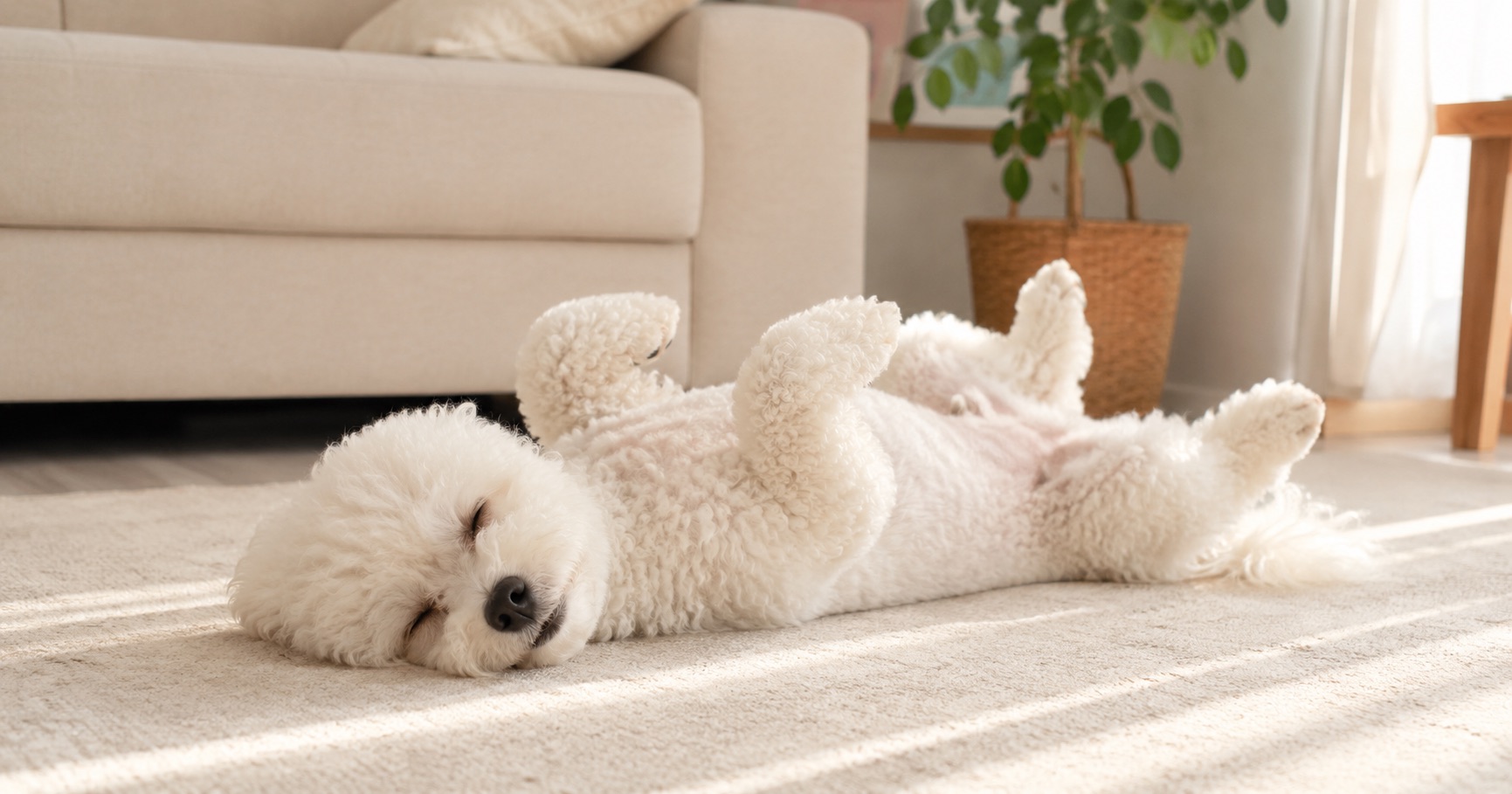
Summers, my dog Gureum sleeps belly to the ceiling, all four paws in the air (it means "cloud" in Korean). Winters, she's a donut. But in an unfamiliar house: donut, regardless of season, nose pointed at the door. That's how I learned sleep positions speak temperature AND state of mind, both at once.
Sleep position is set by degree of security plus temperature regulation. Belly-up with paws aloft is maximum vulnerability: it appears only where home feels completely safe. The curl is cold OR vigilance: one of the two. The full side-sprawl is deep, comfortable sleep: the sphinx pose with chin on paws is light sleep, ready to launch. A sudden position change: check temperature and pain first.
The seven positions, decoded
In the wild, dogs slept belly-hidden, spring-loaded. So the belly-up, paws-in-the-air pose is that instinct fully powered down. The curl, meanwhile, conserves heat AND shields the vital line: which is why it shows up for cold and for wariness alike. Never read one pose in isolation: season, location, and their usual repertoire all belong in the reading.
| Position | What it looks like | Meaning | Typical timing |
|---|---|---|---|
| Belly-up, paws aloft | Back on the floor, four legs airborne | Total security: or heat | Summer, the familiar home |
| Full side-sprawl | Legs extended sideways | Deep sleep, comfort | Naps, post-walk |
| The donut curl | Nose tucked to tail | Cold, vigilance, self-protection | Winter, strange places, new arrivals |
| Sphinx, chin on paws | Chin parked on front paws, rear legs folded | Light sleep, on standby | Whenever you're moving around |
| The superman | Belly down, legs stretched fore and aft | Fell asleep mid-play: or cooling off | Puppies: hot floors |
| Back-to-back | Spine pressed to you or another dog | Trust, bond | Bed, couch |
| On or against your feet | Body draped over or touching your feet | Attachment: occasionally anxiety | Evenings, before you go out |
What actually decides the position?
First: temperature. Dogs vent heat through the belly and paw pads: hot means belly exposed and legs spread, cold means belly wrapped and body coiled. Second: security. Same temperature, but a strange place gets the curl and home gets the sprawl. Third: temperament and breed. Watchful breeds like Shibas and Jindos rarely show the belly even when relaxed: person-oriented breeds like Bichons and Goldens unfold easily. Fourth: age. Puppies collapse anywhere in any shape: seniors settle into whichever pose the joints have ratified. So a dog who never sleeps belly-up isn't withholding trust: their comfortable is simply shaped differently.
Learned this on the job: Gureum first slept belly-up about a month after she arrived. Before that: always the donut, always facing the front door. Looking back, that month was exactly how long it took her to believe in this house.
When the position suddenly changes
- The lifelong belly-up sleeper starts curling: colder weather, a new person or sound in the house, or belly pain.
- Can't lie on their side anymore: sleeps only sphinx-style: possible chest or abdominal pain, or breathing trouble: especially if the elbows splay and the neck stretches out, breathing is the problem.
- Constant repositioning, can't settle: joint pain, senior cognitive change, or anxiety.
- Only ever lies on ONE side: the other side may hurt.
- Bolts up from sleep and paces: pain or digestive trouble: in a senior, add cognitive decline to the list.
Sleep poses are worth the photo archive
The shift from the always-curled puppy to the first belly-up sprawl only becomes visible in date order. Post the sleeping shots to kkeung and each keeps its date: the whole transition, preserved. And when a strange new pose appears, those dated photos are how you pin down the day it started.
Save a photo of today →Building a place worth sprawling in
A spot for each season
Summer: a cooling mat or a stretch of stone-cool floor to press the belly against. Winter: a donut bed deep enough to burrow. Offer both and they'll pick by the day's forecast: which is the best setup there is.
The senior's spot
Aching joints make side-lying hard: hence the sphinx sleeping and the constant readjusting. Thick memory foam takes the pressure off: a non-slip floor underneath makes standing up survivable.
The newcomer's spot
For the first month: a corner bed, wall at the back, doorway in view. They need to curl AND see the exits: that's what security looks like at first. When the belly starts showing, the bed can move anywhere.
The sleep position is a report card on how your home feels to them. Belly-up today: the house passed. Curled: add a blanket: or just add time. Both work.
Frequently asked questions
My dog sleeps with their eyes open. Okay?
Is wanting to sleep in my bed about dominance?
Why do they tremble in their sleep?
Why do they sleep with their head propped up on things?
Can you read personality from sleep position?
This article is general information and does not replace a veterinary diagnosis. Talk to your vet about your dog's condition.