Do Dogs Dream?
Why They Whimper and Paddle in Their Sleep
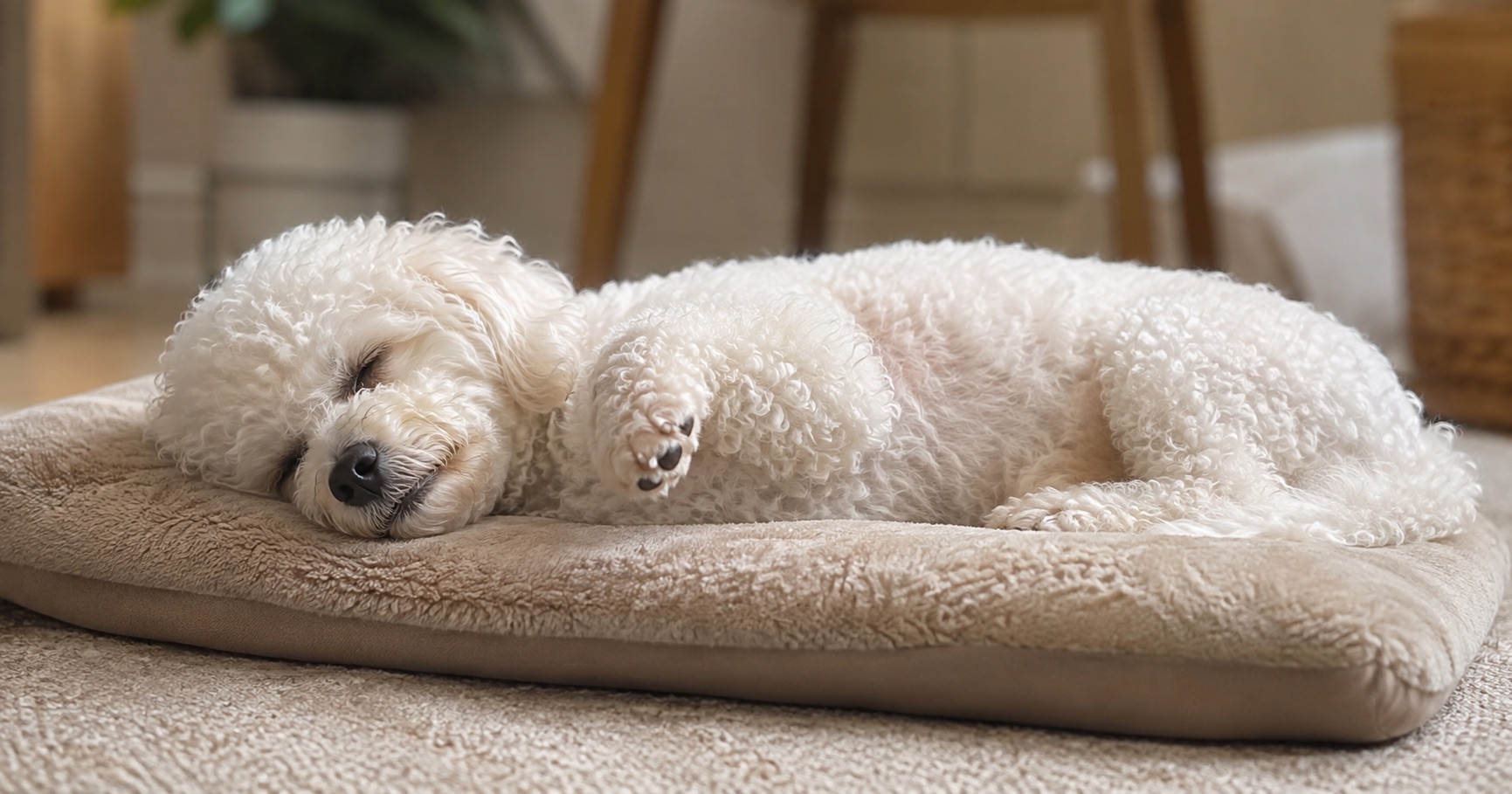
My dog Gureum once paddled all four feet in the air, asleep, while producing tiny muffled woofs (it means "cloud" in Korean). Eyes shut, mouth working, tail tip fluttering. It was the exact sound she makes when we run into Mungchi, the Maltese, on our walks. That night, I've decided, Mungchi was in the dream.
Yes: dogs dream. They have the same REM sleep stage we do, and brain activity in it climbs to near-waking levels. Twitching legs, whimpers, fluttering eyelids: all normal sleep-talk. Let them be. But a body that goes RIGID all over, drooling, unresponsive to their name: that's not a dream. That may be a seizure.
How does dog sleep work?
Dog sleep cycles through light sleep, deep sleep, and REM: same architecture as ours, on a much faster clock. A human cycle runs about 90 minutes: a dog's, around 20: which means multiple REM entries per day and sleep-talk visible even during naps. REM is the stage where the eyes dart beneath the lids, and the brain appears to be filing the day away. The famous rat experiments found identical brain-activity patterns running a maze and later sleeping: dogs are built on the same plan.
| Stage | What it looks like | Share | What's happening |
|---|---|---|---|
| Light sleep | Ears track sounds, wakes easily | Longest | Head lifts at small noises |
| Deep sleep | Slow regular breathing, body fully loose | Middle | Physical recovery: hard to wake |
| REM | Eyelid flutter, leg twitches, whimpers, muffled barks | About 10-12% | Dreams, memory filing |
Sleep-talk or seizure: how do you tell?
This is the distinction that matters. Sleep-talk: legs move ALTERNATELY, like running: the torso stays soft: it ends within seconds to a minute: and their name wakes them. A seizure: legs extend or tremble in unison, rigid: the whole body stiffens: drooling or urination may follow: the name gets no response: it typically runs 1-3 minutes: and afterward they're dazed or wobbly. Suspected seizure: don't touch them, clear the hazards nearby, time it, and call the vet.
Learned this on the job: Gureum's sleep-talk always includes lip-smacking: an eating dream, apparently, every time. When I say her name she opens her eyes, files me under present, and returns to sleep. That response IS the proof of sleep-talk.
Should you wake a dreaming dog?
No. Woken mid-REM, a dog surfaces disoriented: same as us: and can bite reflexively before recognizing anything. The classic accident: a child hugging a sleeping dog awake. If a dream looks distressing and you can't bear it, don't touch: step back a little and say their name in a low voice. When they wake on their own, THEN pet them. The nightmares themselves can't be prevented: but shrinking the scary parts of their days is, in the end, how you smooth their nights.
Film the sleep-talk once, for the day you might need it
Vets sometimes ask what normal sleep looks like for this dog: the strange night only reads as strange against a baseline. Post one short sleep-talk clip to kkeung and the date stays on it: that's your dog's baseline, filed where you can find it.
Save a video of yours →Helping them sleep well
The daily quota
Adults sleep 12-14 hours a day: puppies and seniors, 16-18. It's not all overnight: naps carry a real share, and a dog repeatedly woken from daytime naps turns edgy by evening. Guard the naps.
The sleeping spot
Not in a walkway: a corner with a wall at their back and the family in view. Entering REM requires feeling safe. And the standing rule: no scolding at, or dragging out of, the sleeping spot. Ever.
When the sleep-talk spikes
Big-stimulation days: a new house, a move, a run-in with a strange dog: produce noisy nights. Natural, and it settles within days. Weeks of heavy sleep-talk PLUS frequent night waking and pacing: that can be pain, or senior cognitive change: worth a consult.
Watching those small feet run mid-air, you get to think: today must have been pretty good. Whatever they're chasing in there, it's a scene the two of you filmed together during the day. So tomorrow, go make more footage worth dreaming.
Frequently asked questions
What do dogs dream about?
Do small dogs dream more often?
Is barking or crying in sleep a nightmare?
Do dogs snore?
Is sleeping too much a problem?
This article is general information and does not replace a veterinary diagnosis. Talk to your vet about your dog's condition.