Thunder and Fireworks:
Safe Spaces and the Desensitization Sequence
Summer nights bring frequent thunder to Paju, where we live. At her first thunderclap, my dog Gureum wedged herself under the bathroom sink and stayed two hours (it means "cloud" in Korean): trembling, panting. I'd absorbed the old line that comforting a scared dog teaches more fear, so I only watched. I later learned that line is wrong. Here's everything that night taught me.
When the noise starts: let them go to their safe space, and stay nearby acting like it's any other evening. The claim that comforting reinforces fear has no evidence behind it: fear is an emotion, not a behavior that rewards can inflate. Long-term, run sound desensitization over several weeks: recordings at near-zero volume paired with treats: and if the trembling is severe or there's self-injury or bolting, get medication from the vet. On fireworks days, the long walk and the potty run happen BEFORE sundown.
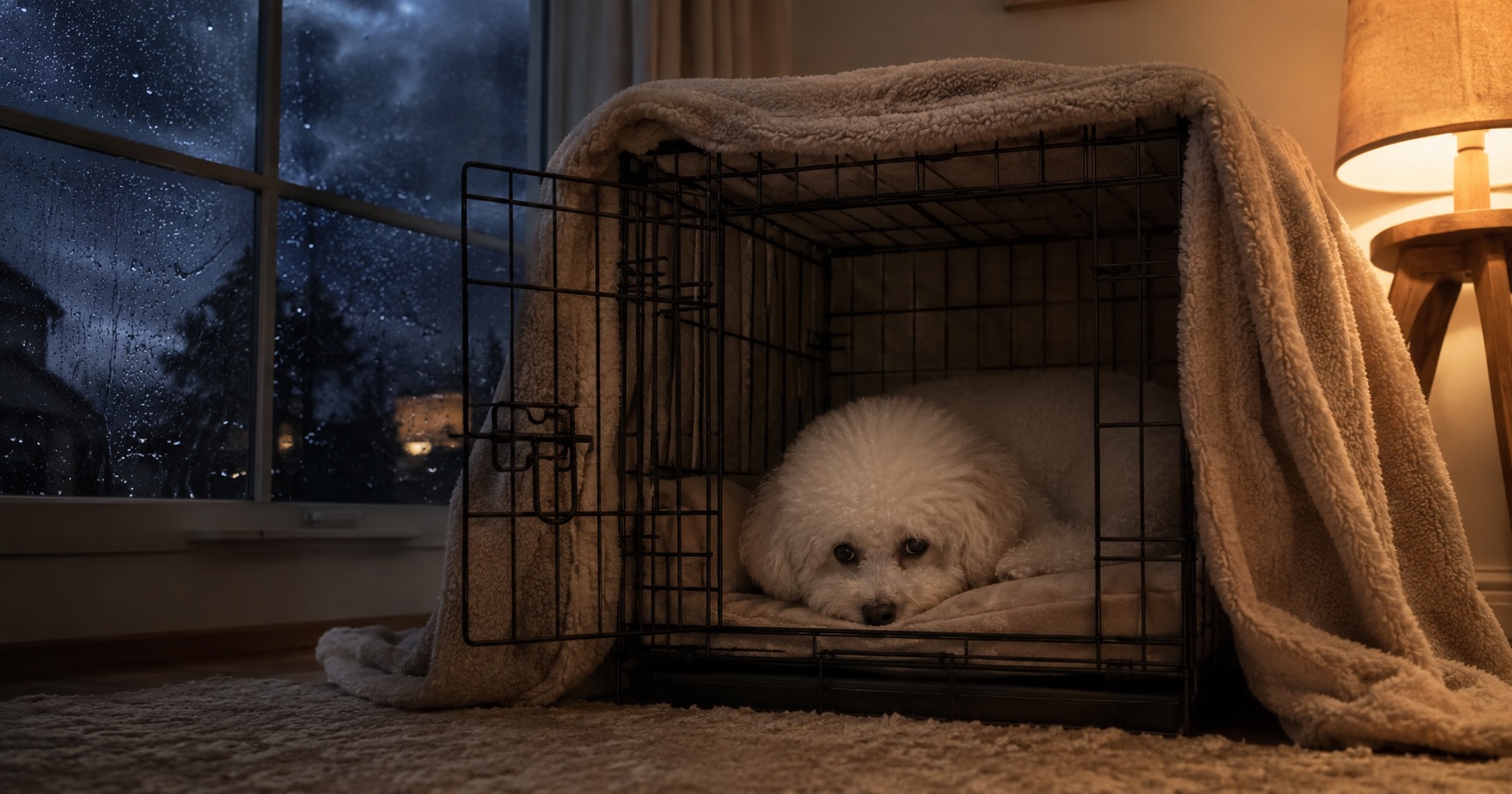
What do you do the moment the noise starts?
Dog hearing runs far past ours: thunder arrives louder for them, riding on pressure changes and static we barely register. Fireworks add unpredictability and flashing light. In that moment a dog wants exactly two things: somewhere the sound is smaller, and their person behaving like the world is normal. Provide both: that's the whole assignment.
| Do | How | Don't |
|---|---|---|
| Open the safe space | Crate, bathroom, closet: wherever THEY chose: blanket over the top | Drag them out of it |
| Shrink the sound | Windows shut, curtains drawn, TV or music at NORMAL volume | React to every boom yourself |
| Be boringly normal | Sit nearby with a book: talk in your regular low voice | Hover, fuss, pace |
| Touch if they ask | They come to you: hold and pet them | Push them away citing "spoiling" |
| Block the exits | Door and windows locked, ID tag checked | Take them out walking |
| Food and games | If they can eat: snuffle games, a long chew | Force food they can't touch |
Does comforting really teach more fear?
No. It's an old myth with no evidence under it. Fear is an emotion, not a trick that treats reinforce: hugging a terrified person doesn't deepen the terror, and dogs run on the same logic. There's research showing dogs with storm fear recovered FASTER when their person stayed close and in contact. The real transmission risk runs the other way: an owner flapping and chanting it's-okay-it's-okay in a panicked voice exports the panic. Hold them if they want holding: in your everyday voice, at your everyday speed. And if they'd rather wedge into a corner alone: that gets respected too.
Learned this on the job: under the sink, if I just sit on the bathroom floor with my phone, Gureum climbs into my lap around the 30-minute mark. If I call her or reach in: she stays put. These days when it thunders, I go sit in the bathroom too. It's our storm spot now.
The desensitization sequence
- Get a thunder or fireworks audio track: they're all over YouTube.
- Play it at barely-audible: if they eat treats without reacting, stop after 5 minutes. Once or twice a day.
- Three good days: one notch up. Trembling or hiding: two notches down. Rushing is how it breaks.
- At medium volume, run meals or play over the top: the sound becomes background music for good things.
- Budget 4-8 weeks. Real thunder adds vibration and pressure, so it's not a perfect rehearsal: but the reactions shrink measurably.
- Start in the quiet season, before summer storms or the year-end fireworks: real booms mid-training collapse the whole ladder.
Fireworks night: stamp the paw print by daylight
If the sky is scheduled to explode tonight, the surest prep is a longer-than-usual walk this afternoon. A tired dog reacts less: and with the potty run done, nobody has to go out after dark. Log walks in kkeung and the distance and time keep their dates: months later you can spot the fireworks days by their extra-large paw stamps.
Log today's walk →Preparation and response, case by case
The scheduled fireworks night
Long walk and potty by daylight: home before sundown. Windows and curtains shut, TV at normal volume, the safe space stocked with blanket, water, and a long chew. Verify the ID tag and registration. The day after fireworks is the busiest day of the year for lost-dog reports.
When medication is the answer
Throwing themselves at walls, scratching doors until nails tear, hours of panting without recovery: training alone won't reach that. Vets prescribe noise-phobia sedatives and anti-anxiety medication for exactly this. Using them isn't failing: a brain in panic cannot learn, so the sequence is lower the panic with medication, THEN desensitize.
The senior who's newly afraid
Plenty of dogs sail through storms young and start fearing them in old age. Joint pain makes startling physically costly: hearing changes make the sound itself strange. Start at the vet, with the pain check.
Sitting on the bathroom floor on a thunder night, the thought arrives: this dog is enduring the scariest sound in her world, next to me. Sometimes being next to them is all that's available. It's also the entire job. Stay close: at your regular volume.
Frequently asked questions
Does thunder fear worsen with age?
Do pressure wraps (ThunderShirt-style) work?
My dog gets anxious before the thunder even starts.
My dog bolted from home at the noise.
Do calming supplements or pheromones help?
This article is general information and does not replace a veterinary diagnosis. Talk to your vet about your dog's condition.