Why Dogs Sniff Everything on Walks
(Let Them)
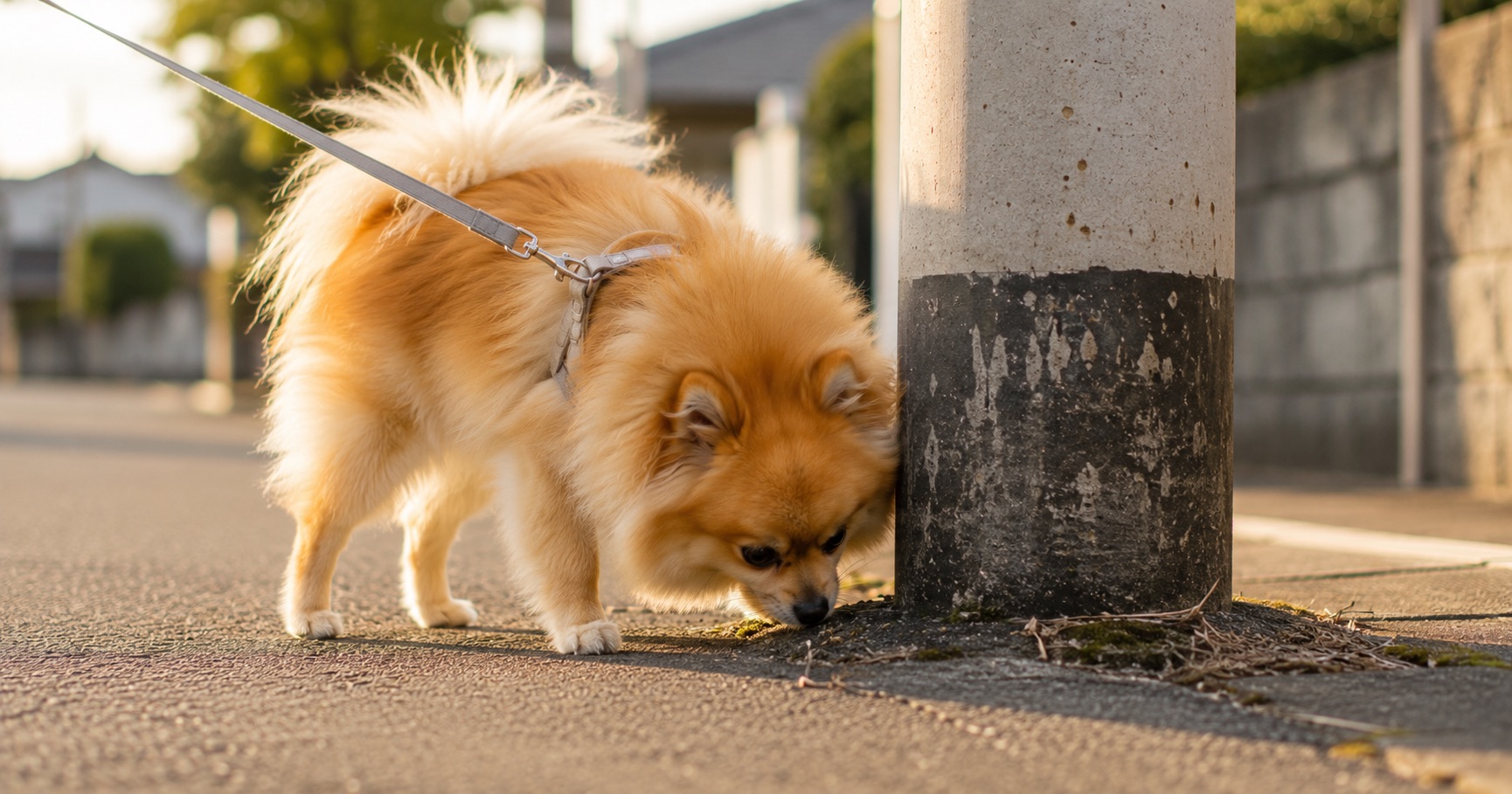
Three minutes at the same utility pole, zero forward progress. Some days you wonder whether it's a walk or a scent appreciation tour. Here's the thing: that's not a problem behavior. That's your dog doing the walk exactly right. Let me tell you what's inside all that sniffing.
Sniffing is how dogs read the world's information. Smell is a dog's primary sense, and a single utility pole works like the neighborhood bulletin board. A walk with plenty of sniffing beats a brisk walk of the same distance for both energy burn and stress relief.
What is smell to a dog?
A dog's scent receptors outnumber ours by dozens of times. Where humans read the world with eyes, dogs read it with the nose. From another dog's trace on a pole they extract who passed, when, and in what condition. It's the neighborhood bulletin board and the neighborhood social feed, both.
So a walk with no sniffing time is, in human terms, a walk taken blindfolded. The exercise happens; the fun doesn't.
Brisk walking vs. sniff-walking
| Item | Brisk walking | Sniff-walking |
|---|---|---|
| Physical exercise | High | Medium |
| Mental stimulation | Low | Very high |
| Fatigue | Body only | Body and brain together |
| Stress relief | Moderate | High |
People say 15 minutes of nose work tires like 30 minutes of running, and scent activity really does burn that much. Think of the days your dog sleeps unusually deeply after a walk. Odds are those were the big-sniffing days. My dog Gureum (it means "cloud" in Korean) stands at the same pole for a minute every day, and after a 20-minute walk like that she sleeps more soundly at home than after 30 minutes of brisk walking.
When you do need to move along
You can't wait out every smell. Try dividing the walk into zones: this block is free-sniffing territory, the next block is for walking. Set a cue like "let's go" and use it at every departure, and your dog learns which mode you're in.
One request, though. Whatever you do, don't yank the leash to cut a sniff short. It's like snatching away a newspaper mid-article. Waiting those few seconds until they finish reading: from your dog's side, that's the finest walk manners there are.
This is where the name kkeung comes from
"Kkeung" is the Korean word for the sound of a dog sniffing: the sound of a dog reading the world. The app was built because that time deserves keeping, which is why walk logging sits at its center. Where did your dog read today, and how much? Distance and time stack by date, with a paw stamp on every walked day.
Start your walk log in kkeung →Schedule a dedicated sniff walk
If your usual walks are transit-oriented, carve out one or two sniff-only walks a week. No destination, dog in the lead, stopping as long as they want, for 30 minutes. Hold the leash a touch longer than usual and just follow. It feels odd at first, and then the fun of discovering what your dog is curious about turns out to be bigger than you'd expect.
The day after rain is the golden hour of sniff walks. Wet ground carries scent intensely; for dogs it's a feast day. There's a reason they linger forever in the grass they normally trot past.
Telling healthy sniffing from too much
That said, not all sniffing is joy. Some dogs escape into ground-sniffing when anxious. The tell is the body: a natural tail and light steps mean exploration; a lowered body with ears pinned back, digging into one spot, can signal avoidance. If it's the latter, scan for what's bothering them (an approaching dog, a loud work site) and put distance between them and it.
The principle stays simple: sniffing is your dog's right, and your job is just the safety of when and where.
On today's walk, look at those three minutes at the pole a little differently: your dog is catching up on the news. A dog who got to sniff their fill beside a patient owner has, without question, a richer day.
Frequently asked questions
All this sniffing means they're not getting exercise, right?
Is sniffing other dogs' pee spots sanitary?
Suddenly the sniffing has become almost obsessive.
How much sniffing time is enough?
If I let them sniff, walks run forever. Where do I draw the line?
This article is general information and does not replace a veterinary diagnosis. Talk to your vet about your dog's condition.