Dog Eats Everything Off the Ground?
Try This Before Scolding
A chicken bone on the sidewalk. Something unidentifiable in the grass. That half second before it disappears into your dog's mouth, your heart drops. I've pulled a chicken bone out of my dog Gureum's mouth myself (it means "cloud" in Korean), so I know the feeling. Turns out what I did in that moment wasn't actually the right move.
Two things matter: trade instead of taking, and teach the drop-it cue. Prying their mouth open to snatch things teaches them to swallow faster next time. Teach "drop it" by trading up for a better treat, and give them plenty of sniffing time on walks. The scavenging will shrink.
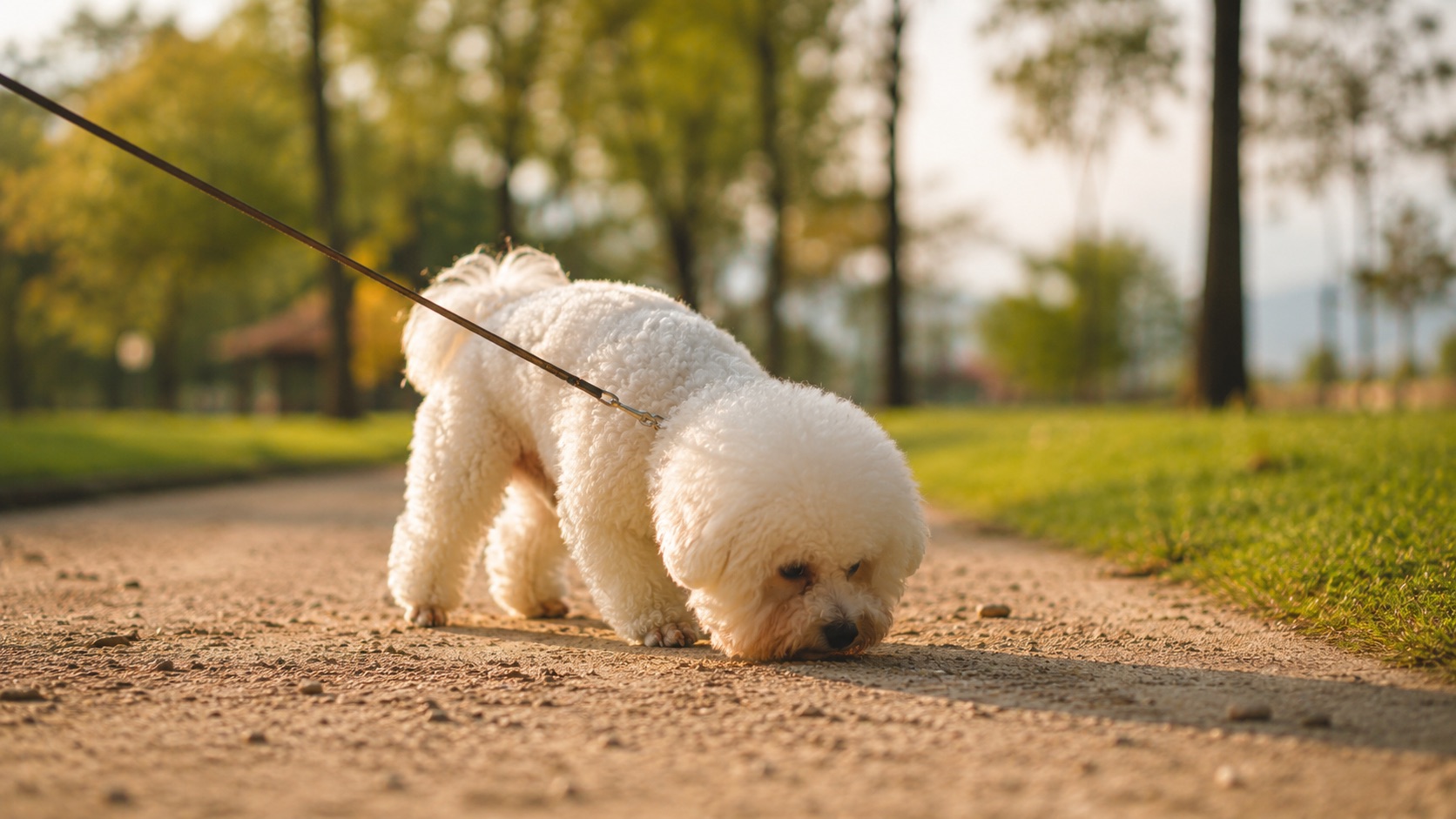
Why taking it away backfires
Think about it from your dog's side. I found something precious, and it gets taken every single time. There's only one conclusion: swallow it before they can take it. Dogs who go through repeated snatching really do get faster at gulping. It's the worst possible lesson.
So flip the script. Don't take. Trade. Hold a treat that clearly beats whatever's in their mouth right up to their nose, and most dogs spit it out on their own. The instant they do, treat and praise. That's the beginning of drop-it training.
Drop-it training: the at-home sequence
| Step | Method | Point |
|---|---|---|
| Step 1 | Let them hold a toy, show a treat, say "drop it" | Treat the instant they release |
| Step 2 | Let them hold a low-value treat, cue "drop it" with a better one | Teach that trading always pays |
| Step 3 | Take it live on walks | Big praise on success |
Get ten successes at home before trying it outside. The temptation level out there is a different league. If it falls apart in the field, go back home and rebuild. No rushing.
Prevention is half the battle
Scavenging has its hot times and hot spots. Alleys on trash night, the sidewalk outside fried chicken joints, the picnic-blanket zone at the park in blossom season. Skip those routes, or shorten the leash just for those stretches.
And one surprising cause: dogs who don't get enough sniffing time on walks sometimes switch to exploring the world with their mouths. Give them generous sniff time, and for quite a few dogs the scavenging drops on its own.
When the scavenging fades, your walk times show it first
You can see drop-it training working in the numbers. Less time glued to the ground means the same route takes less time. Log your walks in kkeung and the distance and duration stack up by date, so the change is right there to see.
Log today's walk →A seasonal map of scavenging hazards
What's on the ground changes with the seasons. Spring brings picnic leftovers and herbicide-treated flower beds; summer, spoiled food and ice cream sticks; fall, ginkgo nuts and acorns; winter, ice-melt salt and holiday chicken bones. Ginkgo nuts in particular are toxic to dogs, so in fall it's simplest to just drop ginkgo-lined streets from your route.
Trash collection day is a variable too. On our neighborhood's food-waste night, the temptation density hits its annual peak. Rerouting just on that day of the week is a perfectly practical defense.
Emergency management until the training sticks
Drop-it takes weeks to solidify, and the walks have to happen every day in the meantime. During the transition, manage your way through: keep the leash short in risky stretches and walk your dog on your side rather than along the wall; when their nose starts diving, call their name to bring their eyes up and reward with a treat. A lifted head can't scavenge.
Also, walking hungry raises the difficulty. Head out 30 minutes to an hour after a meal, comfortably full, and the pull of ground food drops noticeably.
Scavenging is a fight with instinct, so it won't be fixed overnight. But keep trading and preventing, and it genuinely shrinks. The heart-dropping chicken-bone moments spacing further and further apart: that's what success looks like.
Frequently asked questions
They already swallowed it. What do I do?
Would a muzzle be the better move?
Should I stop them from eating grass too?
Won't nose work make the scavenging worse?
Drop-it works fine, except on night walks. Why?
This article is general information and does not replace a veterinary diagnosis. Talk to your vet about your dog's condition.