Summer Dog Walks:
Don't Go Out at This Temperature
86 degrees out. For a human, that's a "bit warm" day. For a dog, it's a different story: the asphalt under their paws is running past 120. Here are the numbers that actually matter for summer walks.
The standard isn't air temperature; it's ground temperature. Midday summer asphalt climbs to 120 to 140 degrees and burns paw pads. One test decides it: press the back of your hand to the ground for 5 seconds. If you can't take the heat, your dog can't walk on it. In summer, before sunrise or after 8 p.m. is the safe window.
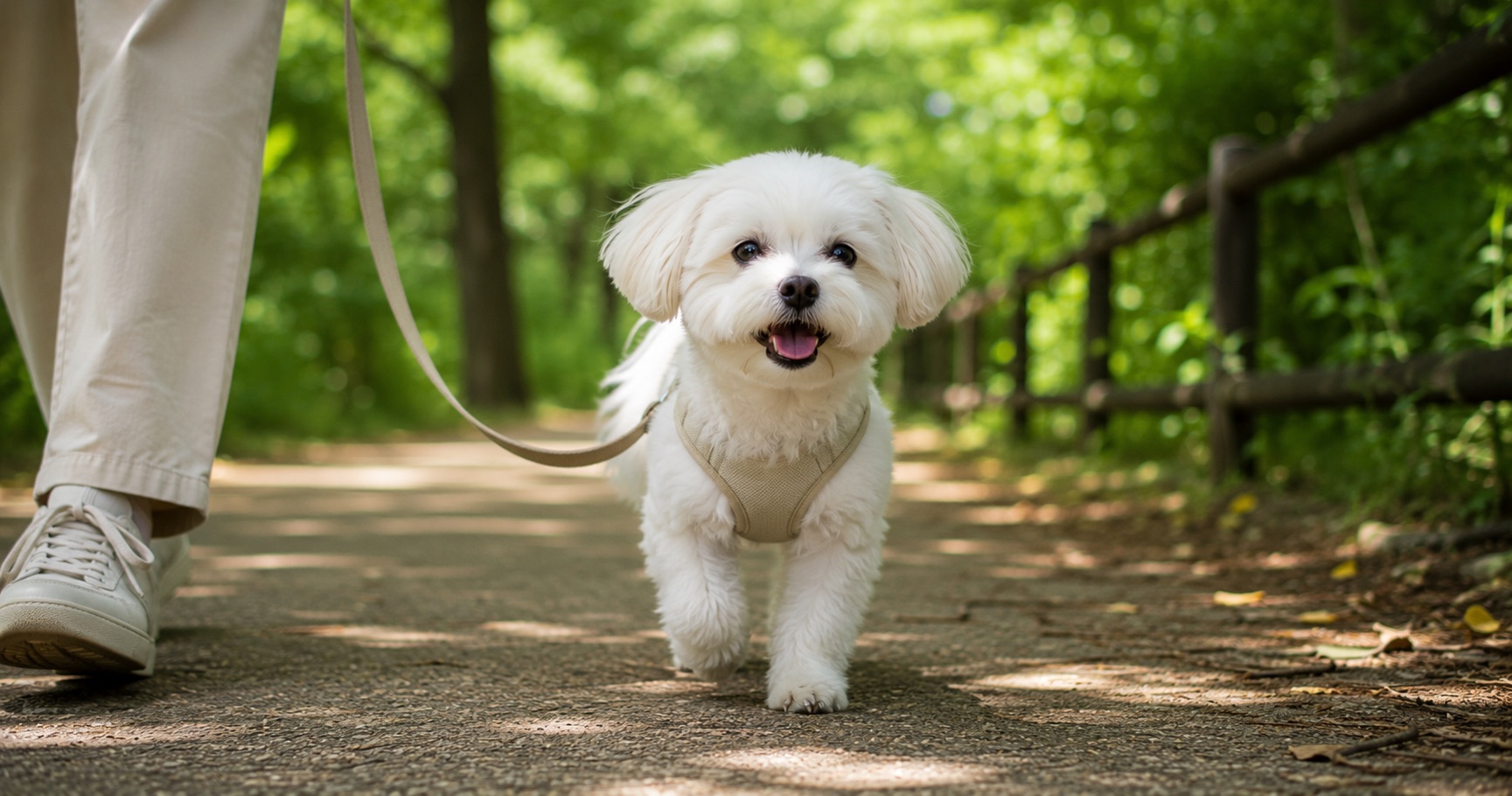
Summer walk risk by hour
| Hours | Risk | Note |
|---|---|---|
| Dawn to 7 a.m. | Safe | The only daylight hours when the ground has cooled |
| 10 a.m. to 6 p.m. | Dangerous | The asphalt-burn window. Don't go out |
| 6 to 8 p.m. | Caution | The air has cooled; the ground hasn't |
| After 8 p.m. | Mostly safe | Hand test, then go |
The evening slot is the trap. The sun goes down and it feels cooler, but asphalt holds its heat for hours. I learned this at 7 p.m. one evening when my dog Gureum kept steering herself onto the grass (it means "cloud" in Korean). The pavement was still hot. Since then, summer walks are locked at 9 p.m.
Heatstroke signs: memorize these
Tongue stretched long with violent panting. Drool turning sticky. Gums flushing deep red. A wobble in the walk. Any one of these: move to shade immediately and wet the paw pads and belly with lukewarm water. Ice-cold water backfires by constricting blood vessels. If the symptoms don't ease, go straight to the vet.
Flat-faced breeds are in particular danger. Shih Tzus, pugs, bulldogs: short noses vent heat poorly through panting, so they fold first at the same temperature.
The summer walk kit
Water and a collapsible bowl are the baseline, and it's worth redrawing your route around shade and dirt paths. Cooling vests and cool scarves help, with one catch: the soak-in-water kind insulates once it dries, so re-wet it midway.
And don't force the quota. A month of reduced summer walking is normal. Fill the gap with nose work at home.
What time did your dog walk last summer?
Log walks in kkeung and the hour of each walk stays by date. When summer rolls back around, open last year's records and go straight to that rhythm, zero trial and error. Summer walking is entirely a matter of timing.
Log today's walk →The parked car: summer's worst accident
A slight detour from walking, but it's summer, so it stays in. "Just for a minute" and leaving your dog in the car: absolutely not. A summer car's interior temperature rockets within minutes of the AC going off. A cracked window changes nothing. If there's a store run to make, the right call is leaving your dog home.
One more pass at radiant heat: dogs live far closer to the ground than we do. On a day that reads 90 at human face height, it's several degrees hotter at dog height. You're walking the same weather, but your dog is walking a hotter world.
Getting through summer on indoor substitutes
The energy from a canceled midday walk gets spent at home. Twenty minutes of nose work in the air-conditioned living room, a toy stuffed with frozen treats, sprawling on a damp towel. Pull the cooling mat out of the icebox and they'll flatten their belly onto it, and honestly, that sight is summer's finest scenery.
A couple months of reduced walking is natural. When fall comes, you walk again. The art of the summer walk isn't beating the heat; it's sidestepping it.
The goal of summer walking isn't endurance; it's safe enjoyment. Pick the hours right and a summer night walk becomes the most romantic route of the year. Walking to the sound of crickets: give it a try this summer.
Frequently asked questions
Can we cut walk frequency in summer?
With dog boots on, can we go out at midday?
How long should post-walk panting last?
What about carrying ice packs or ice water on walks?
Are some breeds especially weak against heat?
This article is general information and does not replace a veterinary diagnosis. Talk to your vet about your dog's condition.