Crate Training:
Building a Den, Not a Jail
Say crate training and many people bristle: isn't that just caging a dog? I did too. Then come the hospital stays, the car trips, the storm evacuations: and the thinking changes. A dog who enters a crate willingly walks through life's rough days far less afraid. The goal was never confinement: it's a private den with the door open.
Crate training's value: making the unavoidable crate moments: travel (car, transit, flights), hospital stays and grooming waits, disaster evacuation, a safe space when guests visit: fear-free. The method: 1) door off or fixed open, treats luring voluntary visits: 2) meals and long-lasting chews served inside: 3) once resting inside is natural, brief door-closes: 4) slowly extend the stay. Punishment placement is absolutely banned: that's the moment the den becomes a jail.
The adaptation roadmap
| Step | Method | Graduation sign |
|---|---|---|
| 1. Explore | Treats tossed into an open crate; zero pressure | Comes and goes freely |
| 2. Make it good | Meals inside; long chews served ONLY inside | Enters and stays voluntarily |
| 3. Close the door | A few seconds closed while eating, then open | Calm behind a closed door |
| 4. Time and distance | Stay near, leave the room, extend duration | Chooses it for naps |
Not rushing the steps is the whole game. In step 3 especially: opening the door DURING whining teaches whining = open button. Wait for a quiet beat, then open. Better yet, start with stretches short enough that whining never begins.
Choosing and placing the crate
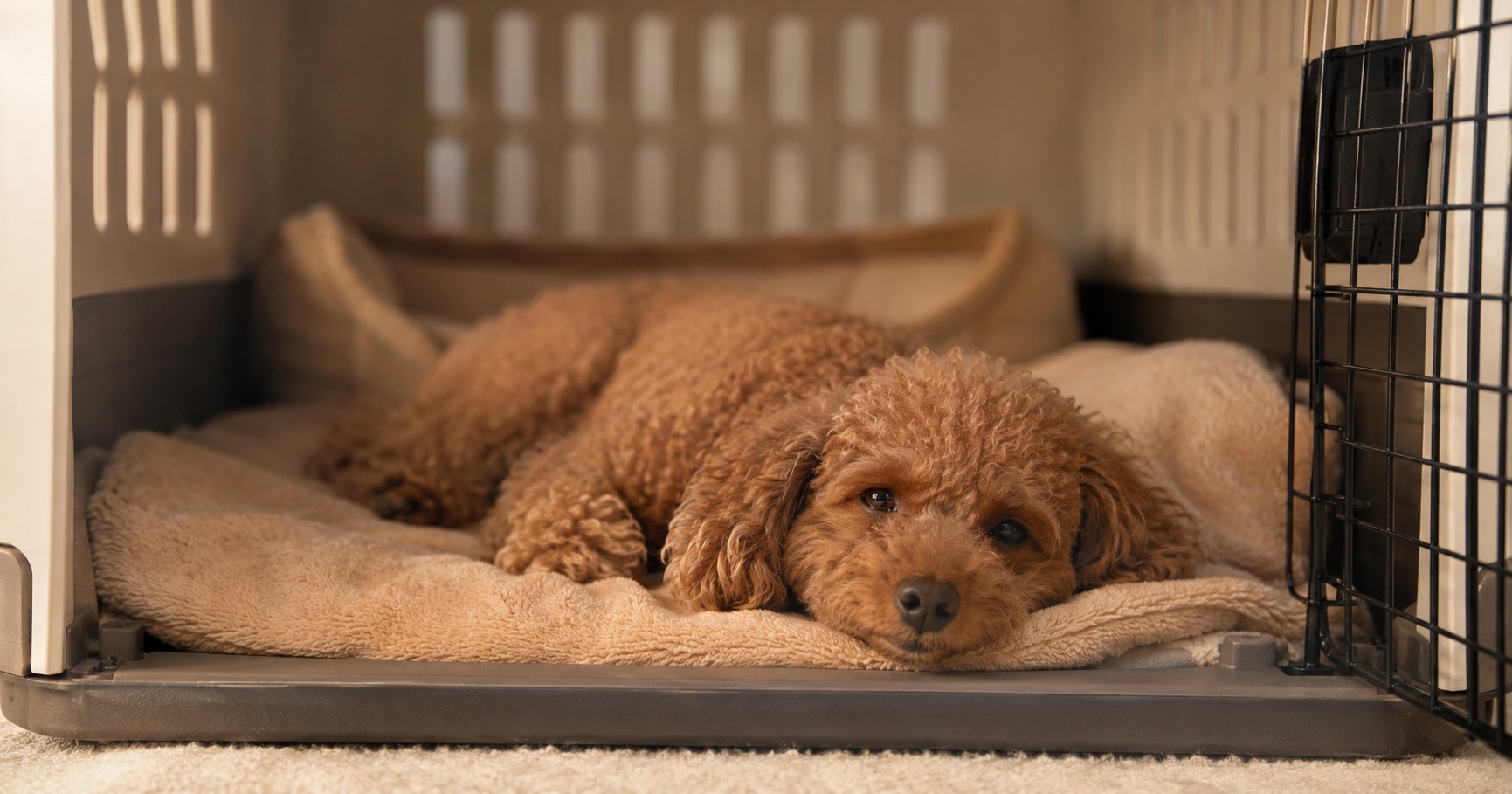
Size: stand, turn, lie down comfortably: that's the spec. Oversized crates lose coziness and invite the corner-bathroom problem during potty training. Material follows purpose: travel duty favors airline-approved hard crates: home-den duty works with a covered wire crate or fabric style. Placement: somewhere family presence is felt but traffic doesn't trample: the living room's edge is classic: with familiar-smelling blankets and a cushion inside. Gureum's crate got a blanket draped halfway over, cave-style: it's now the personal bunker she evacuates to on her own when the doorbell rings.
The never-do list
One: punishment placement. Send them to the crate for misbehaving and the goodwill you've built collapses. Two: marathon confinement. A crate is not an all-day storage unit: the common adult guideline caps single stretches around three to four hours, and puppy bladders hold far less. Long absences call for a gated safe zone with a playpen, not a crate. Three: physical shoving. A body forced in without the mind returns tomorrow with bigger resistance. Four: bad things launched FROM the crate. The pattern of straight-from-crate-to-nail-trim erodes the crate's image too. The den has one law: only good things happen in here.
Photograph the adaptation: it becomes your yardstick
Crate progress moves slowly enough to feel invisible. The day they walked in on their own, the day they held five minutes behind a closed door: post those to kkeung and each keeps its date: weeks in, the distance traveled shows at a glance.
Save a photo of today →Extending to the travel crate
Expanding home-crate love into travel needs intermediate rungs: lift the occupied crate in the living room: carry it to the front door: load it into a parked, engine-off car: a short drive. Treats at every rung. And keep car trips from hardening into crate = vet-bound: mix in joyful expeditions where the crate ride ends at a park or a dog run. A dog who completes this training crosses the big events: holiday travel, trips, moving day: carrying their own room with them.
The unexpected use: disaster readiness
The crate's value actually peaks in emergencies. When a storm or earthquake forces evacuation, the practical prerequisite for evacuating WITH your pet is a crate: and in a strange shelter, the crate is the one familiar space your dog owns. Hospital stays and strict post-surgery rest split the same way: the crate-comfortable dog and the crate-terrified dog recover under very different stress loads. Like insurance you hope never pays out, crate training is the safety system you install while life is calm.
Frequently asked questions
Can an adult dog start now?
Can they sleep in the crate at night?
They'll only eat meals inside the crate now.
Is sending them to the crate when guests arrive a punishment?
How do I size a crate?
This article is general information and does not replace a veterinary diagnosis. Talk to your vet about your dog's condition.