Separation Anxiety:
Alone-Time Practice, Starting at One Minute
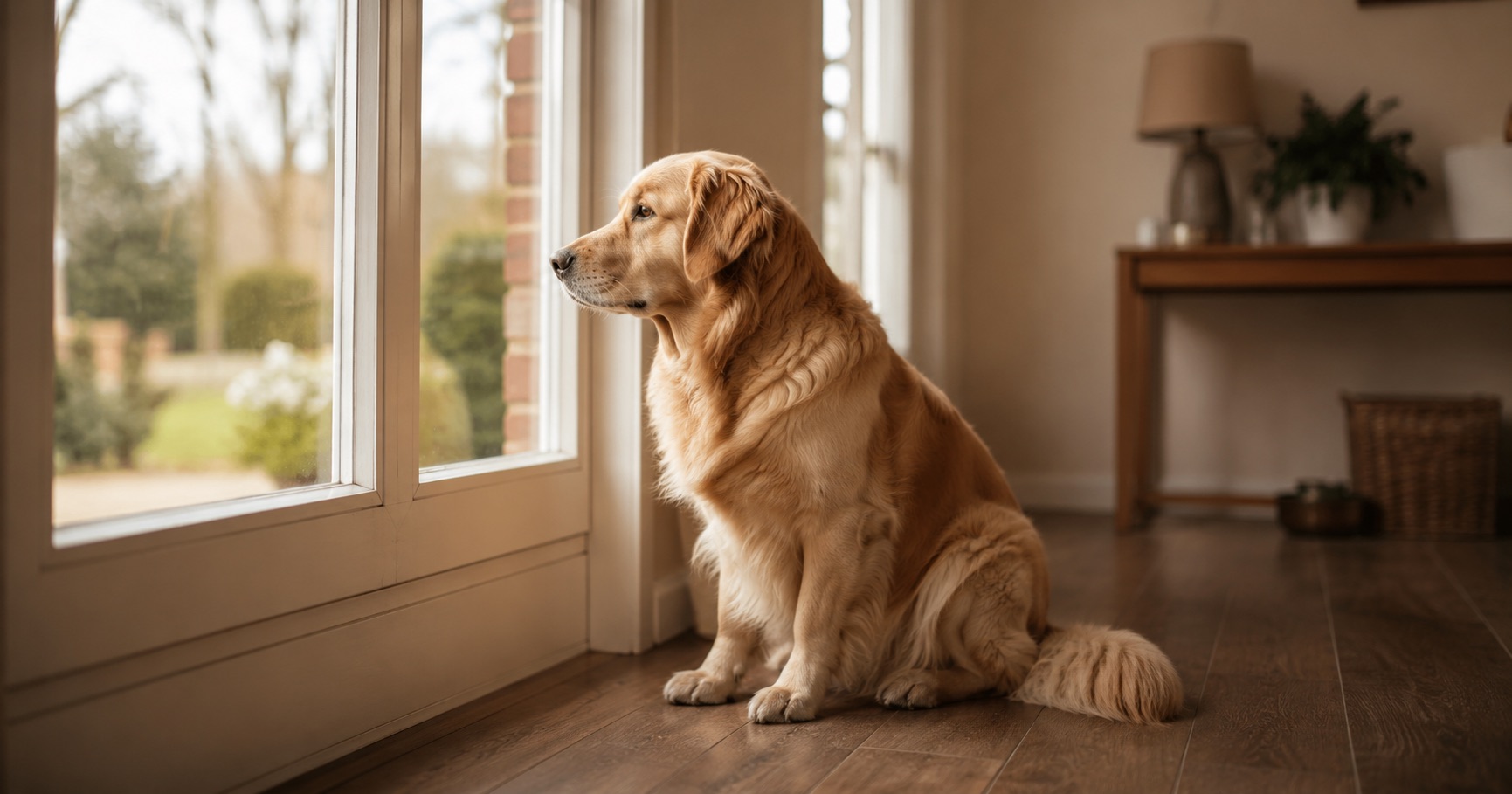
The first day I left my dog Gureum home alone (it means "cloud" in Korean), I spent the workday staring at the home camera: that small back, sitting, watching the front door. It flattened me. Separation anxiety isn't a behavior problem: it's fear. Which is why the training's name isn't correction: it's PRACTICE. Practicing, with the body, that alone is safe.
The core: stack experiences that alone means nothing bad: starting from the tiniest successes. The order: 1) desensitize the departure cues (keys, coat): show the cue, don't leave, repeat: 2) door open-close, one-minute departures: bank the wins: 3) extend ONLY within what they currently tolerate: 4) departures get a plain goodbye: arrivals get greetings after the excitement settles. Repeated exposure to panic-length absences isn't practice: it's fear reinforcement: extension happens inside the current limit, always.
The signal check
| Level | What it looks like | Approach |
|---|---|---|
| Mild | Whining then settling; waiting at the door | Home practice can carry it |
| Moderate | Sustained barking, howling, refusing food | Staged practice + consult if needed |
| Severe | Destruction, accidents, self-injury (torn nails at the door), heavy drooling | Behavior professional + vet, together |
A home camera is required equipment for the level check. Which minutes after departure run hottest, how long until settling: without those numbers, you can't set the practice's starting line (the currently tolerated time).
Stage 1: desensitize the departure cues
For a separation-anxious dog, the fear starts long before the door: it starts when your hand touches the KEYS. Cut the cue-to-goodbye wiring first. The method is almost comically boring: pick up the keys and sit on the couch. Put on your going-out clothes and do the dishes. Shoes on, shoes off. Scatter cue-then-NOTHING experiences through the day, and over weeks the cues lose their doom-forecast function. When the camera shows shrugs where panic used to live: next stage.
Stage 2: seconds, then minutes
Now the real departures. Out the door: back in ten seconds: BEFORE the whining starts: that's the point. The success metric is their comfort holding, never endurance. Ten seconds, thirty, one minute, three. Extend only while the camera shows ease: and after each extension, repeat that duration for days to set it. Mix in ultra-short departures to keep it unpredictable. Backslide days are normal: drop half a step and continue. This training has exactly one enemy: impatience.
Alone-time practice needs before-and-after too
Practice that starts at one minute moves slowly enough to doubt. Post the pre-departure calm and the homecoming state to kkeung: each keeps its date, and week one against month one shows the distance. That visible difference is what keeps the practice going.
Save a photo of today →The never-do list
Sneaking out. It dodges today's commotion: but from their side, you EVAPORATE without notice: the surveillance and anxiety only sharpen. A plain be right back is the whole ceremony. Skip the dramatic farewells and reunions too: the more departure and return become emotional rollercoasters, the darker the alone-time reads by contrast. On returning, greet calmly AFTER the excitement drains. And the crime scene discovered on arrival: the shredded cushion, the accident: never gets scolded. They cannot link hours-ago acts to now's anger: the only lesson that lands is the worst one: owner's return = scary.
Environment and exercise: the two wings
Alongside the practice, make the alone-time itself livable. A pre-departure walk drains the tank: most of the empty hours become nap hours. A snuffle mat or a long-lasting project (a stuffed Kong) handed over at the door converts the goodbye moment into a treat-unboxing ceremony. Radio or TV cuts the silence: a common assist. But honest framing: these tools carry the MILD cases: severe separation anxiety doesn't get papered over by a Kong. At the destruction, self-injury, hours-of-howling level, a behavior professional plus a veterinary anxiety consult is the fastest route to a comfortable dog.
Frequently asked questions
Can I not leave the house at ALL during training?
Would a second dog fix the separation anxiety?
I work from home: we're always together. Could that be a problem?
I've heard about medication: is that only for extreme cases?
Does leaving the TV or radio on help?
This article is general information and does not replace a veterinary diagnosis. Talk to your vet about your dog's condition.