Top 10 Houseplants Dangerous to Dogs:
Check Your Monstera and Lilies First
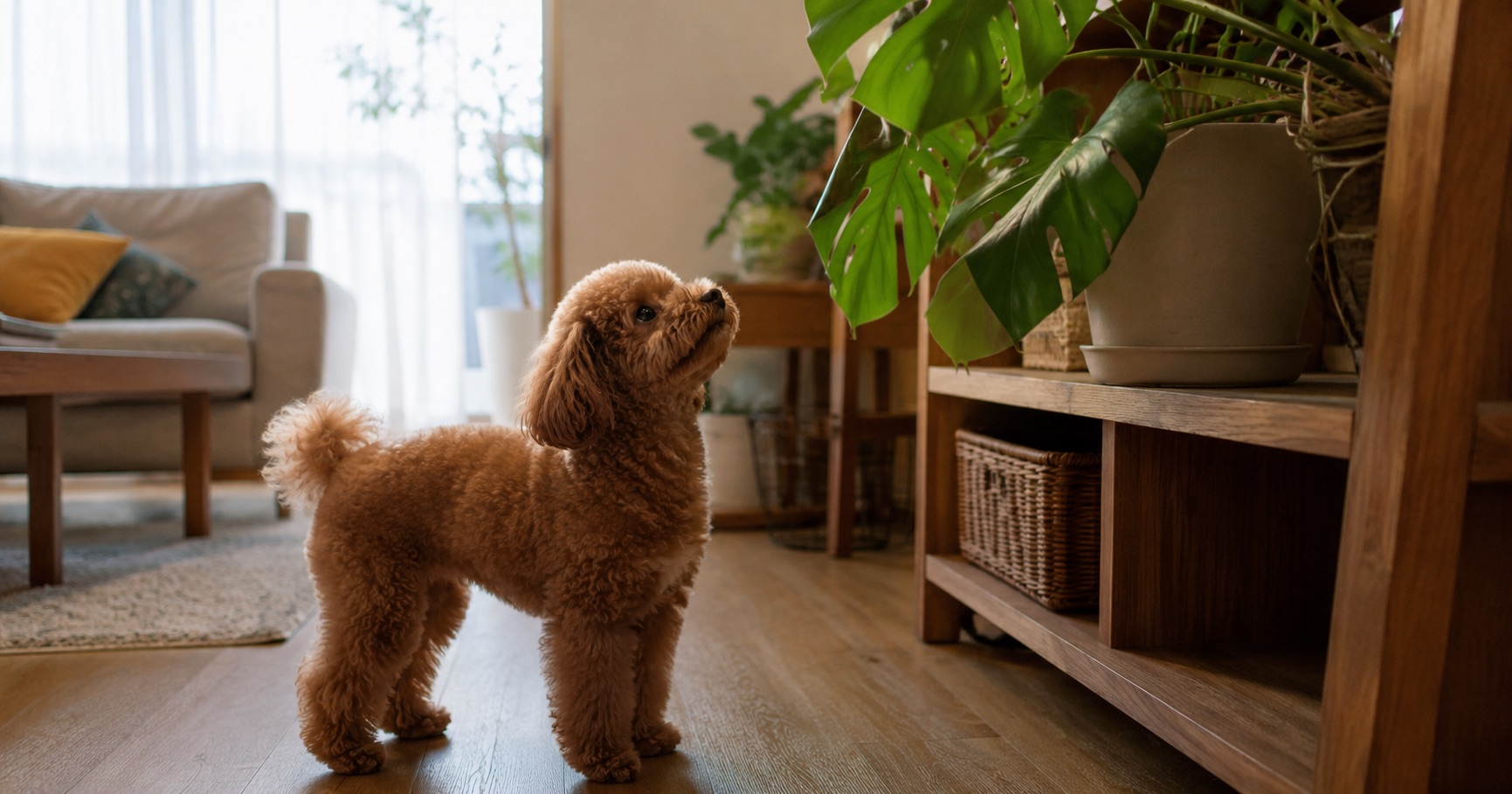
A plant-loving friend brought a monstera as a housewarming gift. I thanked her, set it down: and that night a casual search froze me solid: dangerous to dogs. My dog Gureum hadn't gotten to the leaves yet (it means "cloud" in Korean): pure luck. The list I built that night, shared below.
The most dangerous: lilies, azaleas, and bulb plants like daffodils and tulips: and everyday houseplants: monstera, pothos, ivy, dieffenbachia: irritate the mouth and gut. In a dog household these plants either leave, or move somewhere provably out of reach. Those are the two options.
The danger table
An uncomfortable number of decor-darling plants are hostile to dogs. Run every pot in the house against this list, by name.
| Plant | Danger | Main symptoms |
|---|---|---|
| Lilies | Very high | Vomiting, lethargy, possible kidney damage |
| Azaleas, rhododendrons | Very high | Vomiting, drooling, heart irregularities |
| Daffodils, tulips (bulbs) | High | Vomiting, diarrhea: seizures at volume |
| Dieffenbachia | High | Mouth pain, swelling, trouble swallowing |
| Monstera | Moderate | Mouth and tongue irritation, drooling, vomiting |
| Pothos | Moderate | Mouth irritation, vomiting, trouble swallowing |
| Ivy | Moderate | Vomiting, diarrhea, skin irritation |
| Aloe | Moderate | Vomiting, diarrhea, lethargy |
| Peace lily | Moderate | Mouth irritation, drooling |
| Hydrangea | Moderate | Vomiting, diarrhea, lethargy |
※ Danger scales with dose and body size: a small dog eating the same amount gets hit far harder.
After a nibble: the protocol
Clear any leaf still in the mouth, then establish WHAT and HOW MUCH. Do not induce vomiting on your own: call the vet and take instructions: for some plants, forced vomiting makes things worse. Bring a leaf or a photo of the plant to the visit: it speeds the diagnosis measurably. Heavy drooling, vomiting, or lethargy already showing: skip the deliberation and go.
Can't part with the pot?
Neither could I: the gift monstera now lives on top of the refrigerator. The bar: a height no jump can reach the leaves from, in a spot where fallen leaves get seen and cleared fast. Hanging planters work too: though trailing species can dangle back into jaw range: check the droop. And for the dedicated digger-and-shredder: rehoming the plant to a friend is the kinder call, for everyone involved.
The cleared living room deserves its first photo
The day the monstera moved up high, the photo of a dog rolling around beneath it is worth taking. Every hazard removed adds one more zone of carefree sprawling. Posts on kkeung keep their dates: the album quietly becomes a record of the home getting safer, one pot at a time.
Save a photo of today →Keeping the green, safely
The relatively safe list
Areca palms, parlor palms, Boston ferns, calatheas, and herbs like basil and rosemary sit on the dog-safe side of the ledger. Need green in the house: trade toward these. Note that "safe" still isn't "edible in bulk": the shredding habit itself still gets trained out.
Before any new plant comes home
Build the habit: search the plant's name plus "dogs" BEFORE buying. Bouquets too: and a lily bouquet makes even the vase water dangerous.
For the committed grass-eater
Boredom or an unsettled gut are the usual drivers: spend the energy on walks and nose work first. If the grazing persists, growing a pot of dog-safe pet grass and redirecting there is a legitimate compromise.
Plants and dogs: nobody has to give up either one. Know the list, change the layout, and coexistence works. Our monstera thrives on the refrigerator: Gureum thrives below it. Tonight's homework: the names of every pot in the house.
Frequently asked questions
Why do dogs eat plants at all?
They ate a tiny piece of a leaf. Vet?
Are succulents dog-safe?
My dog keeps digging in the pots.
I received a bouquet. How do I keep it safely?
This article is general information and does not replace a veterinary diagnosis. Talk to your vet about your dog's condition.